
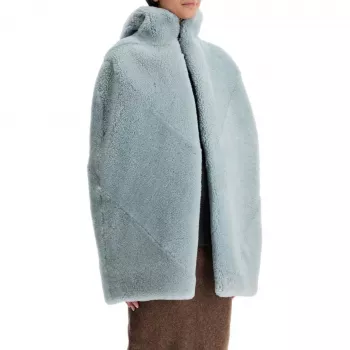
A hooded fur coat in Rick Owens’ signature dark-luxe spirit delivers dramatic volume, cold-weather coverage, and a strong silhouette that reads as both protective and directional. The hood changes the coat’s posture on the body—framing the face, building structure at the neck, and adding practical warmth when wind hits. Below are the key details that matter most when choosing fit, dialing in styling, and keeping the coat looking formidable season after season.
Start with the silhouette. Rick Owens outerwear is often about elongated lines, intentional exaggeration, and a drape that looks sculptural rather than “fluffy.” A fur coat can easily overwhelm an outfit; the Rick Owens approach is to make that dominance feel designed—clean in intention, imposing in scale.
The built-in hood is more than a weather feature. It shifts volume upward, creating a stronger collar/neckline presence and a more guarded, architectural profile. With the hood up, the coat reads even more like armor; with it down, it still builds a stacked, dimensional neckline that stands apart from standard fur outerwear.
Because the coat works best as a single-statement piece, keep the rest of the outfit tonal and pared back. Think high-contrast minimalism: fewer logos, fewer competing textures, and sharper lines underneath. This type of outerwear is especially suited to cold city wear, evening arrivals, and outfits that rely on silhouette rather than color.
Before purchasing, confirm the latest price, stock status, and imagery on the product page—small details like hood shape and overall length are easiest to judge visually. Also consider where the coat will be worn most often: daily commuting usually prioritizes mobility and durability, while occasional events can lean further into drama and volume.
| Detail | Info |
|---|---|
| Product | Rick Owens Fur Coat with Hood |
| Price | 3673.94 USD |
| Availability | In stock |
| Primary visual | Hooded fur outerwear silhouette (see images on product page) |
| Best for | Cold-weather statement layering, night-out outerwear, wind protection with hood |
Warmth comes from two places: material loft and coverage. A hood plus a longer body reduces heat loss around the neck and head, which can make a noticeable difference in cold wind. If the coat is worn partially open for styling, that hood still provides a “buffer zone” at the collar line.
Expect substantial weight. Fur outerwear often feels heavier than wool coats, and the hood adds more mass near the upper back and neck. Plan your layering so the coat remains comfortable through the shoulders and sleeves—especially if you’re pairing it with a thick knit, a structured jacket, or anything with padded shoulders.
Sleeve ease matters more than people expect. If mobility is important (public transit, frequent door-opening, carrying bags), test the range of motion you’ll need: reaching forward, lifting arms, and turning your upper body. Also consider sensitivity at the neckline—when the hood is up, the fur may contact the jawline and cheeks, so comfort there is key.
Decide the intended silhouette before choosing a size. A closer fit can look sleek and architectural, emphasizing long lines and a sharper outline. Oversizing amplifies the drama and makes layering easier, but it can also feel more cumbersome in tight spaces or when sitting for long periods.
Focus on two fit checkpoints: shoulder width and upper-arm room. These areas determine whether the coat feels powerful or restrictive. A coat that’s too tight at the shoulder can pull the neckline backward—an issue that becomes more obvious with a hooded design.
Hood fit is its own measurement. Ideally, the hood sits securely without tugging the collar area, and it should drape without awkward bunching at the base of the neck. If the hood shifts the collar backward, the coat can feel like it’s “hanging” rather than sitting cleanly on the shoulders.
For cleaning, use a professional specialist experienced with fur rather than attempting home washing or aggressive brushing. For general care guidance, reference established resources like the Fur Information Council of America (FICA) and background on fur as a material via Britannica.
For current pricing, stock status, and the latest images, visit the product page for Rick Owens Fur Coat with Hood. Before committing, map the purchase to real-life use—travel, events, and daily wear each demand a different balance of drama, comfort, and practicality.
The shoulders should feel supported without pulling or creating tension at the neckline. Leave enough room for light-to-medium layering, and test arm lift plus hood-up comfort to ensure the collar doesn’t shift backward.
Brief exposure is usually manageable, but the coat should be air-dried naturally afterward. Avoid heat sources, and if it gets heavily soaked, use a specialist cleaner experienced with fur.
Store it in a cool, dark, ventilated space on a wide hanger inside a breathable garment bag. Avoid long-term plastic sealing, and consider professional storage if the off-season is extended.





Leave a comment