Purr-fect Portions: A Daily Cat Feeding Checklist for Balanced, Stress-Free Meals
Daily feeding is easier when portions, timing, water, and treat limits are tracked in one place. A simple checklist routine helps support steady energy, healthy weight, and fewer “did I feed them already?” moments—especially in multi-cat homes or busy schedules.
Why a feeding checklist helps (even for experienced cat owners)
Feeding a cat can feel automatic—until life gets hectic. A quick daily checklist creates a reliable routine that’s easy to follow even when multiple people share pet care.
- Reduces accidental double-feeding and missed meals by creating a single source of truth.
- Supports consistent calorie intake, which is strongly tied to healthy weight management.
- Makes patterns visible: picky days, stress-related appetite changes, or treat creep.
- Helps coordinate care between family members, pet sitters, and vets.
For nutrition best practices and what to watch long-term, the WSAVA Global Nutrition Guidelines offer a helpful framework for discussing feeding with a veterinarian.
What to track each day for healthier portions
The goal isn’t to “journal everything.” It’s to capture the few details that prevent accidental overfeeding and make changes easier to spot early.
- Meal timing: morning/evening (and any midday meals) to keep routines stable.
- Food type: wet, dry, mixed, or prescription diets to avoid unplanned switches.
- Exact portion: measured cups/grams or can fractions to prevent gradual overfeeding.
- Treats and toppers: count or calorie estimate to keep extras within limits.
- Water intake notes: refreshed bowl/fountain checks and any unusual changes.
- Appetite and behavior: finishing meals, begging, vomiting, stool changes, energy.
If you’re comparing formulas, it also helps to understand how labels work. The AAFCO guide to reading a pet food label explains what the key statements mean and why foods can differ even when they look similar.
Portion basics: building a steady routine without guesswork
Portion control doesn’t have to be complicated—it just has to be consistent.
- Start with the food label feeding guide, then adjust based on body condition and veterinarian guidance.
- Weigh or measure consistently (a kitchen scale for grams is often more accurate than scoops).
- Use the same measuring tool daily; note brand and formula because calorie density varies.
- If feeding multiple cats, separate bowls and record per-cat intake to spot issues early.
- Make changes gradually over 7–10 days when switching foods to reduce digestive upset.
When something seems “off” (sudden appetite changes, vomiting, or increased thirst), it helps to have a written record to share with a clinic. The Cornell Feline Health Center is a trusted resource for understanding common cat health concerns.
Daily checklist template (printable-friendly)
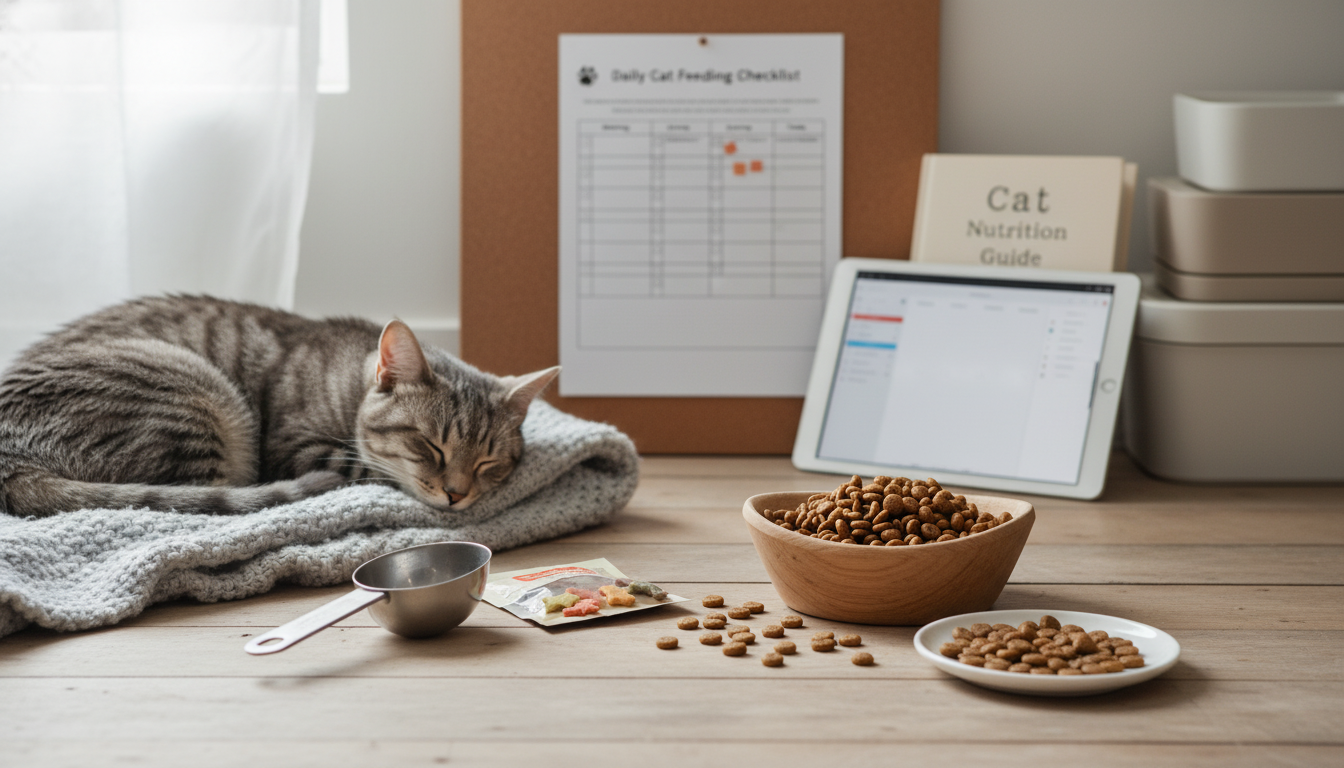
Keep your checklist where feeding happens (pantry door or fridge). Aim for quick checkmarks and short notes rather than long entries.
- AM meal: portion served, portion eaten, meds/supplements (if any).
- PM meal: portion served, portion eaten, appetite notes.
- Treat budget: planned treats, training treats, shared “human food” incidents.
- Hydration: water refreshed, fountain cleaned/checked, broth added (if used).
- Health notes: vomiting, hairballs, stool quality, activity level, stress triggers.
- Weekly snapshot: weigh-in (if recommended), body condition check, refill/stock reminders.
Sample daily feeding log (one-cat example)
| Time |
Food |
Portion served |
Portion eaten |
Treats |
Notes |
| AM |
Wet food |
1/2 can |
All |
0 |
Normal appetite; water refreshed |
| Midday |
Dry food |
10 g |
Most |
2 small treats |
Light play session |
| PM |
Wet food |
1/2 can |
All |
1 treat |
No vomiting; normal stool |
Special situations: kittens, seniors, indoor cats, and weight goals
One schedule doesn’t fit every cat. Adjust the checklist categories to match your cat’s life stage and goals.
- Kittens: more frequent meals and growth-focused nutrition; track weight regularly.
- Seniors: monitor appetite changes closely; note dental discomfort signs and hydration.
- Indoor/less active cats: portion control and treat limits matter more; schedule play before meals.
- Weight loss or gain plans: measure precisely and log progress; avoid sudden calorie drops.
- Multiple cats: feed separately when needed to prevent food guarding and hidden overeating.
Common feeding mistakes the checklist can prevent
Small daily “extras” add up quickly. A checklist helps catch the easy-to-miss habits that can quietly change calories over time.
- Free-pouring kibble without measuring (a small daily excess adds up).
- Treat stacking: dental treats, lickables, table scraps, and “just one more” rewards.
- Not accounting for calorie differences between flavors or brands.
- Feeding changes too fast during transitions, causing stomach upset.
- Missing early warning signs: decreased appetite, increased thirst, frequent vomiting.
Printable planner + mini eBook: a simple system to keep on the fridge
If you prefer a ready-to-use system (instead of building a log from scratch), a printable checklist can make daily tracking fast and consistent.
Recommended downloads:
FAQ
How many times per day should a cat eat?
Many adult cats do well with two meals per day, while some prefer smaller, more frequent meals. Kittens often need more frequent feeding, and the best schedule depends on age, health needs, and your veterinarian’s guidance.
Is wet food or dry food better for portion control?
Either can work if portions are measured consistently, but calorie density can vary a lot by formula. Wet food can support hydration, while dry food is convenient—tracking grams or calories is what keeps portions controlled.
How can double-feeding be prevented in a household with multiple caregivers?
Use one shared checklist in a central spot and have each person initial and time-stamp meals and treats. Clear handoffs (who feeds AM vs PM) and a visible log reduce confusion, especially with pet sitters.
Recommended for you






Leave a comment