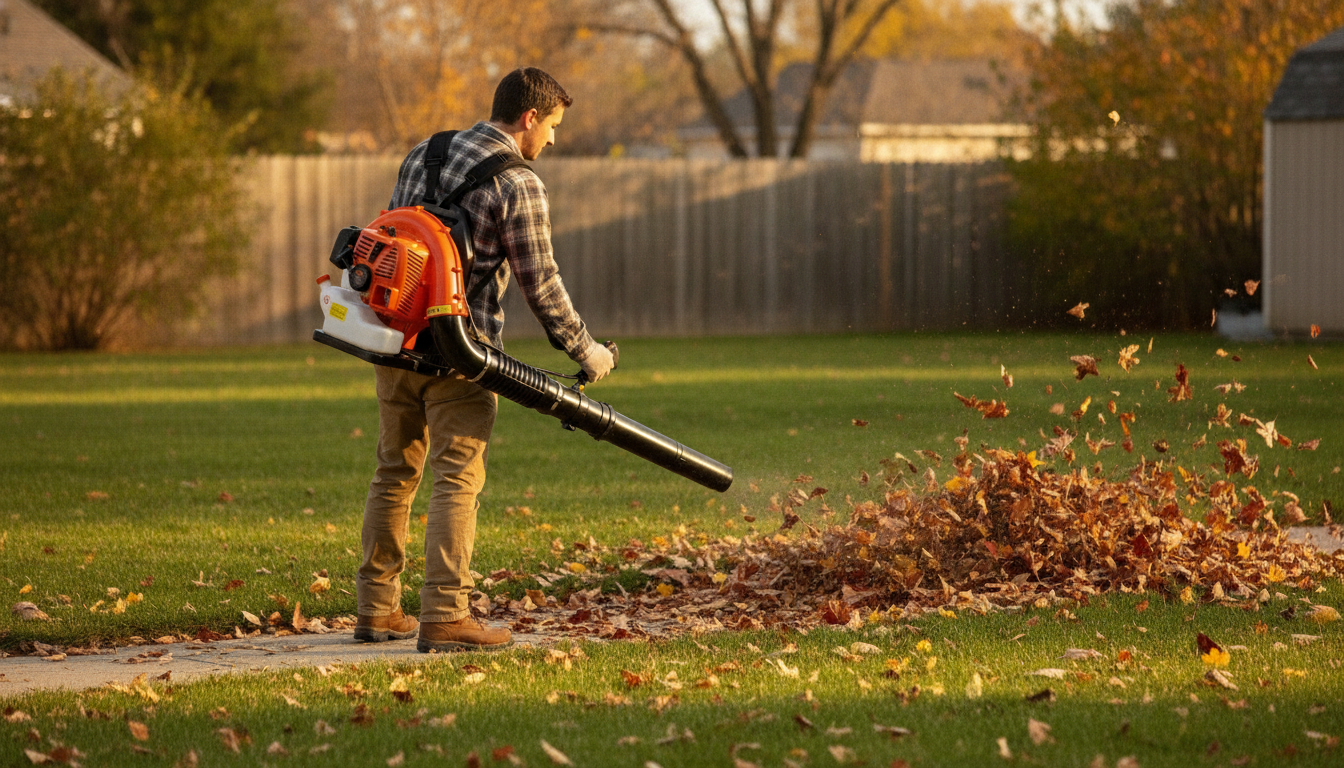
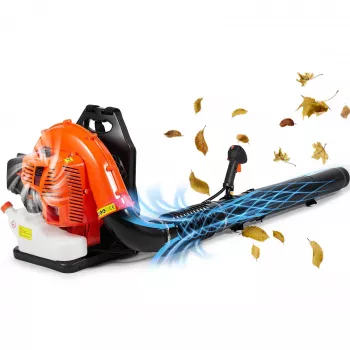
A high-output backpack blower is designed for fast, sustained cleanup across big yards, long driveways, and jobsite-style messes. In the 79cc 2-cycle class, the goal is simple: deliver strong airflow for longer stretches without the arm fatigue that often comes with handheld units. If you routinely face wet leaf piles, heavy seasonal drop, or sprawling perimeter work, this type of blower is made to keep the pace up while keeping stops (and strain) down.
What This Type of Backpack Blower Is Best For
A 79cc backpack blower is most useful when “a quick pass” needs to move a lot of material—fast. Compared with lighter-duty options, it’s better suited to tougher piles and longer sessions.
- Clearing heavy leaf piles, wet leaves, and compacted debris where handheld blowers can struggle
- Moving grass clippings and light gravel off driveways, sidewalks, and parking areas
- Handling larger properties with fewer stops due to a larger fuel tank and backpack carry
- Faster perimeter cleanup along fences, hedges, and hardscape edges using a focused nozzle stream
Key Performance Numbers to Understand (CC, 2-Cycle, CFM, Tank Size)
Specs can look like a wall of numbers, but a few tell you most of what matters for everyday use: power class (cc), engine type (2-cycle), airflow (CFM), and how long you can work before refueling (tank size).
- Engine displacement (79cc) typically indicates a higher-output category intended for heavier loads and longer cleanup sessions.
- 2-cycle operation generally means you’ll use a gas/oil mix. The correct ratio and fresh fuel make a noticeable difference in starting and smooth running.
- Air volume (930 CFM) reflects how much air the blower moves. More volume helps carry leaves farther and clear wider paths in fewer passes.
- Control matters: high airflow is most useful when it’s controllable—especially near mulch beds, decorative rock, and doorways.
- Fuel tank (3L) supports longer work intervals and fewer refuel breaks during big cleanups.
Quick Specs Snapshot
| Spec |
What It Means in Use |
| 79cc engine (2-cycle) |
Power class suited for heavier debris and longer cleanup sessions |
| 930 CFM air volume |
Moves large amounts of material; helps clear wide swaths efficiently |
| 3L fuel tank |
Fewer refuel stops during extended yard work |
| Backpack design |
Shifts weight to shoulders/hips for better endurance than handheld units |
Real-World Cleanup Scenarios and Tips
Technique can matter as much as raw output. A higher-volume blower can scatter debris if it’s used like a “full throttle everywhere” tool. These scenarios help dial in cleaner results with less rework.
- Wet leaves: use a steady, low-to-mid throttle and work in narrow passes to avoid scattering and re-piling. Build one manageable windrow at a time.
- Gravel driveways: keep the nozzle angle shallow and reduce throttle to avoid launching stones. Work from the edges inward so you don’t chase gravel back and forth.
- Long fence lines: start from the upwind side when possible and push debris into a single windrow, then make one final “collection” pass.
- Mulch beds: feather the throttle and keep distance so you move leaves without blasting mulch into lawns or walkways.
- Morning dew conditions: plan an extra pass and avoid over-throttling, which can kick up grit and create a dusty cloud that settles right back down.
Comfort and Fit: Making a Powerful Blower Easier to Use
Backpack blowers earn their keep on big properties because they distribute the load, but fit still determines whether the work feels steady or punishing after 20 minutes.
- Adjust shoulder straps so the unit rides high enough to reduce lower-back leverage and “pull.”
- Use the waist/hip belt (if included) to transfer load from shoulders and improve stability on slopes.
- Check trigger comfort and throttle response; smoother control reduces hand fatigue during long sessions.
- Work in intervals: clear one zone, walk debris to the collection edge, then continue to keep your pace consistent.
- Wear hearing and eye protection; powerful blowers can be loud and can propel dust and small debris.
For more detail on noise exposure limits and why hearing protection matters, review OSHA’s occupational noise guidance and CDC/NIOSH noise resources.
Fueling and Starting Basics for 2-Cycle Backpack Blowers
Most reliability complaints with 2-cycle outdoor power tools trace back to fuel quality, mix ratio, or a rushed starting sequence. A few habits go a long way.
For fuel handling and small engine emissions context, see the U.S. EPA overview of small engines and gasoline.
Maintenance That Protects Performance
Noise, Dust, and Safety Considerations
When a Backpack Gas Blower Makes More Sense Than Electric
In-Stock Picks
FAQ
What does 930 CFM mean for yard cleanup?
930 CFM describes the volume of air the blower moves per minute. Higher air volume can clear wider areas faster and carry leaves farther, though nozzle angle and throttle control still determine how cleanly debris piles where you want it.
Does a 2-cycle backpack blower require mixed fuel?
Many 2-cycle backpack blowers use a gasoline-and-2-cycle-oil mixture rather than straight gas. Follow the manufacturer’s specified ratio and use fresh fuel to reduce hard starts, smoking, and performance drop-offs.
How long can a 3L tank run before refueling?
Run time varies with throttle use and how heavy the debris is, but a 3L tank is designed to reduce refueling frequency during longer cleanups. Plan for shorter run time at high throttle and during dense, wet conditions, and use refuel breaks as natural rest intervals.
Recommended for you






Leave a comment