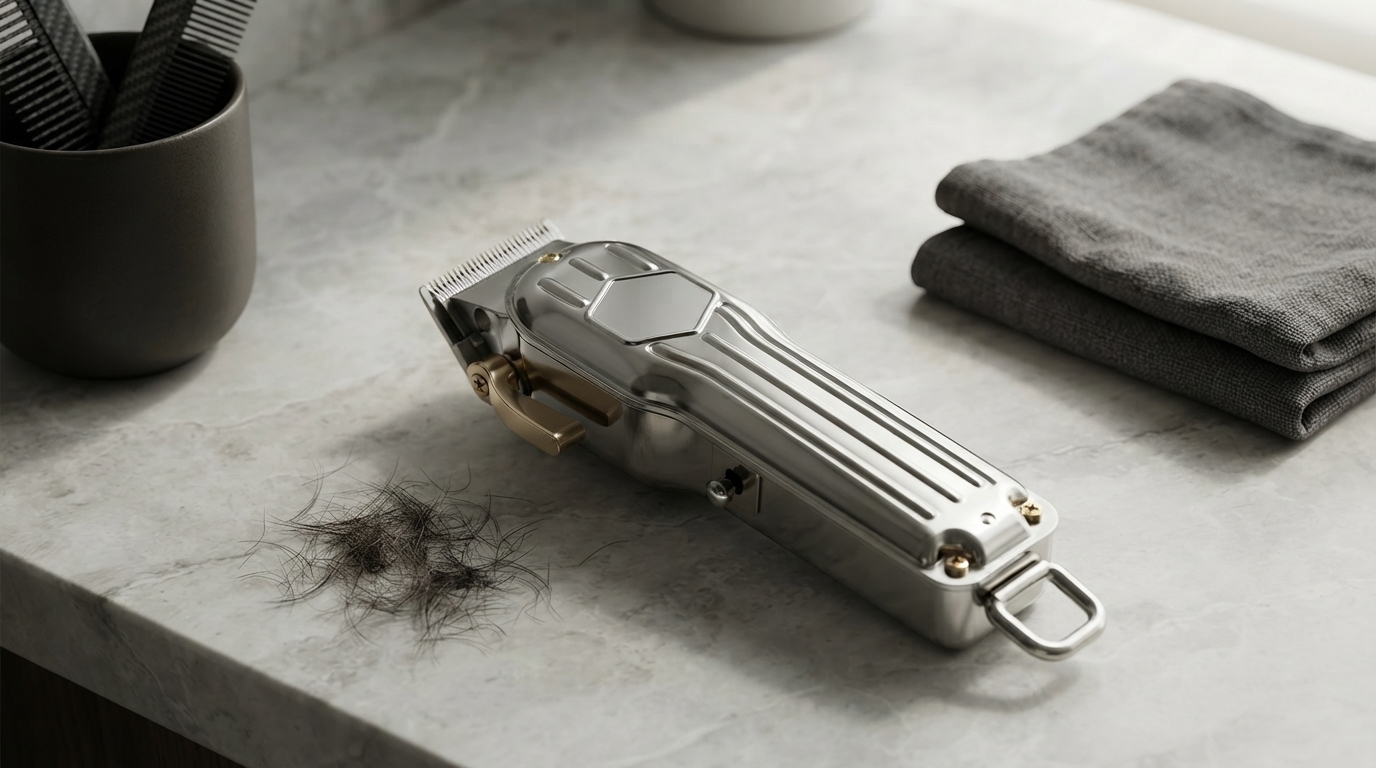
Professional Cordless Hair Clipper for Men: Why an All‑Metal Tool Feels Different
A dependable cordless clipper can make home haircuts quicker, cleaner, and easier to repeat—especially when the housing is metal for better balance and durability. If clean fades, tapers, and beard touch-ups are part of your regular routine, an all‑metal cordless clipper offers a steadier feel in the hand and smoother control around tricky areas like the ears, neckline, and cheek lines. For more guidance, see Hair clipper – Wikipedia.
What an all‑metal cordless clipper changes
- Sturdier feel and improved balance: Metal bodies typically feel more planted than many plastic housings, helping the clipper sit naturally in your grip.
- Better resistance to daily handling: An all‑metal shell tends to tolerate bumps and frequent use, which matters if you trim weekly or do multiple family cuts.
- More stable hand pressure: During edging, taper work, and lever blending, a consistent weight can reduce “wobble,” helping lines look cleaner.
- Often paired with higher‑torque motors: Many metal builds are matched with stronger cutting power aimed at thicker hair and faster bulk removal.
- Cordless freedom: With no cord pulling or snagging, it’s easier to keep a steady angle around ears, nape, and beard contours.
Key features to look for before buying
- Motor strength: For dense or coarse hair, a stronger motor helps reduce snagging and makes it easier to cut evenly with fewer passes.
- Blade material and design: Sharp, well-finished teeth cut smoothly and help control heat buildup during longer sessions.
- Adjustable cutting length: A lever or dial is essential for blending; small adjustments can erase lines without jumping to a new guard.
- Guide comb range: A solid guard set lets you move from short stubble to longer lengths without guessing.
- Battery runtime and charging: Look for reliable cordless time and a charging method that fits your setup (USB or a stand).
- Noise and vibration: Lower vibration is easier on the wrist and helps keep the blade path steady, especially when detailing.
- Weight and grip texture: Metal is premium, but it should still feel secure—especially if hands get slick during a cut.
- Easy cleaning access: Being able to brush and oil the cutting area quickly improves consistency and comfort.
Quick comparison: all‑metal cordless clipper vs basic trimmer
Clippers and trimmers overlap, but they shine in different roles. A cordless clipper is built for bulk cutting and blending, while a detail trimmer focuses on crisp outlines and precision. Many people start with a strong clipper first, then add a trimmer later if they want ultra-sharp edges. For further reading, see Hair Clippers | Transportation Security Administration – TSA.
Clipper vs Trimmer at a Glance
| Task |
Cordless Clipper |
Detail Trimmer |
| Bulk cutting |
Best choice |
Limited |
| Fades & blending |
Best choice |
Not ideal |
| Lineups & edges |
Good with care |
Best choice |
| Beard shaping |
Good with guards |
Great for edges |
| Speed on full haircut |
Fast |
Slower |
How to use it for a clean home fade
Beard trimming and edging without irritation
Maintenance that keeps cuts smooth and consistent
- Brush out hair after every use: Trapped hair increases friction and heat, and it can make the motor work harder.
- Disinfect periodically: Especially if you use the same tool on both hair and beard. Follow everyday cleaning guidance and product directions for safe handling (see CDC cleaning recommendations).
- Oil the blades: A few drops reduce noise and wear, and help keep cutting consistent from the first pass to the last.
- Check blade alignment: Even teeth minimize nicks. If alignment looks off, correct it before edging.
- Store dry: Avoid leaving tools in steamy bathrooms to help prevent corrosion and residue buildup.
- Replace worn guards: Warped or loose guards create inconsistent lengths and can snag.
For skin comfort, it also helps to use products as directed and keep grooming items clean, especially around the face and neck (see FDA guidance on personal care product safety).
Who it’s best for
Product options available now
Before choosing, compare the product details with your daily routine, available space, care needs, and preferred setup. The strongest option is usually the one that fits the intended use clearly and remains simple to clean, store, and check before repeat use.
FAQ
How often should clipper blades be oiled?
Oil the blades with a few drops before or after each session. If you’re cutting thick hair or doing multiple haircuts back-to-back, oiling more often (and wiping excess) helps keep the blades cool and smooth.
Can a cordless clipper handle thick or coarse hair?
Yes—especially models with stronger motors and sharp blades. Use slower passes, brush hair out of the blade area mid-cut, and avoid forcing the clipper through dense sections to prevent tugging.
What’s the safest way to edge around ears and the neckline?
Use light pressure with small strokes, keeping the blade flat to the skin. Move the ear out of the way with your free hand and pause often to check symmetry before making the next pass.
Recommended for you





Leave a comment