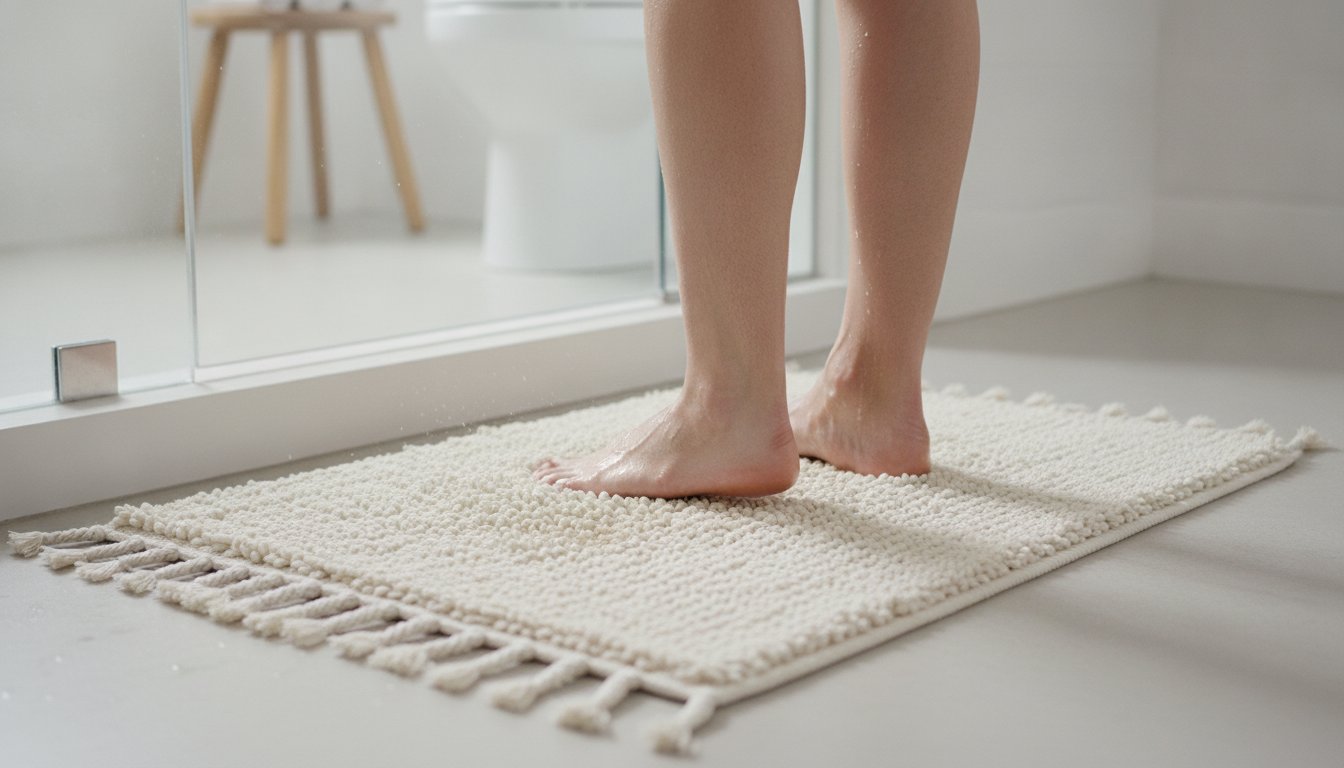
An absorbent bathroom door mat helps catch drips where they happen—right at the bathroom entry or just outside the shower—reducing wet footprints, protecting floors, and improving traction on slick surfaces. The right mat balances fast water uptake, quick drying, a stable backing, and easy cleaning so it stays fresh with daily use.
Bathrooms are high-splash zones, and water that escapes the room can quickly turn into slippery spots and floor damage over time. An absorbent bathroom door mat is built to intercept that moisture at the threshold—before it spreads.
For broader bathroom safety guidance, consumer-safety resources like the U.S. Consumer Product Safety Commission (CPSC) bathroom safety tips and the CDC home fall-prevention checklist highlight traction and trip-risk reduction as practical upgrades.
Not every bath mat performs the same at a doorway. The best options are designed for quick water pickup, stable footing, and easy day-to-day care—especially in smaller bathrooms where mats need to dry fast.
| Feature | Why it matters | What to look for |
|---|---|---|
| Absorbency | Reduces wet footprints and puddles | Dense, water-grabbing surface; feels dry quickly after stepping |
| Drying speed | Helps prevent damp odors | Breathable construction; not overly thick for the space |
| Grip/backing | Improves stability on smooth floors | Non-slip backing; stays flat without curling |
| Thickness | Door clearance and safety | Low to medium profile; edges that lie flat |
| Size | Catches more drips | Wide enough for a full step; fits the doorway or shower exit area |
| Cleaning | Hygiene and longevity | Machine washable or easy to rinse; color that hides everyday wear |
“Door mat” placement is only one option. Where the first drips land is often the smartest place to start—then expand coverage where splashes and traffic add up.
A helpful rule: if a spot regularly shows footprints, water beads, or damp grout lines, it’s a good candidate for targeted mat coverage.
Absorbent mats do their job best when their fibers stay open and the backing stays flat. Simple maintenance keeps absorbency high and reduces odors.
If you want a straightforward upgrade for everyday water control, an Absorbent Bathroom Door Mat is designed to help manage drips at bathroom thresholds and shower exits, improving cleanliness and reducing slippery spots. It’s a practical pick for apartments, dorms, and guest baths where easy maintenance matters and the floor can get wet quickly during peak routines.
For households trying to streamline busy mornings overall, the Calm at Work: Smart Strategies to Manage Stress and Boost Focus digital guide can complement small home upgrades by helping routines feel less rushed and more organized.
For daily-use bathrooms, weekly washing is common; wash more frequently if it stays damp, gets heavy foot traffic, or is used by kids or pets. Always dry it fully to help prevent lingering odors.
Yes, it can work well on tile, but stability depends on the backing and floor condition. Place the mat on clean, dry tile so it lies flat and grips better.
Choose a size that fits the doorway area and allows at least one full step with both feet on the mat. That coverage catches most drips before they travel into nearby rooms.


Leave a comment