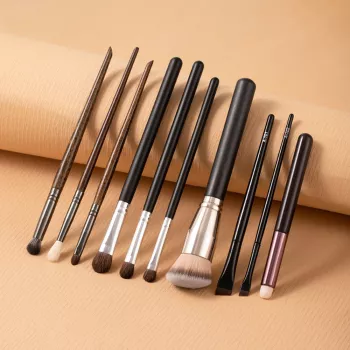
A well-rounded brush kit can make makeup application faster, more even, and easier to blend—especially when it includes essential shapes for face and eyes. This 10-piece synthetic set focuses on versatile, low-fuss brushes that work with liquids, creams, and powders while staying soft on skin. When your tools cover both placement and blending, it’s easier to keep coverage smooth, cheeks lifted, and eye looks clean without overworking the product. For more guidance, see 4 Best Makeup Brushes of 2026, Tested by Experts.
Synthetic fibers are a go-to choice for modern makeup routines because they’re flexible across product types and generally simpler to maintain. They can be especially helpful if you use liquid foundation, cream blush, or cream bronzer often. For further reading, see Fur-Free, Cruelty-Free Makeup Brushes.
For skin and product safety, it also helps to follow basic hygiene habits recommended by authoritative sources like the American Academy of Dermatology Association and the FDA’s cosmetics safe-use tips.
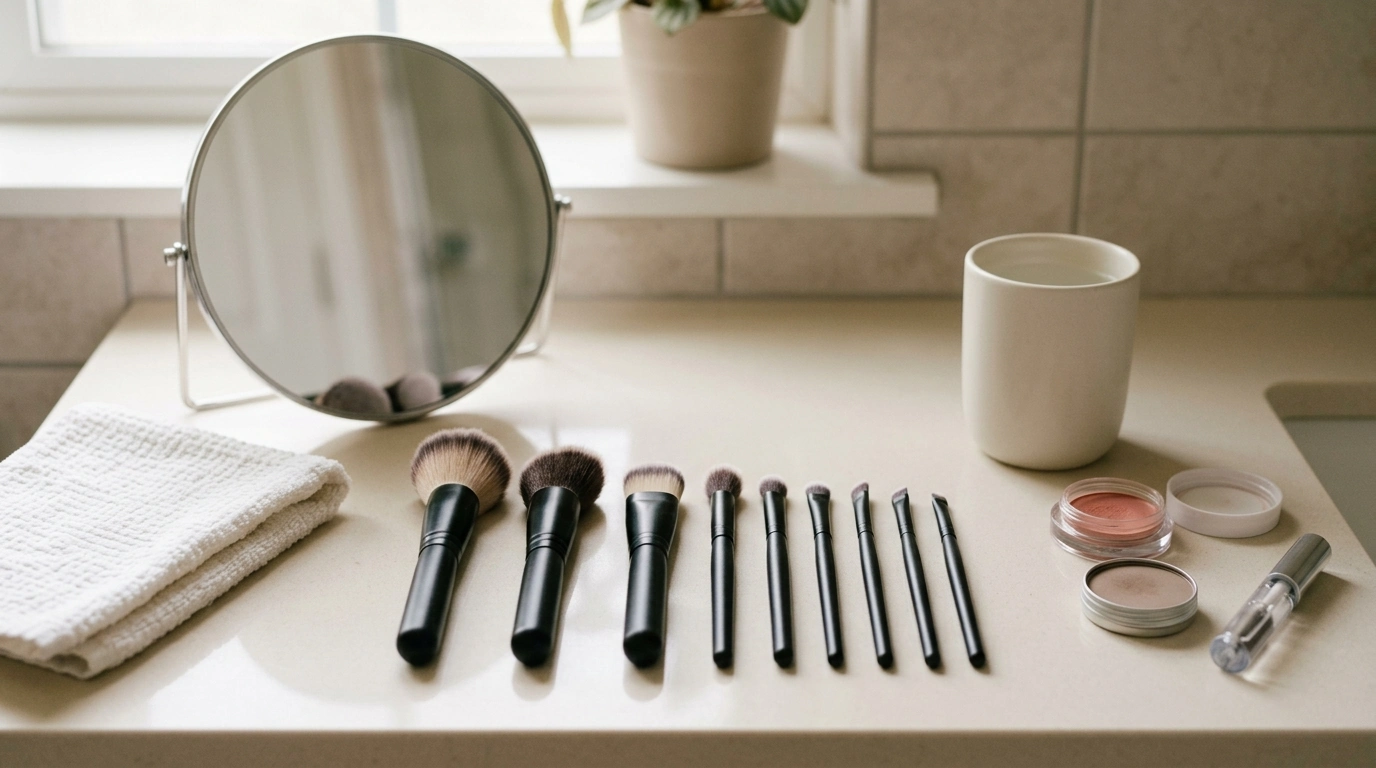
In a typical 10-piece set, face brushes handle base, setting, and cheek color, while eye brushes cover lid placement, crease blending, and detail work. If the handles aren’t labeled, brush shape is the easiest way to match a tool to the task.
| Brush shape | Best for | Works best with | Tip for a smoother result |
|---|---|---|---|
| Dense flat or rounded face brush | Foundation or buffing base | Liquid/cream | Use thin layers and stipple first, then lightly buff |
| Small dense brush | Concealer and spot coverage | Liquid/cream | Press product in; avoid sweeping over texture |
| Fluffy powder brush | Setting powder | Loose/pressed powder | Tap off excess; press then lightly sweep |
| Angled cheek brush | Blush/bronzer/soft contour | Powder/cream | Place color higher on cheeks for a lifted look |
| Fan or tapered highlight brush | Highlighter | Powder/cream | Use minimal product; build slowly on high points |
| Flat shader eye brush | Packing lid color | Powder/cream | Pat instead of swiping to reduce fallout |
| Fluffy blending brush | Blending crease/edges | Powder | Blend with small circles then windshield wipers |
| Small detail brush | Inner corner/outer corner details | Powder/cream | Use the tip to place, then soften with a clean blender |
| Angled liner/brow brush | Gel liner or brow definition | Cream/gel/powder | Wipe frequently for sharper lines |
| Smudge brush | Soft liner and smoky effect | Cream/powder | Smudge first, then refine edges with concealer |
With a compact brush lineup, the goal is simple: even out the complexion, add quick warmth and color, and define the eyes without turning blending into a long project.
If you tend to run late, keeping a dedicated “final blend” brush clean and dry can make the entire look feel more polished in under 20 seconds—especially around the edges of bronzer and the crease.
Synthetic brushes can move product efficiently, so a lighter hand often gets a more skin-like result. Think “place first, then perfect.”
Yes—synthetic fibers often work especially well with liquids and creams because they typically absorb less product. For the smoothest finish, apply in thin layers, stipple to place coverage, then lightly buff the edges, and clean the brush more frequently.
As a practical baseline, wash liquid/cream face brushes 1–2 times per week, clean eye brushes weekly (or sooner when switching shades), and wash powder-only brushes every 1–2 weeks. Let them dry fully with the bristles shaped and angled downward or laid flat.
It can, but the colors may muddy—especially if you go from bronzer to blush. For cleaner placement, tap out excess, wipe the brush on a clean towel between steps, or dedicate separate brushes when possible.



Leave a comment