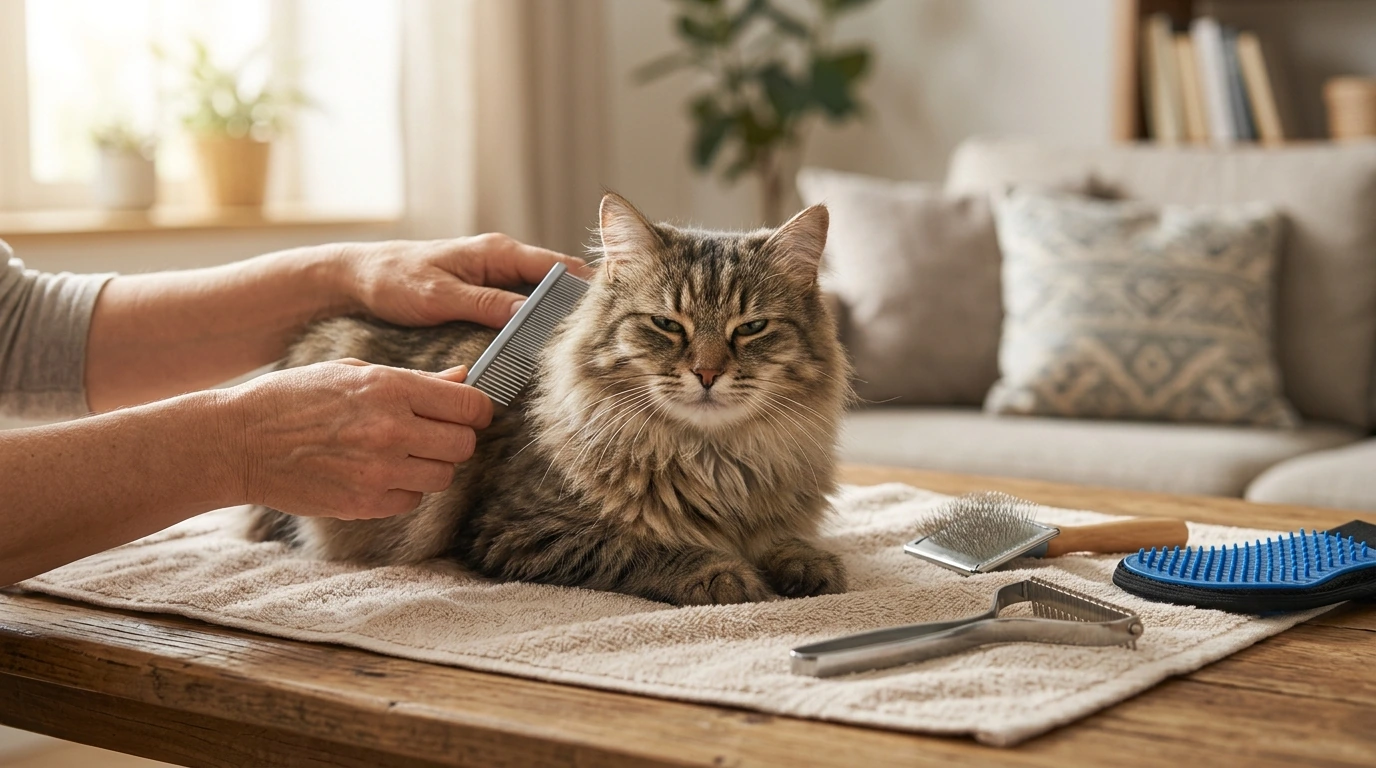
A cat’s coat type—more than the breed name—determines how often to brush, what tools to use, and which problems to watch for. Some cats mainly need quick, calming de-shed sessions, while others require daily line-combing to prevent painful mats. Below is a practical, coat-first approach to building a routine that reduces shedding, supports healthy skin, and keeps grooming low-stress for both of you.
Breed can hint at coat traits, but it’s the actual coat length, density, and texture that drives grooming needs. A “shorthaired” cat with a dense undercoat may shed and tangle more than a longhair with a silky, low-undercoat coat.
Use the schedule below as a baseline, then adjust for seasonal sheds and your cat’s comfort. If brushing is a struggle, keep sessions short (2–5 minutes), reward immediately, and build up slowly over time.
Always check friction zones where tangles form first: behind the ears, under the collar area, armpits, belly, inner thighs, and the base of the tail.
| Coat category (often seen in breeds) | Typical examples | Brushing goal | Suggested frequency | Best tools |
|---|---|---|---|---|
| Short, sleek single coat | Domestic Shorthair, Siamese-type coats | Lift loose hair and distribute oils | 1–2×/week (daily during shedding) | Rubber curry, soft bristle brush |
| Dense plush / double coat | British Shorthair, Russian Blue-type coats | Remove undercoat before it packs | 2–4×/week (daily during sheds) | Slicker (gentle), stainless comb, undercoat rake (light touch) |
| Medium coat | American Shorthair mixes, many mixed-breeds | Prevent small tangles from becoming mats | 2–3×/week | Slicker + metal comb finish |
| Long, fine coat prone to mats | Persian-type, longhair mixes | Prevent mats; keep coat separated to the skin | Daily (5–10 minutes) | Wide-to-fine metal comb, slicker, detangling spray |
| Long, silky low-undercoat | Ragdoll-type coats | Reduce knots without breaking hair | 3–5×/week | Wide-tooth comb, pin brush, slicker for problem spots |
| Curly/wavy coat | Rex-type coats | Protect delicate hair; avoid over-brushing | 1×/week or as needed | Soft bristle brush, grooming glove |
| Hairless / minimal coat | Sphynx-type | Manage skin oils and debris | Wipe 2–3×/week; bathe every 1–2 weeks as tolerated | Soft cloth, fragrance-free pet wipes, gentle cat shampoo |
For a deeper routine you can follow week-to-week, consider the digital guide Cat Grooming by Breed: The Ultimate Guide to Caring for Your Cat’s Coat.
Coat categories explain most grooming needs, but certain breed-associated traits can shift your routine:
Mats tighten quickly and can trap moisture, debris, and pain against the skin. Early action is kinder and safer.
For general grooming guidance and safety tips, the ASPCA’s cat grooming overview is a helpful reference.
For more on hairballs and when they’re a concern, see VCA Hospitals’ hairball guide. For broader feline health education, the Cornell Feline Health Center is a strong resource.
If grooming time feels stressful for you as well, a simple planning and calm-down routine can make sessions more consistent. The digital resource Calm at Work: Smart Strategies to Manage Stress and Boost Focus can help you build steadier habits that carry over into at-home care routines.
Use 1–2 minute sessions daily with a grooming glove or soft brush and reward immediately. Gradually add time as tolerance improves, and focus on high-tangle zones before they mat.
Yes—indoor cats still shed and can mat, and dry indoor air can worsen dandruff. Outdoor cats often need extra checks for debris and parasites, but both benefit from consistent brushing.
If the mat is tight to the skin, widespread, painful, or located in sensitive areas like the armpits, groin, or belly, professional grooming or veterinary help is safer than trying to cut it out at home.







Leave a comment