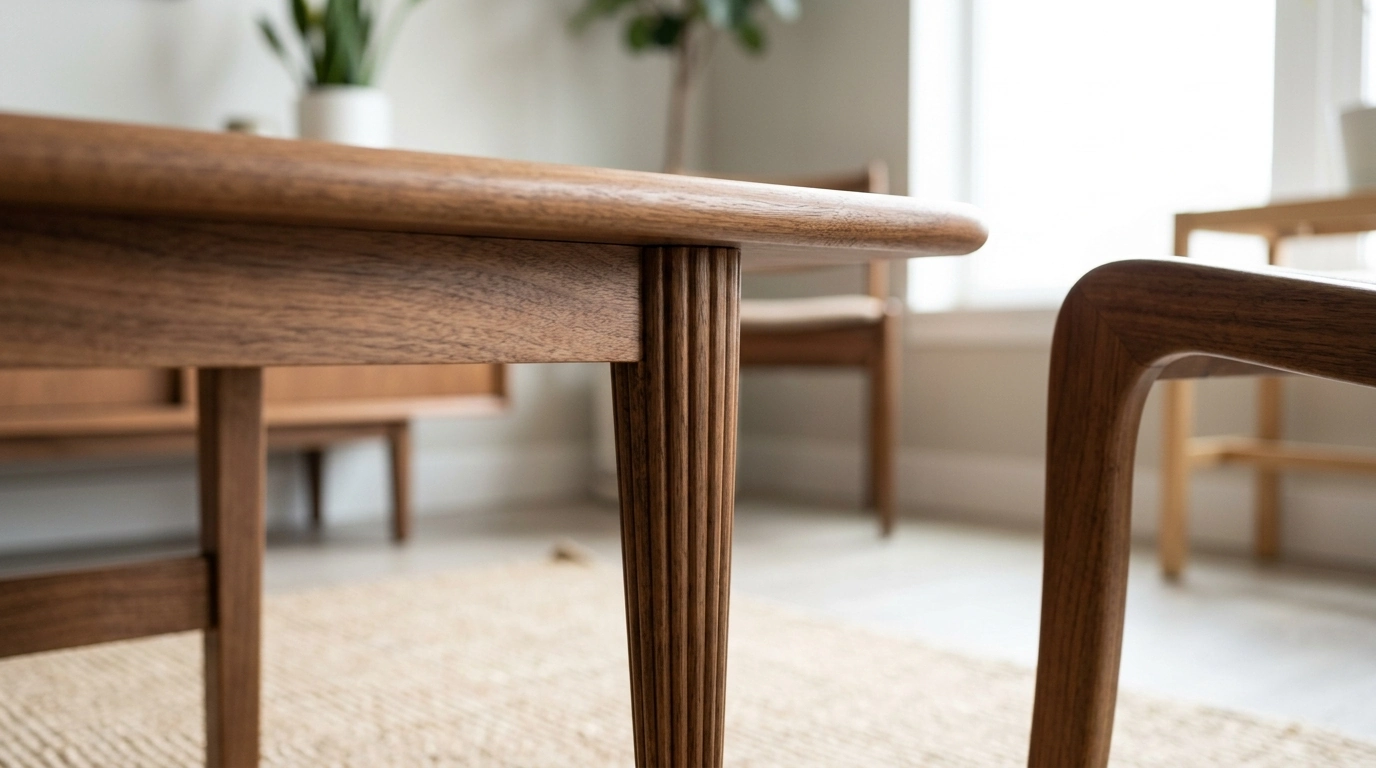
Fluted furniture can fit mid-century modern style, but it isn’t automatically mid-century modern on its own. Traditional mid-century modern (roughly the 1940s–1960s) is defined by clean lines, warm woods like walnut or teak, tapered legs, and a light, uncluttered silhouette. Fluting—those repeating vertical grooves—works beautifully with those traits because it adds texture without feeling fussy.
That said, fluting shows up across many design eras. You’ll see it in Art Deco-inspired pieces, contemporary minimalist furniture, and even classic European looks. The difference comes down to the overall form: a low, streamlined dresser with slender legs and simple hardware reads mid-century; a heavier case with ornate pulls or a more traditional profile leans away from it.
Use a few quick checkpoints:
If a fluted dresser is already modern but not strongly mid-century, styling can push it in that direction. Pair it with a simple round mirror, a ceramic lamp with a clean shade, and a few sculptural accents. Keeping decor sparse helps the grooves stand out as a refined detail instead of visual noise.
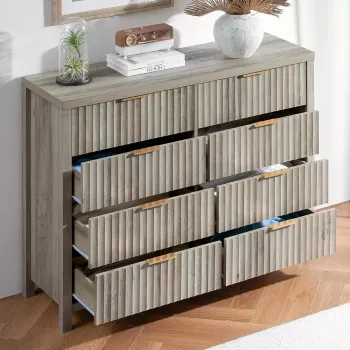
For a practical example of how fluting reads in a modern, calm storage piece, see this guide to a modern fluted 7-drawer dresser.
For Fluted Furniture & Mid-Century Modern: How to Tell, the best answer depends on fit, material, care instructions, and how the product will be used day to day.
Fluted furniture pairs easily with mid-century modern, contemporary, Japandi, and light Art Deco looks because the grooves add texture while staying structured. The key is matching the piece’s shape and finish to your room’s overall vibe.





Leave a comment