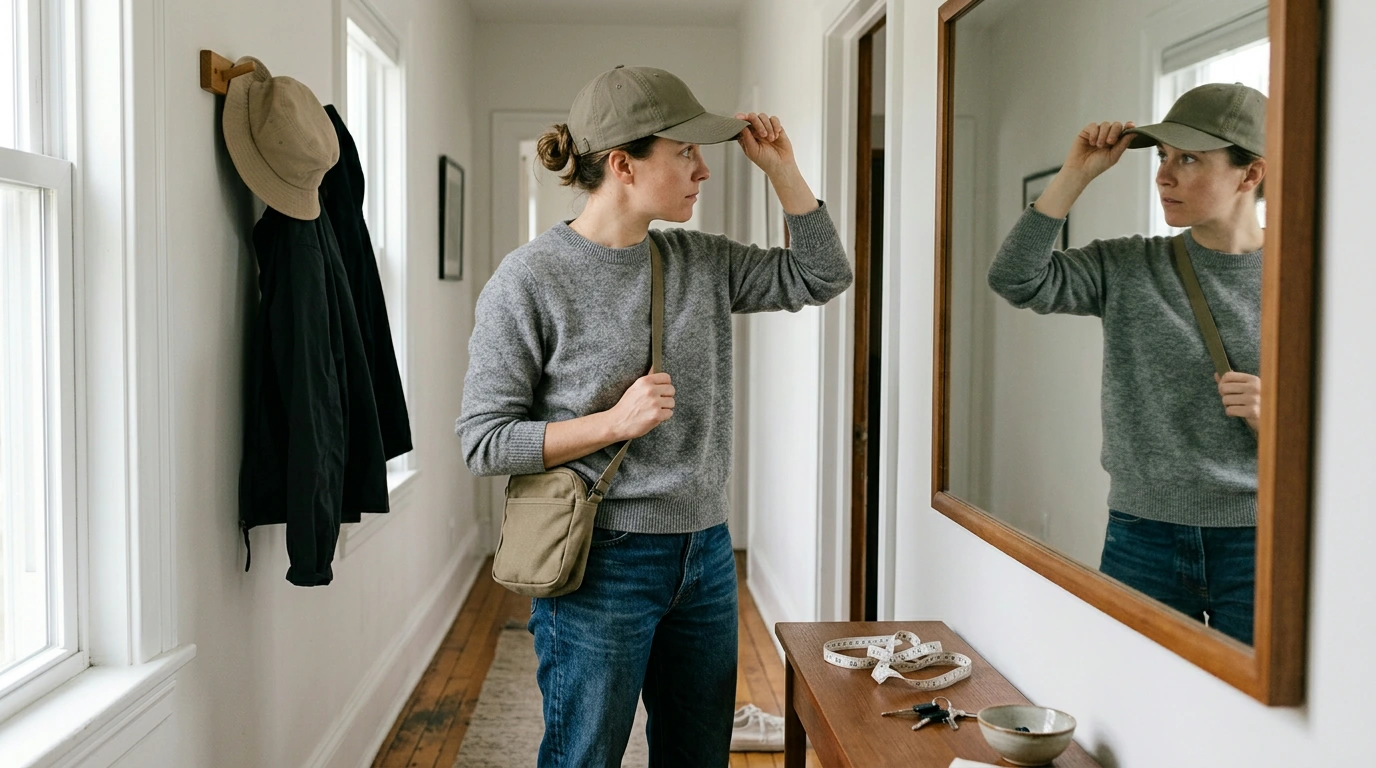
Wearing a hat can feel “too much” if it’s not part of a normal routine—but most hat discomfort comes from a few fixable issues: the wrong size, the wrong brim for the face, or pairing it with outfits that compete for attention. The goal isn’t to turn into a “hat person” overnight. It’s to make the hat look intentional, feel comfortable, and work with the clothes already in rotation. For more guidance, see Hat Styling Guide – How to Find a Hat That Suits You.
If you want a quick, printable version of the process, this digital checklist is built for everyday use: Hat Styling Made Easy for Non-Hat People | Simple Checklist Guide for How to Style a Hat If You’re Not a Hat Person. For further reading, see The Man in the Hat: Mastering Men’s Hat Style – Agnoulita Hats.
Fit is the difference between “effortless” and “I’m aware of this on my head every second.” Start by measuring your head circumference with a soft tape around where the hat will sit—typically just above the eyebrows and ears. The right fit should feel secure but not tight; if you’re getting a deep red mark or a headache, the size (or shape) is wrong.
Do a stability check: nod yes/no and look down. The hat should stay in place without painfully gripping. If it’s slightly big, sizing tape or foam strips can fine-tune the fit. If it’s too small, don’t force it—size up. Also factor in hair: hats fit differently on freshly washed hair versus styled hair, so test the fit with your usual routine.
| Check | What to do | Good sign | Fix if not |
|---|---|---|---|
| Forehead pressure | Wear for 2 minutes indoors | No headache, light contact | Size up or add sizing tape to a larger size |
| Slip test | Tilt head forward | Hat stays put | Choose deeper crown or add grippy sizing strips |
| Ear clearance | Look in mirror from side | Sits above ears without bending them | Try a different crown shape or adjust placement slightly back |
| Vision line | Look straight ahead | Brim doesn’t block eyes | Tilt slightly back or choose a smaller brim |
The easiest hats to wear are the ones that don’t demand a whole new outfit personality. For minimal styling effort, a classic baseball cap pairs with most casual looks and can be worn slightly relaxed (not perched on the very top of the head). If you want elevated casual, a structured cap or clean, unbranded cap reads intentional without feeling like a costume.
For sun and travel, bucket hats and packable wide brims offer coverage with an easygoing vibe—especially in neutrals that don’t compete with your outfit. Save fedoras and dramatic wide-brim felt hats for later; they can look great, but they usually require stronger coordination and more confidence in proportion.
A helpful shortcut: choose one “default” hat that matches at least 70% of your wardrobe. For most closets, that’s black, navy, tan, or denim. If sun coverage is your main goal, the Skin Cancer Foundation’s guidance on sun-protective clothing is a solid reminder that shade for your face and scalp is practical—not extra.
Hats look “off” most often when the formality levels clash. Casual hats (caps, beanies, buckets) generally look best with casual-to-smart-casual clothes: tees, denim, casual button-downs, relaxed knits, and sneakers or boots. Mixing extremes—like a formal felt hat with athletic wear—can work, but it’s harder to pull off early on unless it’s deliberately styled.
Use one anchor principle: if the hat is bold (bright color, strong logo, unusual texture), keep the rest of the outfit quiet. If the outfit is already patterned or layered, choose a solid, simple hat. To make a hat look planned, repeat a color by matching it to shoes, a belt, a bag, or even a stripe in a shirt. When you’re stuck, monochrome is reliable: a black hat with a black/charcoal outfit reads clean and intentional.
If you like structured routines for building new habits (style included), a similar “small steps” approach can help with other daily resets: Calm at Work: Smart Strategies to Manage Stress and Boost Focus | Digital Guide for Professionals | How to Manage Stress at Work eBook & Checklist.
Start with a neutral everyday style (often a clean cap or simple bucket), confirm fit and comfort, then match the hat to one color in your outfit. Keep the rest of the look simple so the hat feels intentional.
Black, navy, tan, and denim are the easiest go-with-most options. Choose the one that matches the majority of your shoes, jackets, and bags so it integrates naturally.
It should feel secure without squeezing, sit just above the eyebrows (adjust slightly as needed), and stay on when you look down. If it’s slightly big, use sizing tape; if it’s too small, size up.




Leave a comment