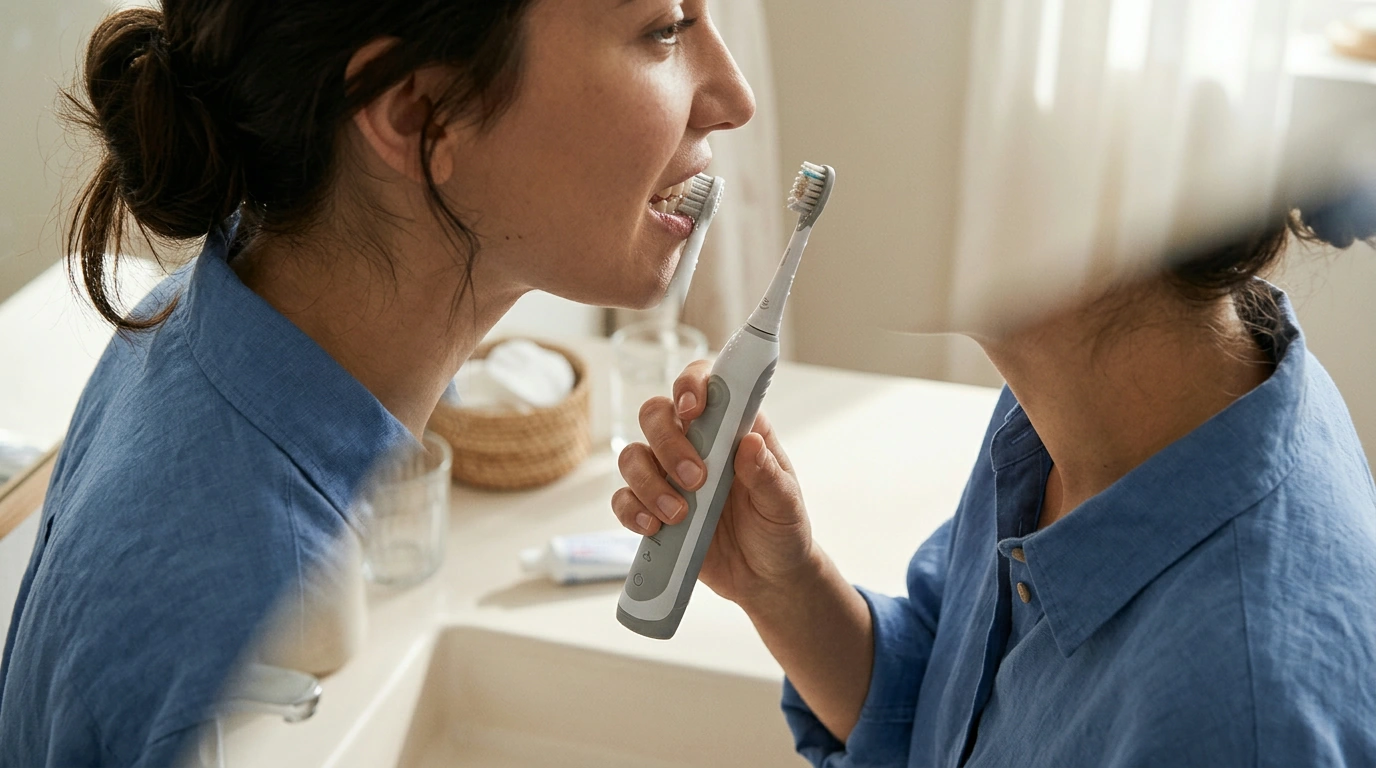
Sometimes—but it’s important to understand what “whitening” means on most electric toothbrushes. A whitening mode typically changes the brushing pattern (speed, pauses, or intensity) to help remove more surface stains from coffee, tea, wine, and smoking. That can make teeth look brighter by polishing away discoloration sitting on the enamel.
What it usually can’t do is change the natural color of your teeth or lift deeper, internal stains. For that, you generally need peroxide-based whitening products (like strips, trays, or in-office treatments). So the whitening setting can help with stain removal, but it won’t deliver the same shade change as true bleaching.
Whitening settings are often designed around stain-focused cleaning rather than overall plaque removal. Common features include:
If your tooth “whiteness” is mostly dulled by surface stains, this can be noticeable within a couple of weeks of consistent brushing.
If teeth look yellow because enamel is thin, dentin is naturally darker, or staining is internal (from medication, trauma, or aging), a whitening mode won’t reach the cause. Also, tartar (hardened plaque) can look dark and cannot be brushed off—only a professional cleaning removes it.
Use a gentle whitening toothpaste a few times per week, keep pressure light, and replace brush heads on schedule. If sensitivity shows up, switch to a sensitive mode and talk to a dentist before adding strong whitening products. For a deeper breakdown of brush modes and what they’re designed to do, see the main guide here: https://exelline.com/guide-5-mode-type-c-electric-toothbrush-whitening-deep-clean/.
They do different jobs: whitening modes focus on polishing action, while whitening toothpastes use mild abrasives and/or low-level ingredients to help lift surface stains. Using a whitening mode with a gentle toothpaste often works better than relying on either one alone.






Leave a comment