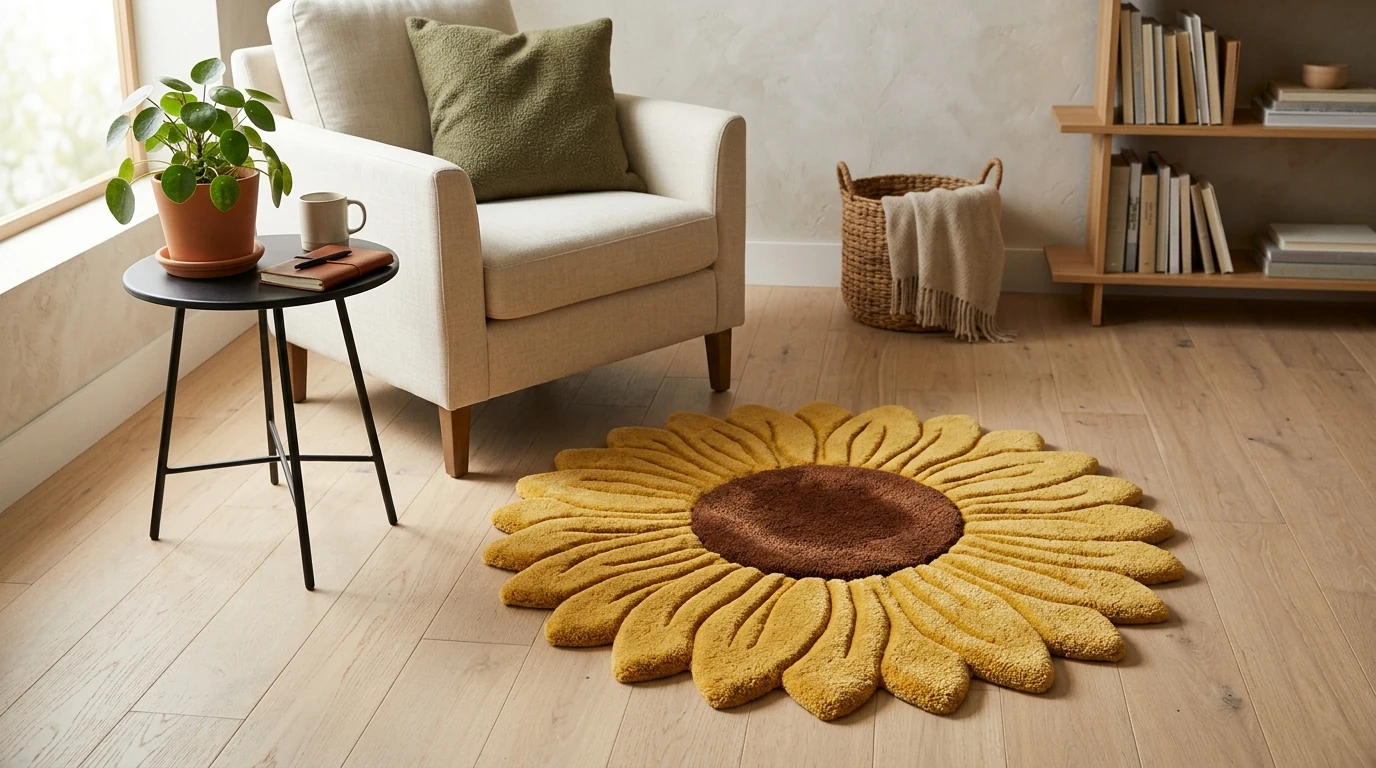
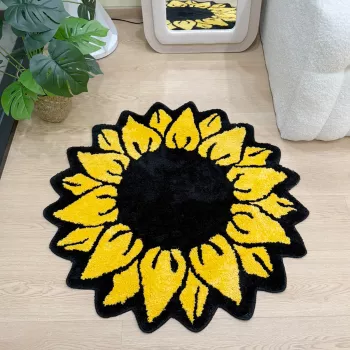
A sunflower tufted rug adds an instant pop of color and a soft, cushioned feel underfoot. With its raised pile and playful floral shape, it can act as the focal point in a room or a small accent that lifts the mood of an entryway, bedroom, or reading nook. If the goal is to make a space feel more welcoming without changing the walls or buying new furniture, a sunflower motif does a lot of work in a small footprint.
Tufted rugs are made by punching yarn through a backing to create a dense, plush pile. That construction gives them a “springy” feel that’s especially satisfying in cozy, lower-traffic rooms where bare feet are common.
Because a sunflower rug is bold by nature, the best styling approach is to make the rug feel intentional—like a design “moment”—rather than one more busy pattern competing for attention.
Think of a sunflower tufted rug as an accent piece: it’s happiest where it can be seen and enjoyed, without getting constantly scuffed or pinned under heavy furniture.
| Space | Best placement | Tip |
|---|---|---|
| Entryway | Centered away from the door swing | Use a non-slip pad to prevent shifting. |
| Bedside | One side or both sides of the bed | Leave 6–12 in of breathing room from walls. |
| Reading nook | Under a chair’s front legs | Keep the sunflower centered under the seating area. |
| Kids’ area | Open floor play zone | Vacuum regularly to keep the pile looking fresh. |
A tufted pile usually has a soft bounce that works well for casual lounging and low-stress, barefoot areas. In brighter rugs, the direction of the fibers can also affect how the color reads across the surface—sometimes it looks slightly lighter or darker depending on which way the pile is laying.
Tufted rugs are generally easy to live with when you keep up with light maintenance. The key is to remove dust gently, treat spills quickly, and avoid harsh scrubbing that can rough up the pile.
For deeper cleaning guidance and best practices, see the Carpet and Rug Institute and this practical overview from Good Housekeeping.
It’s better as an accent or moderate-traffic piece. If you use it in a hallway, add a rug pad for stability and vacuum often, placing it where shoes and door edges won’t constantly scuff the pile.
Blot immediately with a clean cloth, then spot-clean with mild soap and cool water. Avoid rubbing, test any cleaner in a hidden area first, and let the rug dry completely before putting it back down.
A non-slip pad is strongly recommended for grip and added cushioning, especially on smooth floors. It also helps reduce backing wear and keeps the rug lying flatter over time.



Leave a comment