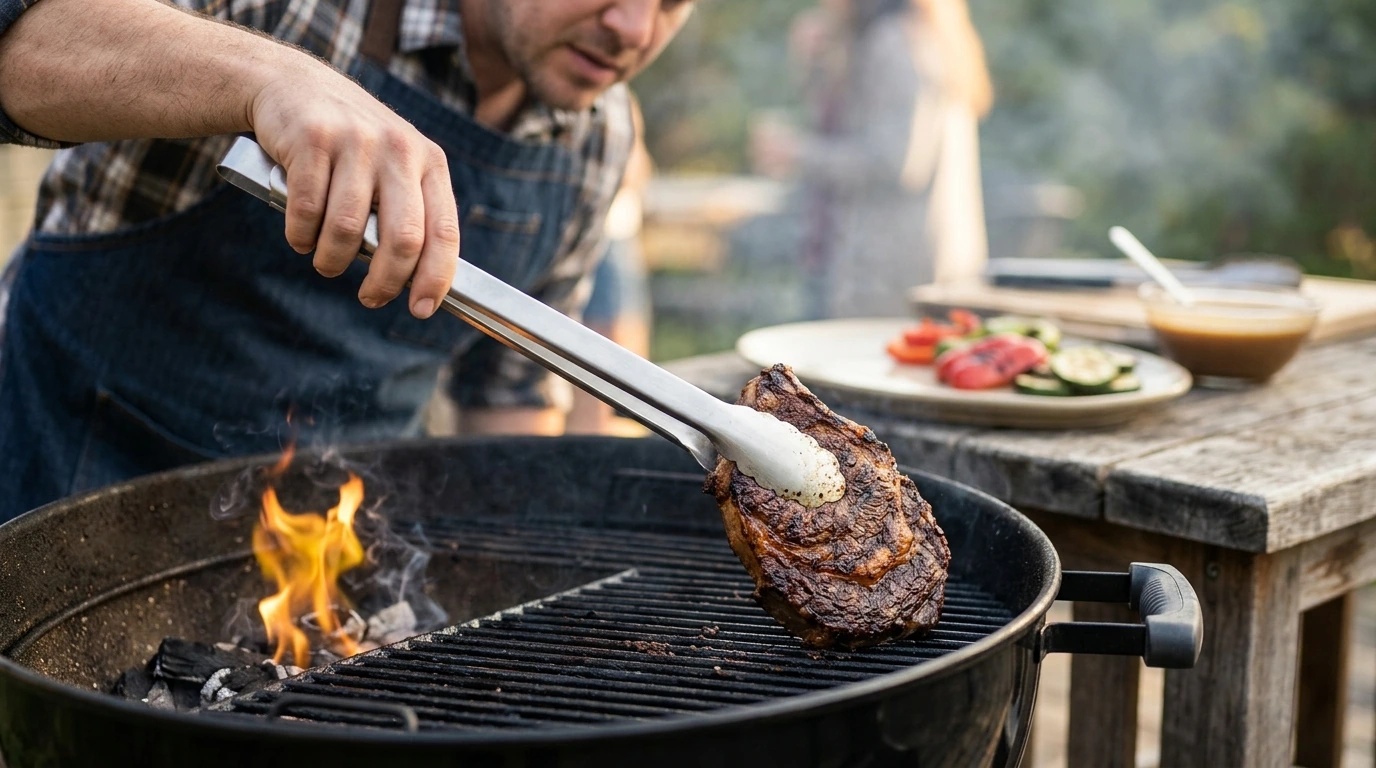
Good tongs make cooking feel controlled: turning steaks without tearing the crust, moving hot food without slipping, and serving cleanly at the table. 304 stainless steel steak tongs are built as a versatile kitchen clamp for grilling, pan-searing, and buffet-style serving, with a focus on grip, heat resilience, and easy cleanup. Whether you’re working over open flame or plating dinner indoors, the right set of tongs helps you handle food with confidence—without poking holes, crushing delicate edges, or getting too close to the heat.
Steak tongs shine when you need a firm hold without piercing food. Instead of stabbing with a fork or wrestling with a spatula, you can clamp, lift, and turn with a clean grip that keeps the surface intact.
| Task | How to use the tongs | Tip for best results |
|---|---|---|
| Flip steaks on a grill | Grip the steak from the side and turn in one smooth motion | Wait until a crust forms so the meat releases cleanly |
| Move vegetables on a sheet pan | Pinch individual pieces or small clusters and reposition | Use gentle pressure to avoid crushing softer vegetables |
| Serve pasta | Clamp a small bundle and lift to the plate | Pause briefly over the pot to drain excess water or sauce |
| Lift hot bread or rolls | Grip lightly at the edge and transfer | Avoid squeezing to keep crust intact |
| Handle bacon or sausages | Turn pieces frequently for even browning | Keep a small dish nearby for finished items to reduce overcooking |
Not all “stainless” is the same. 304 stainless steel is a common choice for kitchen tools because it balances strength with corrosion resistance, making it a dependable material for repeated cooking and washing cycles.
On a hot grill, control is safety. Tongs give you reach and precision—especially when fat renders and flare-ups happen quickly.
For cookout basics—like keeping raw and cooked foods separate and using clean tools—review guidance from the USDA Food Safety and Inspection Service and the U.S. Food & Drug Administration.
Stainless steel is low-fuss, but a few habits keep it looking clean and working smoothly.
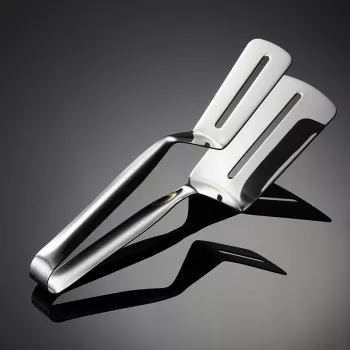
A practical choice for everyday grilling and serving: 304 Stainless Steel Steak Tongs – Versatile Kitchen Clamp for Grilling. It’s a straightforward, budget-friendly upgrade for turning and lifting meats and vegetables while keeping your hands farther from the heat.
| Item | Details |
|---|---|
| Product | 304 Stainless Steel Steak Tongs – Versatile Kitchen Clamp for Grilling |
| Material | 304 stainless steel |
| Price | 9.01 USD |
| Availability | In stock |
Yes—stainless steel is well-suited to high-heat grilling and searing. Keep your hand positioned back from direct flame and use the tool’s reach to stay away from flare-ups.
Stainless steel tongs generally handle higher heat and are a strong match for grilling and cast iron searing. Silicone-tipped tongs are often gentler on nonstick cookware, but they’re not always ideal near extreme direct heat.
Wash them with hot, soapy water as soon as you’re done handling raw meat, then dry thoroughly. To reduce cross-contamination, use separate tongs for raw and cooked foods or wash between steps.




Leave a comment