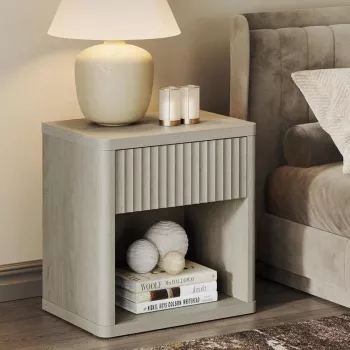
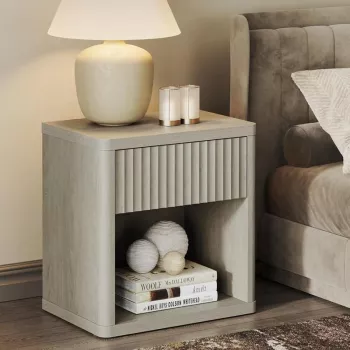
A wide nightstand helps a bedside setup feel intentional: enough surface area for a lamp, book, water, and devices—without balancing items on the edge. This style pairs a closed drawer for visual calm with an open compartment for grab-and-go storage, keeping essentials accessible while reducing countertop clutter.
If you’re upgrading a modern bedroom or trying to make a large bed feel properly “anchored,” a wide profile can deliver both function and proportion. For a streamlined option that blends hidden storage with an easy-access cubby, see the Modern Wide Nightstand with Drawer Storage and Open Compartment.
Wide nightstands are popular for a reason: they make daily routines smoother while keeping the bedside area looking composed.
For households with kids or high-traffic bedrooms, stability is more than aesthetics. Furniture placement and anchoring guidance from the CPSC furniture tip-over resources can help you set up a safer space, especially if you keep heavier items in the drawer.
The most livable nightstands typically do two things at once: hide small clutter and keep a few essentials within reach. The drawer-and-cubby combination is ideal for that “quiet” modern look.
| Zone | Best for | Examples |
|---|---|---|
| Top surface | Daily reach items | Lamp, coaster, phone, glasses tray, water |
| Drawer storage | Small items and backups | Chargers, medications (if appropriate), lip balm, notebook, spare cables |
| Open compartment | Quick-access or larger items | Books, tablet, tissue box, small basket, sleep accessories |
A wide top gives you more design freedom, but modern rooms tend to look best when the styling stays restrained. Think of the surface as a “landing zone” first and decor second.
When the bedside area feels calmer, it’s easier to follow consistent wind-down habits. Small environmental cues—like clearing clutter—support good routines highlighted by the Sleep Foundation’s sleep hygiene guidance.
Before committing to a wide nightstand, a few measurements prevent common frustrations—like a drawer that bumps your bed frame or a surface that sits too low to use comfortably.
| What to measure | Target outcome | Why it matters |
|---|---|---|
| Mattress-top height | Nightstand top near the same height | Easier reaching for lamp/phone |
| Space beside bed | Enough room to stand and open the drawer | Comfort and daily usability |
| Cord routing path | A clean route to outlets | Less clutter and fewer tripping hazards |
| Open compartment needs | Fits your most-used item size | Prevents top-surface pileups |
If you’re sensitive to smells while sleeping, it can also help to air out new furniture in a ventilated room and follow indoor air recommendations like the EPA’s overview of VOCs in indoor air.
Use the drawer for small, clutter-prone items you don’t want visible—cables, earbuds, lip balm, notebooks, and (if appropriate) medications—ideally with a small organizer so items don’t mix. Use the open compartment for larger or frequently grabbed items like books, a tablet, a tissue box, or a basket that holds chargers.
A good width is one that looks proportional to the bed and still leaves enough clearance to stand comfortably and open the drawer fully. Measure the available space on each side, then choose a nightstand wide enough for your lamp and essentials without pushing you into a tight walkway.
Limit the top to a few daily-use items, and group small pieces on a tray or coaster so the surface reads as tidy. Keep the open compartment contained with a single basket/bin, and do a quick daily reset so clutter doesn’t accumulate.



Leave a comment