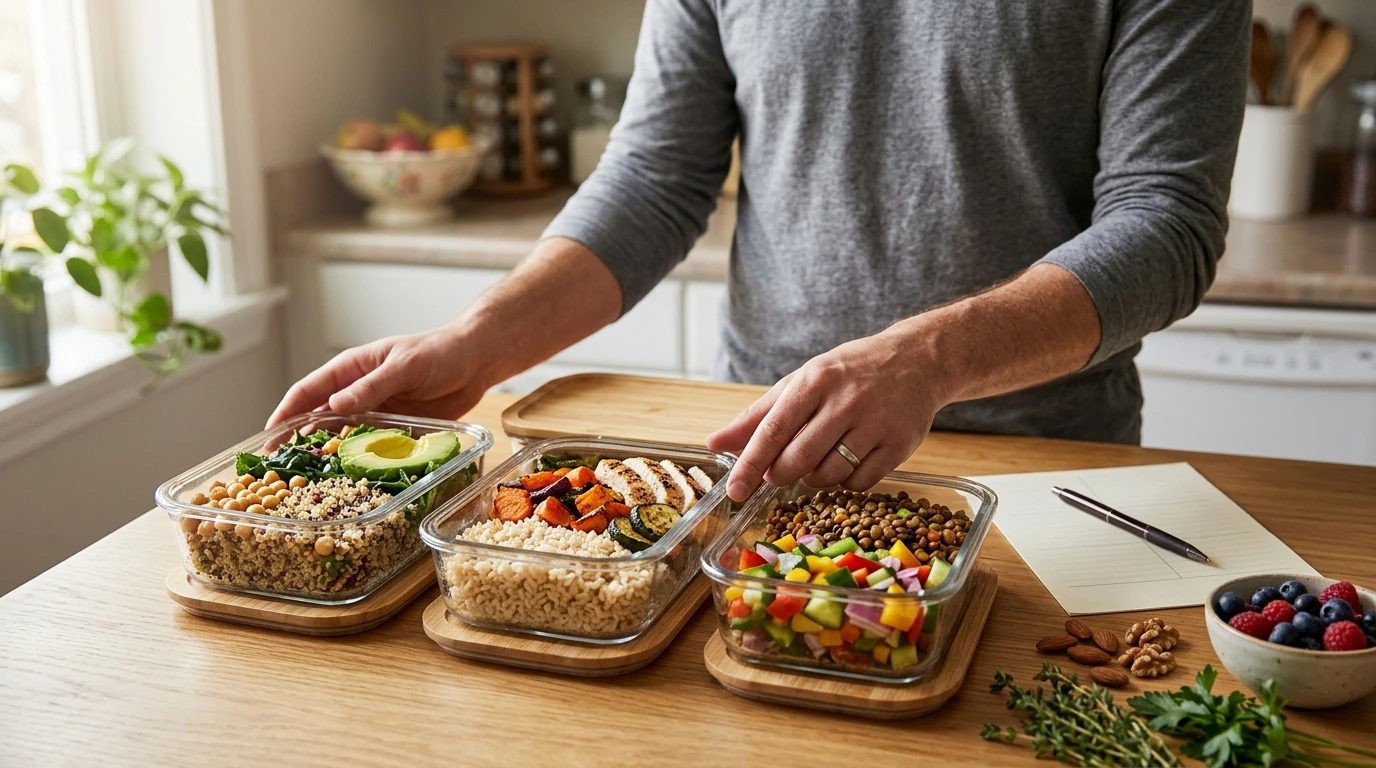
Mood-friendly eating doesn’t have to mean perfect meals or strict rules. A steadier mood often comes from steadier inputs: regular meals, balanced macronutrients, enough fiber, and a plan that reduces decision fatigue when energy is low. Our team put together a simple, repeatable meal-planning rhythm designed to support calm energy and emotional steadiness—plus an easy structure you can reuse week after week.
When you’re trying to feel more emotionally even, the “best” plan is the one you can keep doing on ordinary weeks. Here’s what we use as the north star:
If you want a one-page layout you can print and reuse, our team created How to Meal Plan for Steady Mood (Printable PDF eBook) to make the “what do we eat?” question easier on low-energy days.
Instead of hunting for the perfect recipe, build meals from a few reliable parts. You’ll get variety without starting from scratch every time.
| Meal type | Protein anchor | Fiber-rich carb | Healthy fat | Easy add-ons |
|---|---|---|---|---|
| Breakfast | Greek yogurt or eggs | Oats or fruit | Chia/flax or nut butter | Cinnamon, berries, granola (small) |
| Lunch | Chicken, tofu, or beans | Quinoa or whole-grain wrap | Olive oil or avocado | Greens, cucumber, hummus |
| Dinner | Salmon, turkey, lentils | Roasted potatoes or brown rice | Olive oil or tahini | Roasted vegetables, lemon, herbs |
| Snack | Cottage cheese or edamame | Apple or whole-grain crackers | Nuts/seeds | Dark chocolate square, cinnamon |
| “Rescue” meal | Rotisserie chicken or canned beans | Microwave rice or frozen sweet potato | Olive oil | Bagged salad, salsa |
We use a quick planning sprint that keeps decisions small and predictable:
When you keep your week steady, you’re less likely to rely on ultra-sugary fixes that can intensify energy swings. For context on added sugar, the American Heart Association’s guidance on added sugars is a helpful reference point.
| Day | Dinner plan | Leftover plan | Snack focus |
|---|---|---|---|
| Mon | Sheet-pan chicken + vegetables | Pack for Tue lunch | Protein + fruit |
| Tue | Grain bowl with beans, greens, avocado | Extra bowl for Wed | Fiber + fat |
| Wed | “Rescue” meal: eggs + toast + salad | — | Hydration + salty crunch |
| Thu | Salmon (or tofu) + rice + roasted broccoli | Pack for Fri lunch | Evening wind-down snack |
| Fri | Tacos with beans or turkey + slaw | Taco salad on Sat | Fun snack portioned |
| Sat | Free-choice night (use freezer/pantry) | — | Plan-ahead snack if out |
| Sun | Big-batch soup or chili | Freeze 1–2 portions | Prep snacks for Mon |
If you want the bigger picture on how food patterns connect to brain health, Harvard Health Publishing’s overview of nutritional psychiatry is a useful primer.
For a ready-to-use printable system, you can use our How to Meal Plan for Steady Mood digital guide. And if your dips show up most strongly during the workday, our team also recommends Calm at Work: Smart Strategies to Manage Stress and Boost Focus to pair meal routines with practical stress skills.
Start with 3–5 days so it feels doable, then expand to 7 once it’s easy. Repeats are helpful, and having 1–2 rescue meals prevents the plan from collapsing on busy nights.
Aim for protein + fiber (and optionally a little fat) to help you stay even: yogurt + berries, apple + nut butter, hummus + crackers, or edamame all work well. Eat it before your usual dip so you’re not trying to “catch up” when you’re already drained.
Yes—steady meals, planned snacks, and hydration can reduce mid-morning and mid-afternoon crashes that make focus harder. Pairing a simple food routine with a consistent break or reset habit can make your workday feel more manageable.







Leave a comment