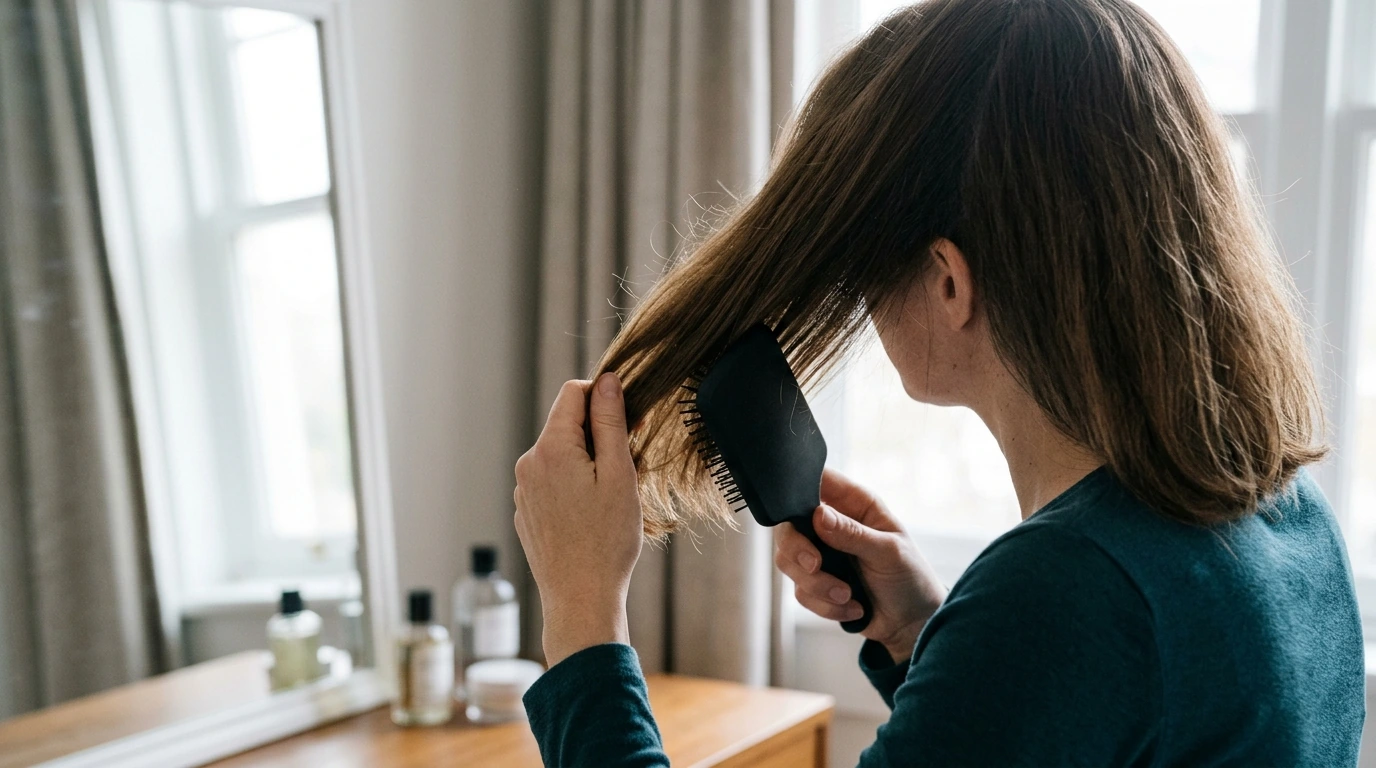
A brush can make an everyday routine feel easier when it suits the way you style your hair. Our Black Air Cushion Paddle Comb combines a broad brushing surface, an air-cushion design, and an anti-static feature. Whether you brush before heading out or gently work through tangles at night, the most important part of the routine is how you use it: start slowly, pay attention to resistance, and choose the right tool for the job.
A paddle brush covers a wider section of hair than a narrow brush. That can be useful when you want to smooth hair with steady, unhurried strokes rather than work through it strand by strand. Our air-cushion design is intended to provide a little give as the brush moves over your scalp. You can let the brush do its work without pressing hard.
The anti-static feature may help make flyaways less noticeable while you brush, particularly when dry indoor air is part of your routine. It is not a guarantee of a perfectly smooth finish: humidity, your hair’s condition, and the products you use all affect how hair looks afterward.
| Feature | What it means for your routine |
|---|---|
| Paddle shape | Brush broader sections with steady, unhurried strokes. |
| Air cushion | Use light pressure as the brush moves over your scalp. |
| Anti-static design | Consider it when flyaways are a familiar part of brushing. |
Begin at the ends of your hair, not at the roots. Take a manageable section and brush through its lowest few inches first. Once those ends move freely, work a little higher. Holding the section above a tangle can keep the pull from going straight to your scalp.
If the brush stops at a knot, stop too. Forcing it through can make brushing uncomfortable and put unnecessary strain on your hair. Try separating the knot gently with your fingers, then return to short, careful strokes. A wide-tooth comb or another detangling tool may be a better first step for a stubborn section.
Take particular care with wet hair. Your hair texture and condition matter, and a method that works well on dry hair may not feel right after washing. The American Academy of Dermatology Association’s hair-care tips offer guidance on gentle handling, including how to approach wet hair. If your brush catches or pulls, switch to a gentler method instead of adding pressure.
Once your hair is detangled, you can move the paddle brush across your scalp with light, controlled strokes. Think of this as a comfortable pause in your routine, not a vigorous scrub. You should not need to press down to feel the brush moving across your scalp.
Avoid brushing over irritated or broken skin. If a stroke hurts, ease up or stop; if brushing seems to cause shedding from pulling, change your technique rather than continuing. Scalp massage can be a pleasant part of grooming, but our brush is not a treatment for hair loss or a scalp condition. Persistent scalp discomfort deserves appropriate professional advice, not more brushing.
For a morning refresh, divide your hair into sections you can handle comfortably. Work through any tangles first, then use longer, gentle strokes to smooth each section and arrange your hair as you like. The anti-static design may be especially appealing when flyaways stand out in dry indoor air, though the finished look will still depend on your hair and surroundings.
In the evening, brush only as much as you need to loosen tangles and prepare for the next day. More strokes are not automatically better. If your hair is already comfortable and easy to manage, there is no reason to turn a quick tidy-up into a lengthy session.
Give the brush a little care, too. Remove trapped hair regularly so it does not collect between uses. Clean the brush according to its care instructions, and allow it to dry fully before putting it away. A simple upkeep habit makes it easier to pick up a clean brush when you need one.
If a broad brushing surface, an air cushion, and anti-static styling suit the way you brush, explore our Black Air Cushion Paddle Comb – Anti-Static Scalp Massage Hair Brush. It is listed at $22.97, subject to change. Choose it for the steps it can make more comfortable in your routine, while keeping a gentler detangling option close by when your hair calls for one.
We also know that an easier routine is not always about adding more styling steps. If you like setting aside a few minutes to reset before a busy day, our Calm at Work digital guide offers a separate resource for managing workplace stress and focus. Our team favors keeping both kinds of routines straightforward: use what helps, and skip what does not fit your day.
Use extra care with wet hair and follow guidance suited to your hair type. If the brush catches or pulls, switch to a gentler detangling method.
No. An anti-static design may help while brushing, but dryness, humidity, hair condition, and styling products also affect flyaways.
Keep pressure light and comfortable. Do not scrub, and stop if your scalp feels sore or irritated.






Leave a comment