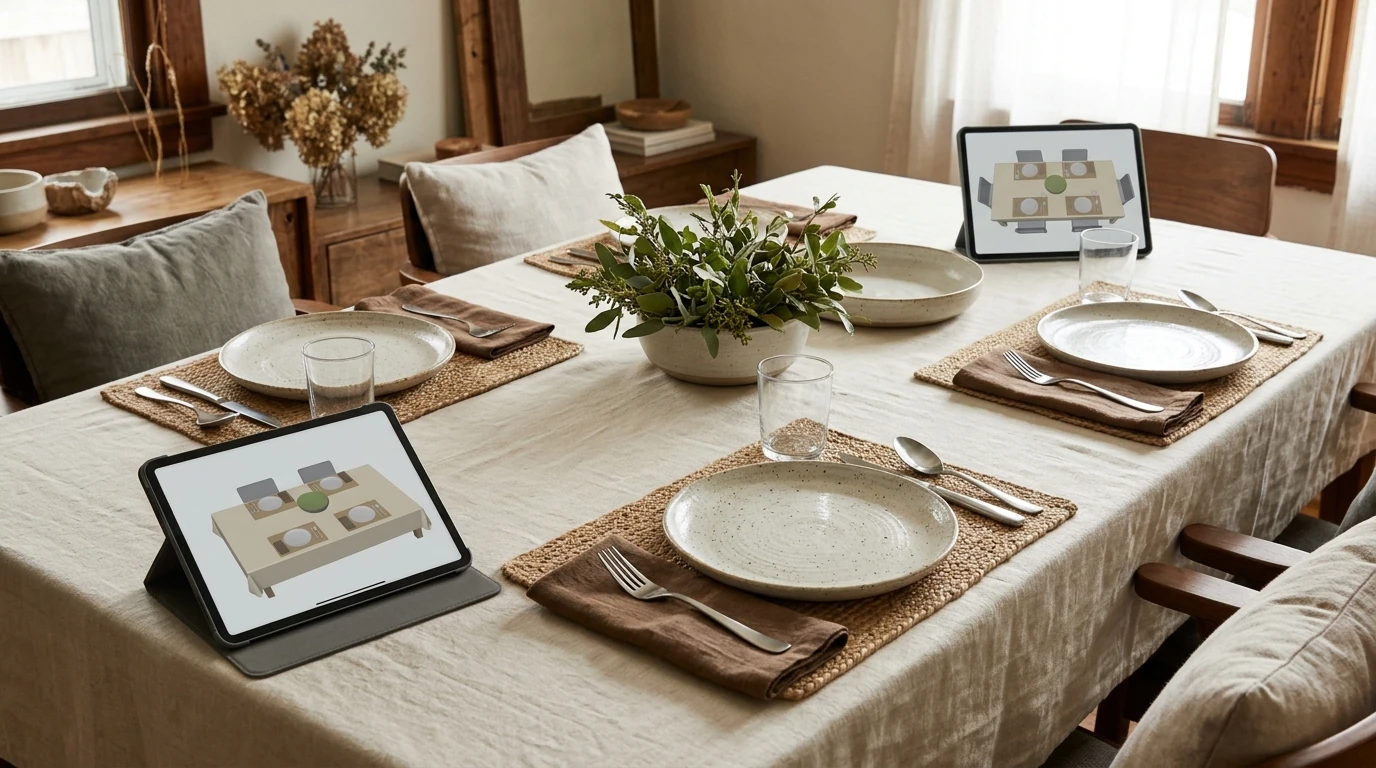
A cozy table starts before the plates come out. With a little planning, you can create a welcoming setting that leaves room for conversation, shared food, and the people gathered around it. Our approach begins with the mood you want, then turns those ideas into a practical arrangement you can adapt to your own space.
Before choosing decorations, consider the occasion and the number of guests. A relaxed dinner for four may call for a different arrangement than a lively seasonal meal with serving dishes in the middle. Pick two or three mood words, such as “warm,” “unhurried,” or “rustic,” to guide your choices.
Warm colors, layered textures, and one simple focal point can make a table feel inviting without making it crowded. Try a cream tablecloth with brown napkins, or pair woven placemats with the dishes you use every day. A low bowl of greenery can bring the look together while leaving guests able to see one another.
Start with what you already own. Mixing familiar plates, glasses, and linens can give the table personality, and a few useful accents are often enough to make it feel special.
Our AI-Powered Cozy 3D Table Layout digital guide is a digital download designed to help you organize a cozy styling idea with a checklist and guidance for describing a 3D layout. It can help you move from a general mood to decisions about settings, textures, and shared space.
First, note your table’s shape and approximate dimensions. Count the seats you need, then consider how you plan to serve the meal. Will guests pass platters, or will food stay on a nearby counter? Leave comfortable space around each place setting and keep the center flexible if dishes need to go there.
| Planning element | Decision to make | Cozy direction |
|---|---|---|
| Palette | Choose two or three complementary colors | Cream, rust, and warm brown |
| Textures | Select a base and a few accents | Linen-style napkins and woven placemats |
| Centerpiece | Pick one focal point | A low arrangement with seasonal greenery |
| Lighting | Choose a gentle light source | Warm ambient lighting or LED candles |
| Practical space | Allow room for guests and food | Keep the center flexible for serving dishes |
If you use a separate AI tool to explore your idea, a clear description can help you communicate what you have in mind. Include the table shape, number of settings, colors, textures, centerpiece, lighting, and viewing angle. The digital guide does not include an AI tool or generated images.
For example, you might describe “a rectangular dining table set for four, with neutral linens, warm brown accents, a low greenery centerpiece, and soft ambient light, viewed from a slightly elevated angle. Leave open space in the center for a shared serving dish.”
Use the result as inspiration rather than a precise floor plan. If an arrangement looks too busy, change one detail at a time: reduce the number of decorative pieces, simplify the palette, or request more open space. You can also compare the imagined setting with your table measurements before gathering supplies. For more background on how generative AI works, explore the National Institute of Standards and Technology’s generative AI resources.
Use the styling checklist as a starting point for gathering your tableware, linens, and accents. Set out plates and utensils first, then add glasses and napkins. This makes it easier to see how much room is left before you place a centerpiece.
Next, sit at the table and check the sightlines. Keep arrangements low enough for conversation, and make sure guests can reach their glasses and shared dishes without moving decorations. If the table feels crowded, remove an accent or move serving dishes to a sideboard.
Keep decorations clear of food, and take care with open flames. LED candles offer a gentle glow without a flame; if you use real candles, follow the National Fire Protection Association’s candle safety guidance.
Planning the table is only one part of getting ready. If you also want ideas for managing a busy day, our Calm at Work digital guide offers strategies focused on stress and attention.
For a quiet dinner, try neutral linens and a small greenery arrangement. For a seasonal gathering, bring in a deeper accent color or foliage suited to the time of year. An everyday breakfast can feel welcoming with simple placemats, favorite mugs, and a small bowl of fruit.
There is no need to reproduce a design exactly. Our team encourages you to keep the pieces that work for your routine and adjust the rest. Explore our digital layout guide when you’re ready for a more organized approach to planning your next cozy table.
It is a digital download focused on cozy table styling, with a checklist and guidance for describing a 3D layout. An AI tool and generated images are not included.
No. Start with the tableware and linens you already own, then add accents only where they are useful.
Include the table shape, guest count, colors, textures, centerpiece, lighting, and desired viewing angle. Note any space you want to reserve for serving dishes.




Leave a comment