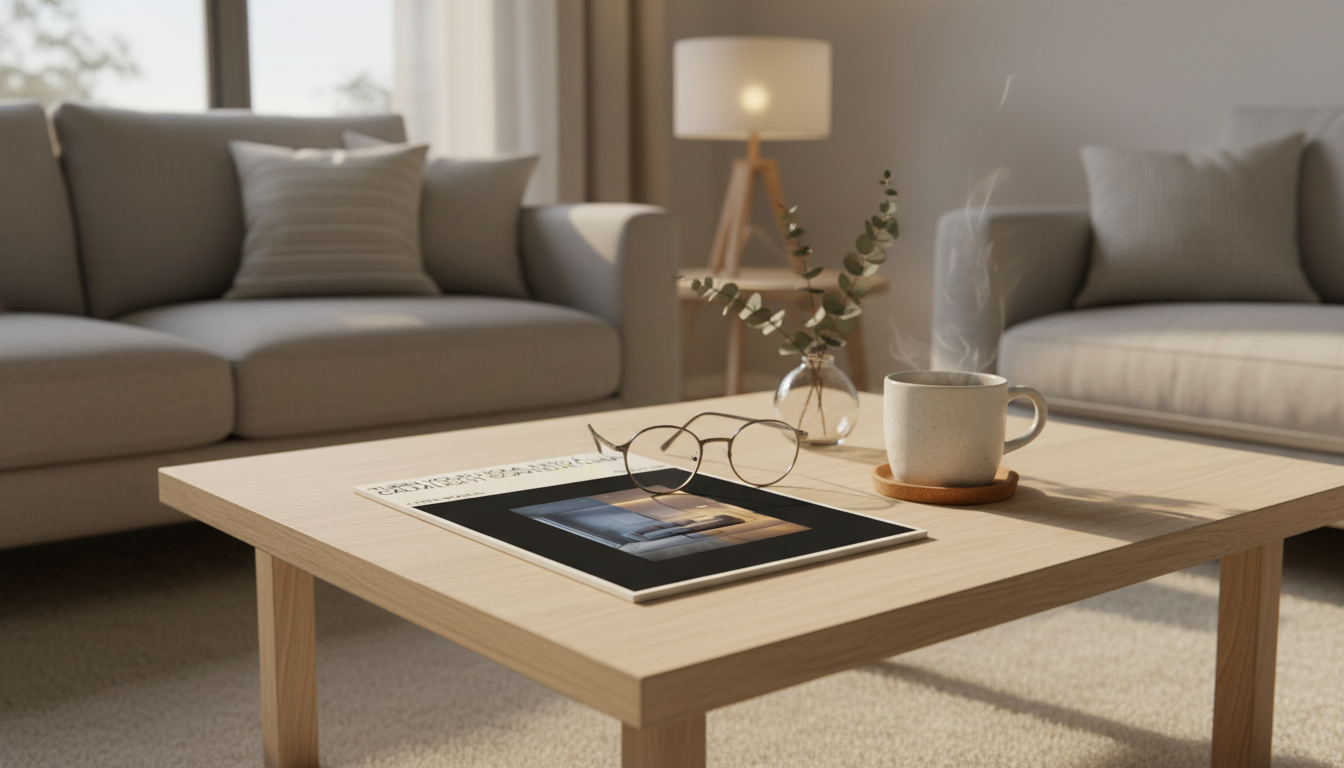
Calm lighting isn’t about making a room dim—it’s about making it easy on the eyes and easy on the nervous system. Instead of a single harsh hotspot (usually an overhead fixture), a calmer space uses gentle glow distributed across the room so your eyes don’t have to constantly adjust between bright and dark zones. For more guidance, see 17 Tips to Make your Home feel Cosy and Inviting on a Budget.
The overall feel is warm, even, and low-glare. You’ll notice fewer sharp reflections on screens and mirrors, less contrast between corners and seating areas, and a more “settled” atmosphere—especially at night. Consistency matters too: dimmers, timers, and simple routines make lighting predictable, which helps a room feel restorative rather than stimulating.
The fastest way to get a cozy ambient glow is to stop asking one light to do everything. Layering spreads brightness across your line of sight and reduces eye strain—so the room feels softer without sacrificing function.
| Layer | What it does | Best fixtures | Quick setup tip |
|---|---|---|---|
| Ambient | Creates the main cozy glow | Shaded table lamps, floor lamps, wall sconces | Aim for 2–4 small sources instead of one bright ceiling light |
| Task | Supports specific activities | Reading lamp, under-cabinet lights, vanity lights | Position to the side of the body to reduce shadows and glare |
| Accent | Adds warmth and visual softness | LED strips, candles, fairy lights, picture lights | Hide the bulb; let the surface glow instead |
Start with ambient (the room’s “base”), add task lighting only where you truly need it, then finish with one or two accent points that make the space feel inviting. If the room still feels harsh, it’s usually a glare issue (bare bulbs, exposed filaments, or reflections), not a “needs more lamps” issue.
Swap “one big light” for two lamps at different heights—one floor lamp and one table lamp is an easy combo. Then add one accent glow behind the sofa or near a shelf to soften the back wall and reduce contrast when you sit down to relax.
Choose warm bedside lamps with shades so the light lands softly across the room instead of blasting your eyes. Keep overhead lighting optional (a dimmer or “only when cleaning” rule) so the bedroom stays associated with winding down.
Keep bright task lighting on counters where safety matters, but soften the overall vibe with a warmer bulb in a secondary fixture or a small lamp in a breakfast nook. That one warm pool of light can make the whole room feel less clinical after dinner.
Bulb choice can change the mood more than a new fixture. Warm white light is typically more relaxing at night than cooler daylight tones, so aim for warmer bulbs in rooms used for downtime (living room, bedroom, hallway). The National Sleep Foundation highlights how light influences sleep and circadian rhythm—one reason bright, cool light can feel “activating” late in the day.
Finally, watch contrast: dark corners next to bright bulbs can make a room feel less restful. Add warm accent light to corners or behind furniture so the brightness transitions feel gradual. For deeper lighting fundamentals, the Illuminating Engineering Society (IES) offers helpful background on lighting concepts and best practices.
On busy days, automation helps. Timers or smart plugs can flip your evening mode on schedule, so you don’t have to remember. Keep one bright task light available for quick needs (finding something, a late load of dishes), but avoid lighting the entire room brightly late at night. The American Medical Association’s guidance on high-intensity lighting also underscores the value of reducing harsh, high-blue light exposure in the evening environment.
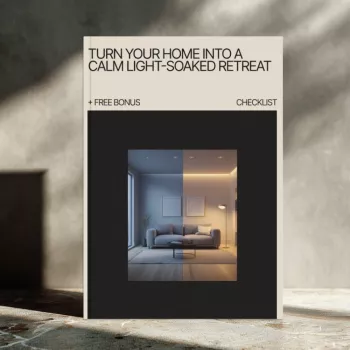
For a repeatable setup you can use in every room, the Turn Your Home into a Calm Light-Soaked Retreat – Printable Checklist for Soft Lighting for Calm Home Vibes, Cozy Ambient Glow Guide walks you through a quick audit and simple changes that make a noticeable difference fast.
A simple approach is a dedicated decompression station: one comfortable chair, a small surface, and one warm lamp. If you want a structured set of tactics for the workday side of the equation, Calm at Work: Smart Strategies to Manage Stress and Boost Focus | Digital Guide for Professionals | How to Manage Stress at Work eBook & Checklist pairs well with an evening lighting routine.
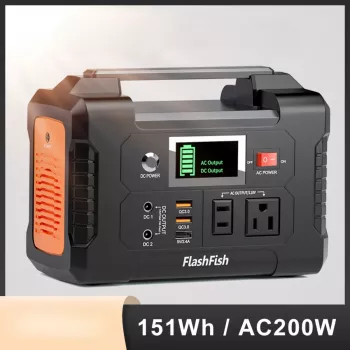
For extra peace of mind during outages or for creating a gentle light corner anywhere, a backup power option like the Portable 200W Solar Generator with AC Outlet & USB Ports can keep a lamp or small ambient lights running without switching to harsh emergency lighting.
Reposition existing lamps to different heights, swap to warmer or dimmable bulbs, and use shades or diffusers to soften glare. Try indirect placement by aiming light toward a wall so the room glows instead of spotlighting.
Warm, dim, diffused light with minimal glare tends to feel most relaxing. A layered setup (ambient plus a little accent) usually feels calmer than bright overhead illumination.
Use shades, frosted/diffused bulbs, and indirect lighting, and place lamps so the bulb isn’t in your direct line of sight. Reduce reflections by adjusting angles near mirrors and screens or swapping to softer sources.





Leave a comment