The “Stick-to-It” Diet Motivation Checklist: A Simple Printable for Consistent Healthy Habits
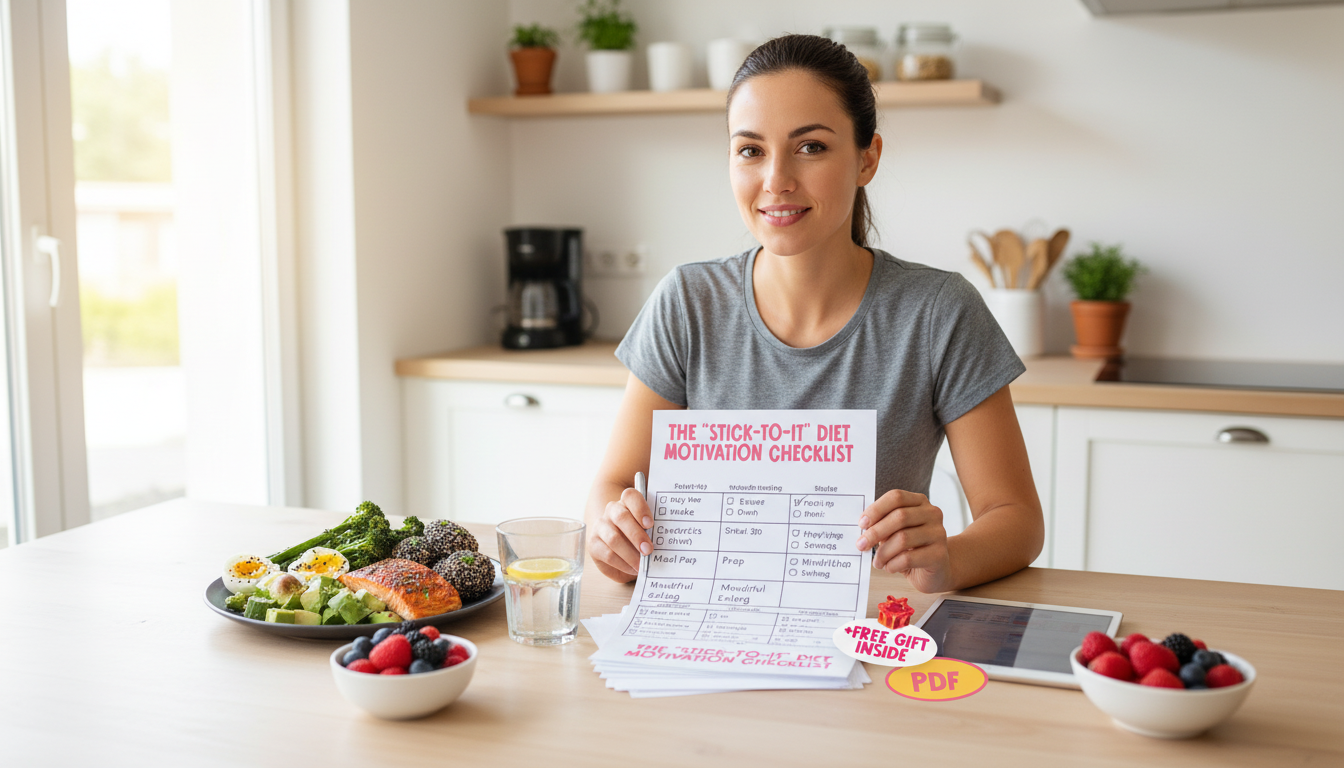
Motivation tends to fade when life gets busy, stress spikes, or results feel slow. A short, repeatable checklist can make consistency easier by turning “staying on track” into a few clear actions that fit real schedules. The “Stick-to-It” Diet Motivation Checklist is designed to be printed and used daily or weekly as a quick reset for mindset, meals, movement, and follow-through.
Why motivation disappears (and why a checklist helps)
Diet motivation usually doesn’t vanish because of a lack of “discipline.” More often, it gets worn down by everyday friction and mental overload.
- Decision fatigue: too many food choices and “shoulds” drain willpower as the day goes on.
- All-or-nothing thinking: one off-plan meal can turn into an abandoned week without a recovery plan.
- Vague goals: “eat better” is hard to act on without specific next steps.
- Less friction, more follow-through: a checklist turns intentions into a small set of observable actions.
- Consistency beats intensity: a “minimum viable day” protects your streak when energy is low.
If you’re aiming for sustainable habits, it helps to lean on simple systems. Health organizations like the CDC and the NIH NIDDK emphasize safe, realistic approaches—exactly the kind of structure a checklist can support.
What’s inside the “Stick-to-It” Diet Motivation Checklist printable
The printable focuses on behaviors that are easy to repeat, even during hectic weeks—so you can keep showing up without overhauling your entire life.
- Quick motivation prompts: reconnect daily actions to your personal “why” (health, energy, confidence, labs, stamina).
- Simple meal and snack cues: planning nudges, protein/produce focus, and hydration reminders.
- Behavior anchors: environment setup, routine timing, and tracking options that make your plan easier to follow.
- A built-in reset step: a recovery move for off days to prevent spirals and return to the next best choice.
- Printable and reusable: keep it on the fridge, in a planner, or at a desk and reuse it weekly.
If you want a ready-to-print version, find it here: The “Stick-to-It” Diet Motivation Checklist printable (Healthy Habits PDF).
How to use the checklist for daily follow-through
The goal is to make the checklist so quick that it feels easier to do it than to skip it.
- Choose a cadence: daily for structure, or 3–4 times per week for flexibility.
- Keep it under 3 minutes: use it as a start-of-day or pre-dinner routine.
- Pick one non-negotiable for tough days: protein at breakfast, a 10-minute walk, or pre-portioned snacks.
- Pair it with a trigger: morning coffee, after school drop-off, or before grocery shopping.
- End with a one-line next-meal plan: reduce impulsive choices by deciding in advance.
Example checklist rhythm for a typical week
| Day/Time |
Checklist focus |
Tiny action (10 minutes or less) |
Backup plan |
| Monday morning |
Set intention + food plan |
Write 2 go-to meals and 2 snacks |
If busy: use a repeat meal day |
| Midweek evening |
Consistency check |
Restock one healthy staple (fruit, yogurt, salad kit) |
If tired: order a balanced option and save half |
| Friday afternoon |
Weekend guardrails |
Decide 1 treat moment and 1 active plan |
If plans change: keep breakfast and water consistent |
| Sunday evening |
Reset + prep |
Prep one protein or chopped veggies |
If no prep: schedule a simple grocery run |
Motivation strategies that work even when willpower is low
- Make the good choice the easy choice: keep ready-to-eat options at eye level; store trigger foods out of sight.
- Use identity-based cues: act like the type of person who keeps promises to themselves—one small action at a time.
- Track process, not just outcome: focus on checkmarks (water, protein, steps) rather than scale fluctuations.
- Shrink the task: when overwhelmed, commit to the next five minutes (prep one snack, fill a water bottle).
- Plan for slips: pre-write a recovery rule (example: “Next meal is normal—no skipping, no punishing workouts”).
Stress can amplify cravings and impulsive choices, which makes “just try harder” a weak plan. If stress is a frequent trigger, resources like the American Psychological Association’s overview of stress effects can help you connect the dots between your body and your habits.
For a practical, workday-friendly approach, pair your nutrition checklist with Calm at Work: strategies to manage stress and boost focus.
Healthy habits that pair well with the checklist
Common sticking points—and quick fixes
When to get extra support
Recommended printables for follow-through
FAQ
How often should the checklist be used?
Use it daily for the first 1–2 weeks to build momentum, then shift to 3–5 times per week. It works best when it’s tied to a routine trigger and kept under three minutes.
What if a day goes off plan—should the checklist be skipped?
Use it especially on off days. Follow a simple reset rule—make the next meal normal and add one small helpful action—so a slip doesn’t turn into an all-or-nothing spiral.
Does this work for different diet styles (calorie counting, low-carb, Mediterranean, etc.)?
Yes. The checklist is behavior- and habit-focused, not a strict menu, so the prompts can be aligned with your chosen approach and personal dietary needs.
Recommended for you





Leave a comment