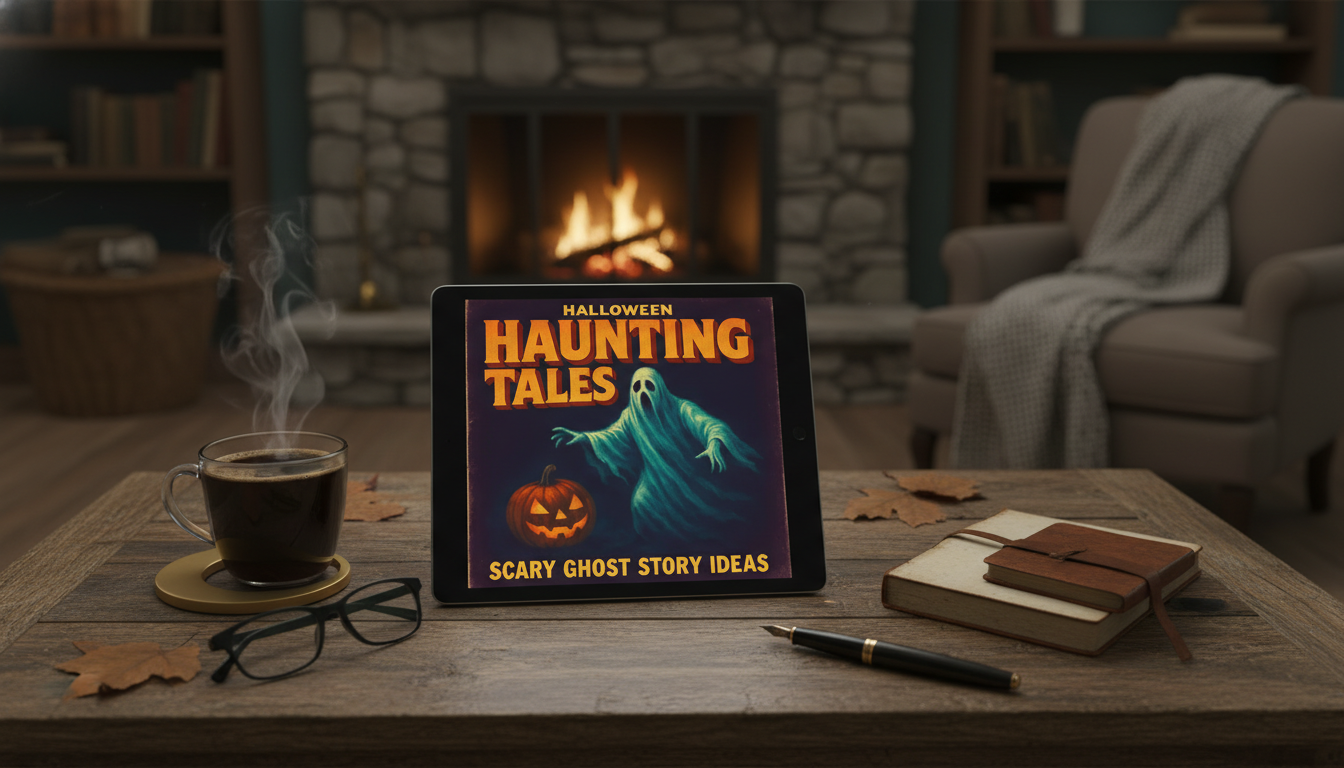
Haunting Tales: Scary Ghost Story Ideas (Digital eBook Writing Guide)
Haunting Tales is a digital writing guide built for writers, storytellers, and creators who want fresh ghost-story concepts, stronger scares, and clearer story shapes. It centers on usable story starters and practical craft so ideas can move quickly from spark to draft—whether the goal is a short story, a campfire tale, a podcast episode, or a scripted video.
For creators who want a focused toolkit for generating premises and building satisfying payoffs, Haunting Tales: Scary Ghost Story Ideas (Digital eBook Writing Guide) offers a structured path from eerie image to complete arc.
What this eBook helps create
- A bank of ghost-story seeds that can be expanded into plots, scenes, or serialized episodes
- A repeatable method for turning a single eerie image into a beginning, escalation, and payoff
- Multiple scare styles: subtle dread, sudden shocks, tragic hauntings, and mystery-driven reveals
- Story-ready building blocks: settings, entities, rules of the haunting, and character vulnerabilities
- Options for different formats: prose fiction, audio narration, screenplay beats, and interactive story threads
For a broader creative refresher on narrative techniques, the Purdue Online Writing Lab (OWL) fiction resources can complement your practice with general craft guidance. For cultural context on how ghost stories function across folklore and literature, see Britannica’s overview of ghosts.
Core ingredients of a memorable haunting
- A clear human want: what the protagonist needs (closure, safety, answers, forgiveness) and how the haunting obstructs it
- A haunting “rule”: what triggers the ghost, what it can and cannot do, and what it demands or repeats
- A meaningful location: a place that carries history and creates natural constraints (sound, light, isolation, witnesses)
- Escalation that changes daily life: the presence grows from unsettling to unavoidable, forcing decisions
- A reveal with emotional weight: the final truth lands best when it reframes earlier clues and hurts in a human way
When these ingredients click together, the ghost stops being “a thing that scares” and becomes a pressure system. The rule limits what’s possible, the location traps choices, and the protagonist’s need keeps the story from drifting into random spookiness.
Idea engines: fast ways to generate ghost-story premises
- Object-first: pick an ordinary item (ring, key, tape recorder, baby monitor) and decide what it remembers or repeats
- Place-first: start with a location that “should” feel safe (hospital wing, daycare, retirement home) and invert expectations
- Rule-first: define a single sentence law (“If you answer the second knock, it gets closer”) and build scenes around testing it
- Character-first: tie the haunting to a private shame, grief, or obsession so fear and guilt escalate together
- Time-first: anchor the story to a recurring moment (2:17 a.m., every full moon, the anniversary) and make that moment evolve
To keep premises from feeling familiar, combine two engines: start with a “safe” place, add a strict rule, then attach it to a character secret the protagonist refuses to name out loud.
Scare styles and when to use them
- Dread: slow, persistent wrongness; best for longer short stories and audio where tension can simmer
- Shock: sharp spikes (a face in the glass, a voice from a dead phone); best when earned by prior calm
- Uncanny: familiar things acting almost right; ideal for domestic settings and “everyday horror”
- Mystery: clues, red herrings, and withheld truth; perfect for creators who want a reveal-driven ending
- Tragedy: the ghost’s pain becomes the story’s heart; strongest when the ending changes the protagonist, not just the threat
Quick match: format to scare style
| Format |
Strength |
Best-fit scare styles |
| Short story (2k–6k words) |
Tight escalation and twist endings |
Shock, Mystery |
| Longer fiction/novella |
Atmosphere and layered reveals |
Dread, Tragedy |
| Audio narration/podcast |
Voice-driven tension and pacing |
Dread, Uncanny |
| Scripted video |
Visual cues and timing |
Shock, Uncanny |
| Interactive thread/game |
Choice and consequence loops |
Rule-first, Mystery |
From prompt to plot: a simple drafting blueprint
- Hook: open with an off-kilter detail that feels small but impossible to ignore
- Inciting event: the protagonist chooses to investigate, hide it, deny it, or exploit it
- First escalation: the haunting crosses a boundary (private space, personal history, a loved one)
- Midpoint turn: a clue reframes the ghost from “monster” to “message,” or reveals a deeper danger
- Final test: the protagonist must break a rule, make a trade, or confront a truth to survive
- Aftermath: show the cost—emotional, relational, or moral—even if the protagonist “wins”
Ways creators can adapt the ideas for different audiences
Digital download details and best ways to use it
If intense drafting sessions leave you scattered, pairing creative work with a focus routine can help you stay consistent. Calm at Work: Smart Strategies to Manage Stress and Boost Focus (Digital Guide) is a separate digital resource designed to support steadier attention and calmer follow-through.
FAQ
Is this eBook suitable for beginners?
Yes. It’s designed to be easy to enter because it relies on ready-to-use story seeds and a clear blueprint for shaping them into a beginning, escalation, and payoff, while still offering depth for experienced writers who want sharper structure and stronger reveals.
Can the ideas be used for podcasts, videos, and games as well as fiction?
Yes. The concepts translate well across formats because they emphasize haunting rules, escalation beats, and scene-ready details—elements that support episodic cliffhangers in audio/video and clear cause-and-effect loops for interactive storytelling.
How quickly can a story be drafted from a single prompt?
A flash-length piece can often be drafted in 30–90 minutes, while a polished short story may take several hours to a few days depending on revision. Using a beat-by-beat blueprint helps turn a premise into an outline quickly so drafting time goes into scenes, not second-guessing.
Recommended for you





Leave a comment