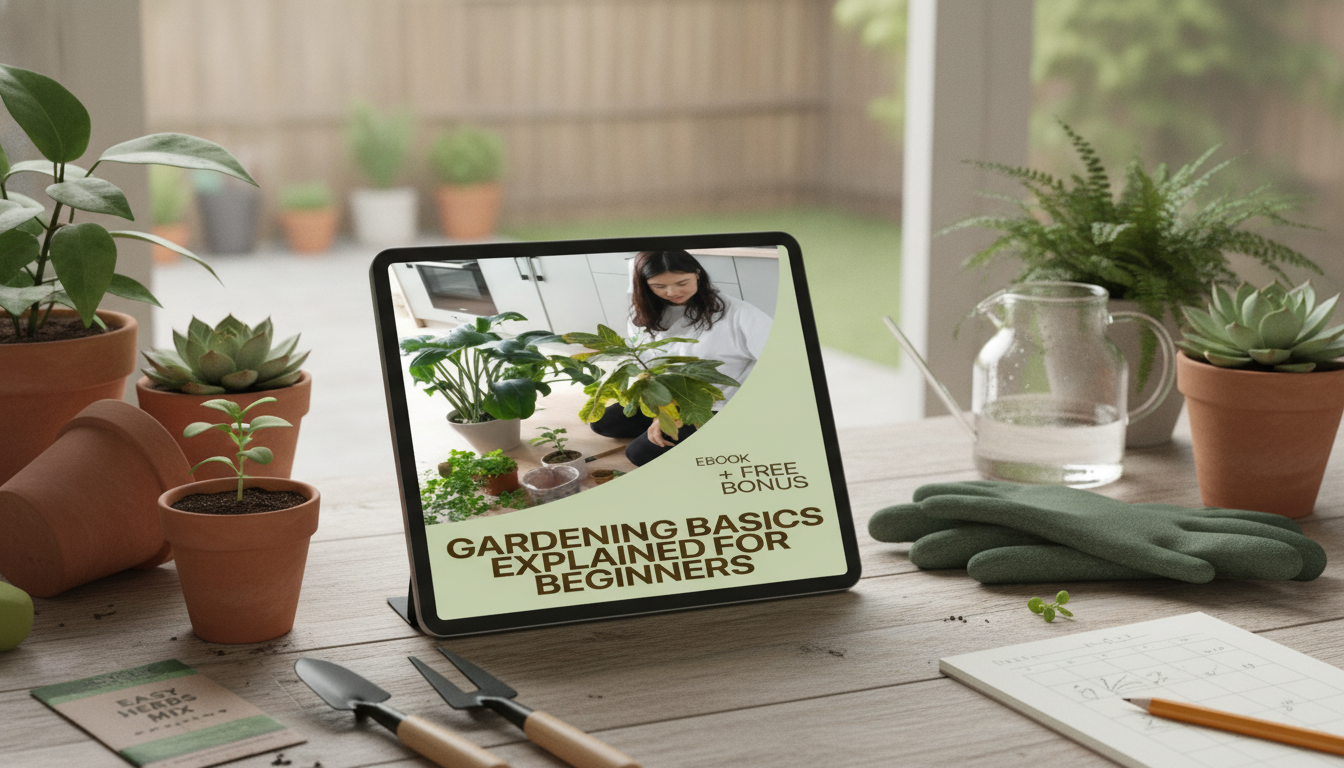
Starting a garden gets a lot simpler once a few fundamentals are clear: light, water, soil, and timing. Whether you’re growing basil on a windowsill or planting a small bed outside, the goal is the same—give plants steady conditions, avoid common mistakes, and keep care routines easy enough to stick with.
A first garden doesn’t need to be big to be satisfying. A few containers, one raised bed, or a single sunny corner is plenty—early wins make it easier to keep going.
If you’re gardening outdoors, it helps to know your climate zone for planting timing. The USDA Plant Hardiness Zone Map is a practical starting point.
| Condition | Good Beginner Choices | Notes |
|---|---|---|
| Sunny outdoor (6+ hours) | Cherry tomatoes, basil, peppers, zinnias | Use sturdy supports for tomatoes; water consistently. |
| Part shade outdoor (3–6 hours) | Lettuce, spinach, parsley, begonias | Great for spring/fall; bolting can happen in heat. |
| Bright indoor window | Basil, green onions, pothos, spider plant | Rotate pots weekly for even growth. |
| Low indoor light | Snake plant, ZZ plant | Water sparingly; avoid soggy soil. |
Many beginner issues—yellow leaves, fungus gnats, slow growth—start with the wrong soil or poor drainage. Getting the base right saves time later.
For deeper, research-based home garden guidance (especially for regional pests, soils, and seasonal timing), resources like University of California Agriculture and Natural Resources are helpful.
Overwatering is more common than underwatering, especially indoors. A simple check keeps you from watering on a schedule that doesn’t match reality.
Both seeds and seedlings work for beginners—it’s more about picking the right match for your patience level and your growing season.
Once plants are established, maintenance is mostly light, consistent habits—quick checks beat “big rescue” projects.
If you like having a simple checklist to follow (light, watering cues, planting depth reminders, and harvesting notes), this quick-reference guide can help you stay consistent: Gardening Basics Explained for Beginners: Gardening Basics Explained Simply eBook Guide for New Gardeners, Indoor & Outdoor Planting Tips, Maintenance, and Harvesting.
For indoor setups where outlets are limited (patios, sheds, or temporary workspaces), a compact backup power option can be useful for small tools or lights: Portable 200W Solar Generator with AC Outlet & USB Ports.
Water based on soil moisture, not the calendar: feel 1–2 inches down and water when it’s dry at that depth. Containers usually need water more often than in-ground beds, and hot/windy weather can increase watering needs significantly.
Outdoors, try radishes, lettuce, basil, marigolds, or cherry tomatoes in a sunny spot; indoors, pothos, snake plant, spider plant, and many succulents are forgiving. The easiest choice is the one that matches your light—plants struggle more from low light than from “beginner mistakes.”
Many indoor plants benefit from light feeding during active growth, especially in bright windows, but follow label directions and avoid overdoing it. In winter or low-light conditions, most houseplants need less fertilizer (or none) because they grow more slowly.




Leave a comment