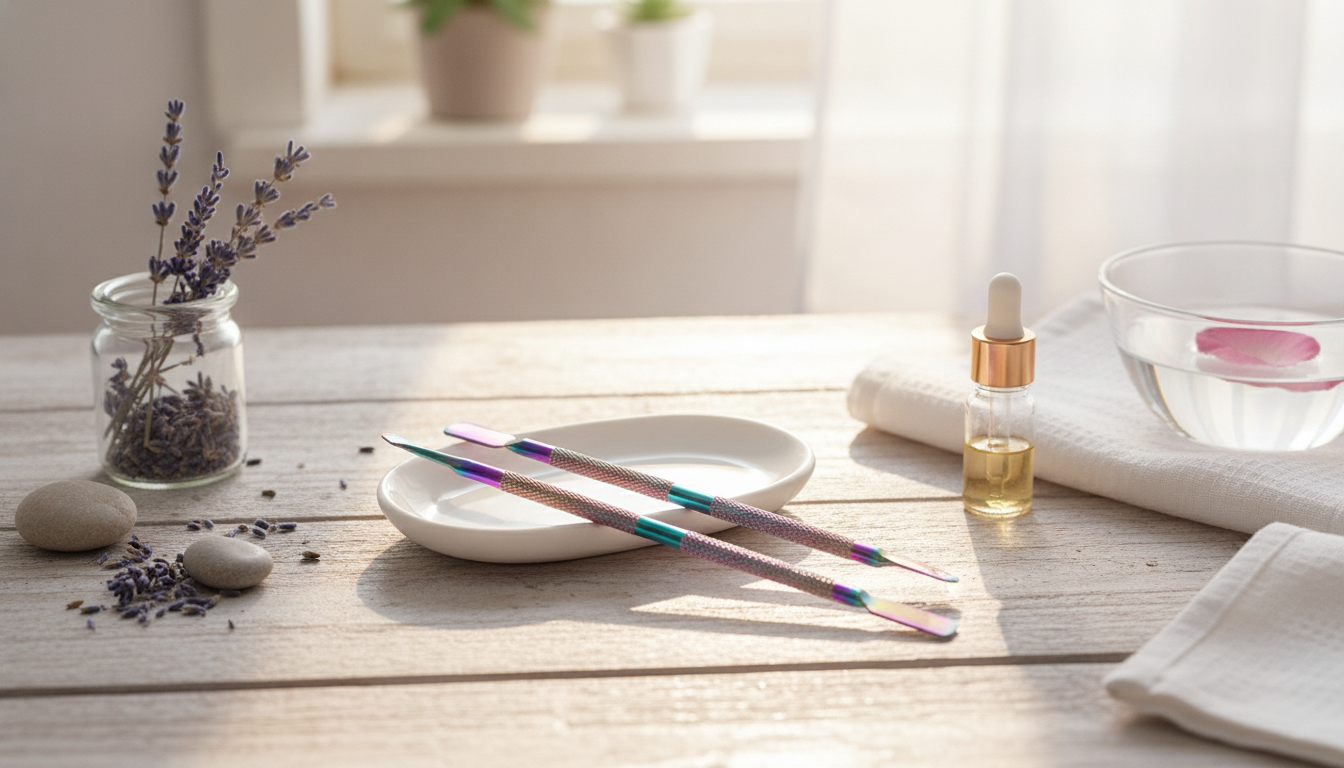
A clean cuticle line helps polish apply smoothly and makes natural nails look neat. The 4Pcs Titanium Double-Ended Cuticle Pusher Set is designed for gentle pushing, lifting, and detail cleanup around the nail plate—useful for home manicures, gel prep, and routine nail care when paired with proper softening and sanitizing. With four separate tools and two ends per tool, you can switch from broad pushing to fine detailing without constantly hunting for a different instrument.
This set includes 4 separate double-ended tools meant to cover the most common cuticle and nail-prep tasks: pushing back softened cuticle tissue, lifting loosened dead skin (only after softening), and cleaning along the cuticle curve and sidewalls. Because each tool has two working tips, it’s easier to match the shape of the nail (and the tightness of corners) without forcing one tip to do every job.
The tools can be used on fingernails and toenails and are especially helpful when working near sidewalls, around the cuticle margin, and along curved nail plates. For best results, use a broad end for the initial push and a finer end only when you need close, controlled cleanup.
| Tool type | End A (common use) | End B (common use) | When to use |
|---|---|---|---|
| Pusher / scraper | Gently push softened cuticle back | Lightly scrape residue from nail plate | Before polish, gel, or to tidy natural nails |
| Precision edge | Detail work along cuticle line | Sidewall cleanup | When working near corners or tight areas |
| Lifter / cleaner | Lift thin, loosened dead tissue (only after softening) | Clean under free edge with care | After soaking; avoid digging into live skin |
| Multi-purpose detailer | Refine cuticle margin | Remove remaining softened debris | Final pass before buffing or wiping |
Titanium nail tools are popular because they balance durability with a steady, controlled feel—important when you’re working millimeters from sensitive skin. They’re also corrosion-resistant, which helps them hold up better to routine washing and disinfection when compared with lower-grade metals.
The difference between “clean prep” and “irritated cuticles” usually comes down to softening, angle, and pressure. Think gentle and gradual rather than fast and forceful.
Cuticles help protect the nail matrix area from germs, so “more removal” isn’t the goal. The goal is neat, comfortable skin with minimal trauma.
Reusable tools only stay “salon-clean” when you treat cleaning and storage as part of the manicure—not an afterthought.
Generally occasional maintenance is enough—often weekly or every couple of weeks—focusing on gentle pushing after softening. Overdoing it can leave the skin irritated and more likely to peel.
Yes, if it’s used with too much pressure or on dry cuticles. Keep the tool flat to the nail plate, work only on softened cuticles, and stop if there’s pain, redness, or visible scratching.
Wash tools with soap and water first, then disinfect according to an appropriate disinfectant’s label directions. Let tools dry fully and store them clean to reduce re-contamination.






Leave a comment