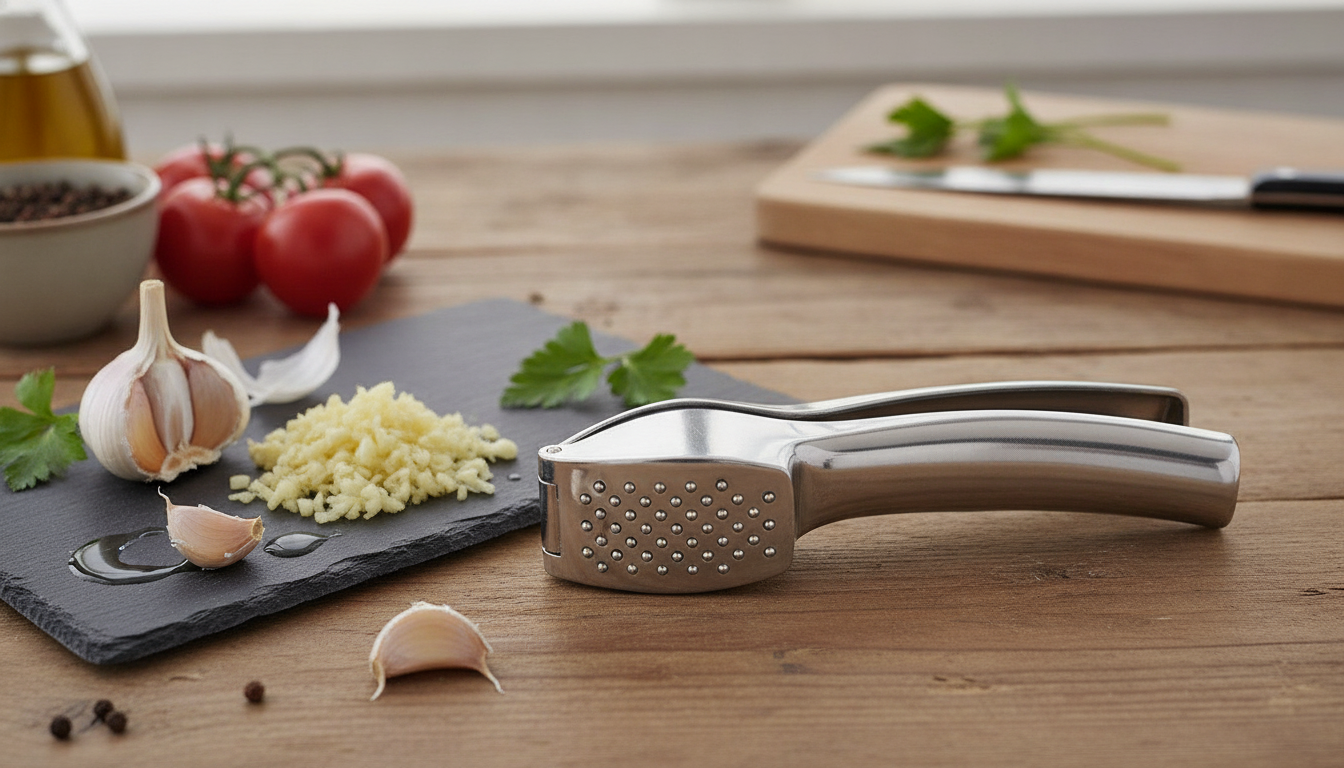
A sturdy garlic press can turn cloves into fine, even garlic in seconds—without slippery chopping and lingering odors on hands. The right heavy-duty design also helps you get more garlic out of each clove with less strain, which is especially helpful when you’re cooking frequently or making garlic-forward recipes like pan sauces, marinades, and dressings.
Below is a practical guide to what makes a press feel truly durable, which features matter most day to day, how to press for better yield, and how to keep the mechanism moving smoothly over time.
What Makes a Garlic Press Feel Truly Heavy-Duty
- Rigid handle arms that don’t flex under pressure, even with larger cloves. Flex wastes force and can leave you with a half-pressed clove.
- A robust hinge/pivot that stays tight and aligned after repeated use. A steady pivot keeps the press plate meeting the chamber evenly.
- Thick pressing chamber walls that resist bending and cracking. Thicker metal tends to keep its shape and helps prevent “blowout” when pressing firm cloves.
- Comfortable leverage from longer handles and ergonomic grips that reduce hand strain, especially when pressing multiple cloves back-to-back.
- Materials that tolerate frequent washing and acidic foods (garlic, lemon, vinegar). Acidic ingredients can be rough on low-quality finishes over time.
Key Features to Look For Before Buying
- Press plate hole pattern: smaller holes generally yield a finer paste; larger holes can produce a coarser mince that reads more “chunky” in some dishes.
- Chamber size: a larger chamber can fit one big clove or multiple smaller cloves, speeding up prep.
- Peel-on vs peel-off pressing: many presses can handle unpeeled cloves, but yield and cleanup vary depending on chamber depth and hole layout.
- Cleaning design: a removable basket/insert or built-in clean-out spikes can save time (and keep you from digging garlic fibers out with a toothpick).
- Handle finish and grip texture: improves control when hands are wet or oily, reducing slips that can stress the hinge.
- Dishwasher compatibility: convenient, but check whether it can dull a finish over time—hand rinsing right after use is often the easiest path anyway.
Quick Comparison: Features That Affect Daily Use
| Feature |
Why it matters |
What to choose for |
| Long handles |
More leverage, less hand fatigue |
Frequent cooking or limited grip strength |
| Removable chamber/insert |
Easier to rinse trapped bits |
Fast cleanup and less scrubbing |
| Fine-hole press plate |
Smoother paste that blends into sauces |
Dressings, marinades, and pan sauces |
| Large-capacity chamber |
Fewer reloads |
Meal prep or garlic-heavy recipes |
| Built-in cleaner spikes |
Helps push pulp out of holes |
Quick rinsing at the sink |
How to Use a Garlic Press for Maximum Yield
- Trim the dry stem end so the clove sits flat and presses evenly. This small step can noticeably improve how cleanly the garlic extrudes.
- For peel-on pressing: lightly crush the clove with the side of a knife first to loosen the skin. This helps the garlic compress instead of sliding inside the chamber.
- Load the chamber with the flattest side down for better contact with the press plate.
- Press in one firm motion; if needed, rotate the handles slightly to finish the push cleanly rather than pumping repeatedly.
- Scrape the underside of the plate with a spoon or silicone spatula to collect paste (especially useful when pressing directly over a pan).
- Press a second time only if needed—if the chamber still feels full. Over-pressing can force stringy fibers through holes and make cleanup harder.
Garlic intensity can vary with how it’s processed. Pressing disrupts more cells at once, which is part of why the flavor can come through more boldly than a knife mince. For basic nutrition context on raw garlic, the USDA’s FoodData Central is a reliable reference.
Cleaning and Care That Keeps the Mechanism Smooth
If you grow or store garlic at home, handling basics like keeping bulbs dry and ventilated can help you avoid overly dried-out cloves that are harder to press. NC State Extension has practical guidance on garlic basics at content.ces.ncsu.edu.
Common Problems and Simple Fixes
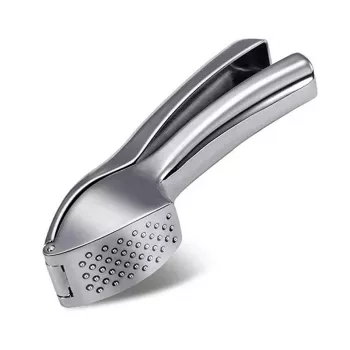
If the goal is quick, consistent garlic with less effort, a sturdy press with solid leverage makes prep easier on busy weeknights and when batch-cooking. The Heavy-Duty Garlic Press Crusher is designed for everyday kitchen use, and it shines when you trim cloves, press decisively, and rinse right after use to keep holes clear.
For outdoor kitchens, tailgates, or power outages—situations where you still want real cooking rather than “snacks only”—a compact power option can keep small appliances running. The Portable 200W Solar Generator with AC Outlet & USB Ports can be a helpful companion for off-grid prep setups (while the press itself remains a no-power, always-ready tool).
Recipe-Friendly Ways to Use Pressed Garlic
FAQ
Can a garlic press handle unpeeled cloves?
Many presses can push through the skin, but yield and cleanup depend on the chamber and hole design. Trimming the stem end and lightly cracking the clove first usually improves results.
Why does pressed garlic taste stronger than minced garlic?
Pressing breaks more cells at once, releasing more pungent compounds. For a milder result, add pressed garlic later in cooking or keep heat gentle.
What’s the easiest way to clean a garlic press?
Rinse immediately, then brush from the back of the press plate. If garlic dries, soak briefly in warm water and brush again.
Recommended for you



Leave a comment