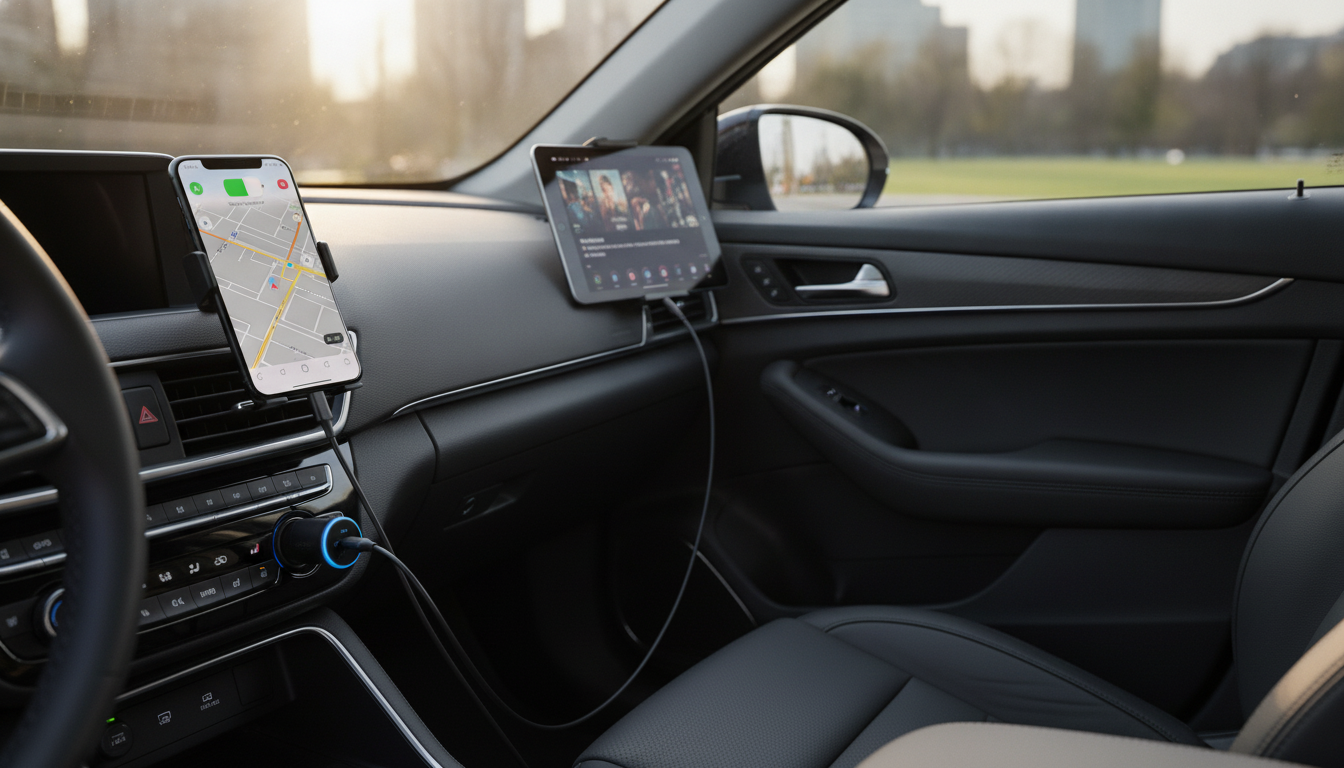
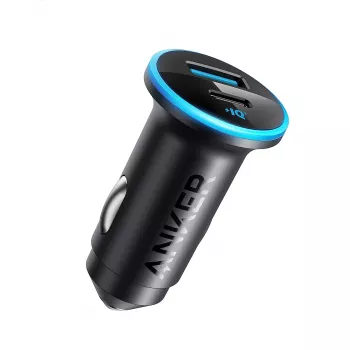
A reliable car charger shouldn’t feel like a compromise. This 52.5W dual‑port adapter pairs a high‑output USB‑C port (up to 30W with PowerIQ 3.0) with a convenient USB‑A port, so a driver and passenger can plug in at the same time—or you can run navigation and streaming while topping up a second device. It’s built for real driving: quick recharges between errands, steady power on commutes, and fewer “low battery” surprises on road trips.
If you want the product details and availability, see 52.5W Fast Car Charger with USB‑C and USB‑A Ports – 30W PowerIQ 3.0, Dual Port Adapter.
A combined 52.5W total output is designed for two-device charging without turning your car into a tangle of adapters. In practical use, you’ll typically get the best experience by assigning the USB‑C port to the most power-hungry or newest device and using USB‑A for a second phone, earbuds case, or another accessory that doesn’t require the highest wattage.
For context on how modern fast charging negotiates power levels, USB‑IF’s overview of USB Power Delivery is a helpful reference.
Mixed ports are still one of the most convenient setups in a shared vehicle. USB‑C has become the go-to for new devices, but plenty of drivers still keep USB‑A cables in the center console—whether for older phones, dash accessories, or backup cords.
This quick summary helps you match the charger to your typical in-car setup.
| Feature | Details | Why it matters |
|---|---|---|
| Total output | 52.5W combined | Helps support two devices charging at the same time |
| USB‑C port | Up to 30W (PowerIQ 3.0) | Better performance for many newer phones and USB‑C devices |
| USB‑A port | Secondary port (remaining share of output) | Useful for older cables and common accessories |
| Vehicle compatibility | 12V/24V car socket | Suitable for most consumer vehicles and many trucks |
Higher-watt charging in a small adapter can generate heat, especially during long navigation sessions or when charging two devices nonstop. Stable contact and good airflow around the adapter help maintain consistent performance.
PowerIQ-style fast charging is designed to optimize output for connected devices; for a plain-language reference on the naming and approach, see Anker’s PowerIQ technology overview.
Fast charging is a three-part equation: the charger, the device, and the cable. Even with a high-output port available, some phones and tablets will only draw what they’re designed to accept—so results can vary between models.
They can charge simultaneously, but “fast” depends on the combined 52.5W budget and per-port limits. The USB‑C port supports up to 30W, and the remaining power is available for USB‑A; actual speed varies by each device’s fast-charge support and the cable used.
Yes, it’s listed as compatible with typical 12V/24V vehicle sockets, which covers many cars and a range of trucks. Confirm your vehicle uses a standard power socket and make sure the adapter fits firmly for consistent charging.
Use a USB‑C to USB‑C cable rated for fast charging to reach higher USB‑C charging rates. A USB‑A to USB‑C cable can still work, but it may limit certain fast-charging modes depending on your device and charging standard.





Leave a comment