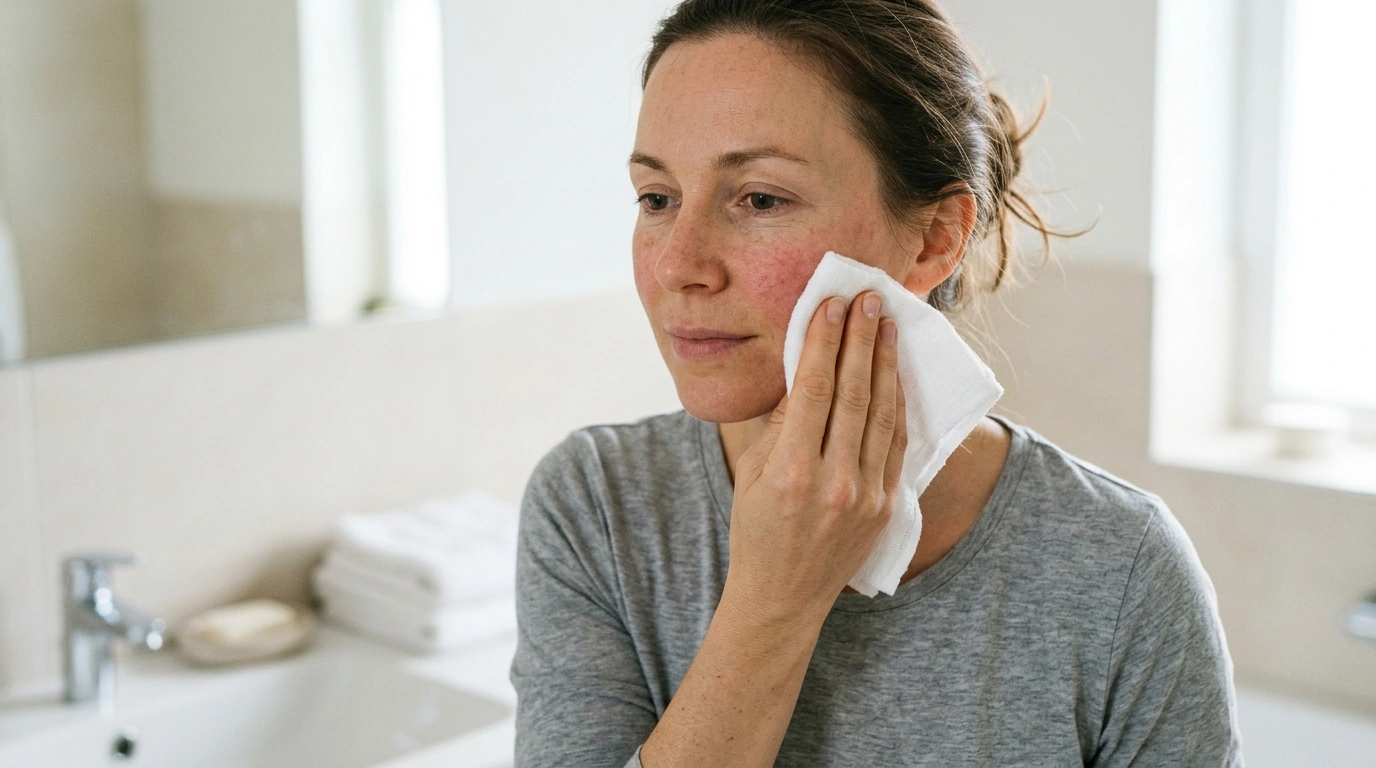
Sudden redness can feel alarming, especially when your skin was comfortable just moments ago. Heat, friction, and skin care products are among the possible triggers, but redness alone cannot tell you exactly what caused it. A gentle response and a little patience are often useful first steps.
Our Cool Down Fast guide brings together practical ways to respond to a flare, build a simpler routine, and use AI to organize questions about your skin. You do not need to overhaul everything at once: start by giving irritated skin a break.
Skin may look red after a hot shower, a brisk walk in cold weather, rubbing with a towel, or contact with a product that irritates it. Sometimes the reaction appears quickly; in other cases, irritation develops after repeated exposure. A familiar product is not necessarily ruled out just because you have used it before.
A brief flush that settles is different from redness that persists, returns often, or comes with pain. Conditions such as contact dermatitis can have several possible causes, and an assessment may be needed to sort them out. The NHS guide to contact dermatitis explains more about symptoms and potential triggers.
If you are concerned, ask a healthcare professional for advice rather than trying to diagnose the cause from appearance alone.
If a product starts to sting or seems to trigger redness, stop using it. When appropriate, gently rinse it off with lukewarm water. Pat your skin dry rather than rubbing, and pause other potentially irritating products while your skin settles.
A cool, damp compress may feel soothing. Use a soft, clean cloth and avoid putting ice directly on your skin. Skip hot water, scrubs, and the temptation to apply several new products at once. Cooling your skin can offer comfort, but it does not guarantee that redness will disappear immediately.
| Situation | First step | Avoid |
|---|---|---|
| A product causes stinging | Stop using it and gently rinse | Applying more active products |
| Skin feels hot | Try a cool, damp compress | Ice directly on skin or hot water |
| Redness persists or worsens | Ask a healthcare professional for advice | Assuming the cause without assessment |
Get urgent medical help if you have trouble breathing, facial swelling, or other severe symptoms. Do not wait to see whether a skin care routine helps.
A simple routine can make it easier to notice what your skin tolerates. Consider a gentle cleanser, a fragrance-free moisturizer, and sun protection suited to sensitive skin. You may not need a long list of treatments, particularly when your skin is already uncomfortable.
Choose a sunscreen you can use comfortably and regularly. Shade, protective clothing, and a wide-brimmed hat can also help limit sun exposure. If a product causes irritation, stop using it rather than trying to push through the discomfort.
When you are ready to introduce something new, add one product at a time. Consider patch testing it first; the American Academy of Dermatology’s product-testing guidance offers practical steps. Patch testing can help reveal a reaction, although it cannot guarantee that a product will be comfortable everywhere or every time.
A short log can also be useful. Note when redness appears, which products you used, the weather, and anything else that changed. Bring those notes to a dermatologist, especially if flares keep returning. Patterns may help guide the conversation without proving a cause on their own.
AI can help you turn scattered notes into a routine checklist or a useful record for an appointment. For example, you could ask:
Keep the information you share general and leave out unnecessary personal health details. AI cannot diagnose a rash, identify the cause of redness with certainty, or replace a qualified healthcare professional. Treat its suggestions as starting points for questions, not as a personalized treatment plan.
We offer the Cool Down Fast sensitive skin redness relief guide as a practical resource for understanding why skin can turn red quickly, considering immediate soothing actions, and organizing skin care questions with AI. It is in stock for $5.99. It is not a cure or a substitute for medical care.
If you also want a separate resource for everyday workplace stress, our Calm at Work guide is in stock for $9.99. It focuses on managing stress and improving focus at work, not treating skin redness.
Stop using a suspected irritant, gently rinse it off if appropriate, and try a cool, damp compress. Seek medical help if symptoms are severe or concerning.
Ask a healthcare professional for advice if redness persists, recurs, worsens, or is painful. Trouble breathing or facial swelling requires urgent medical help.
No. AI can help you organize a routine or symptom log, but a qualified healthcare professional should assess and diagnose skin concerns.







Leave a comment