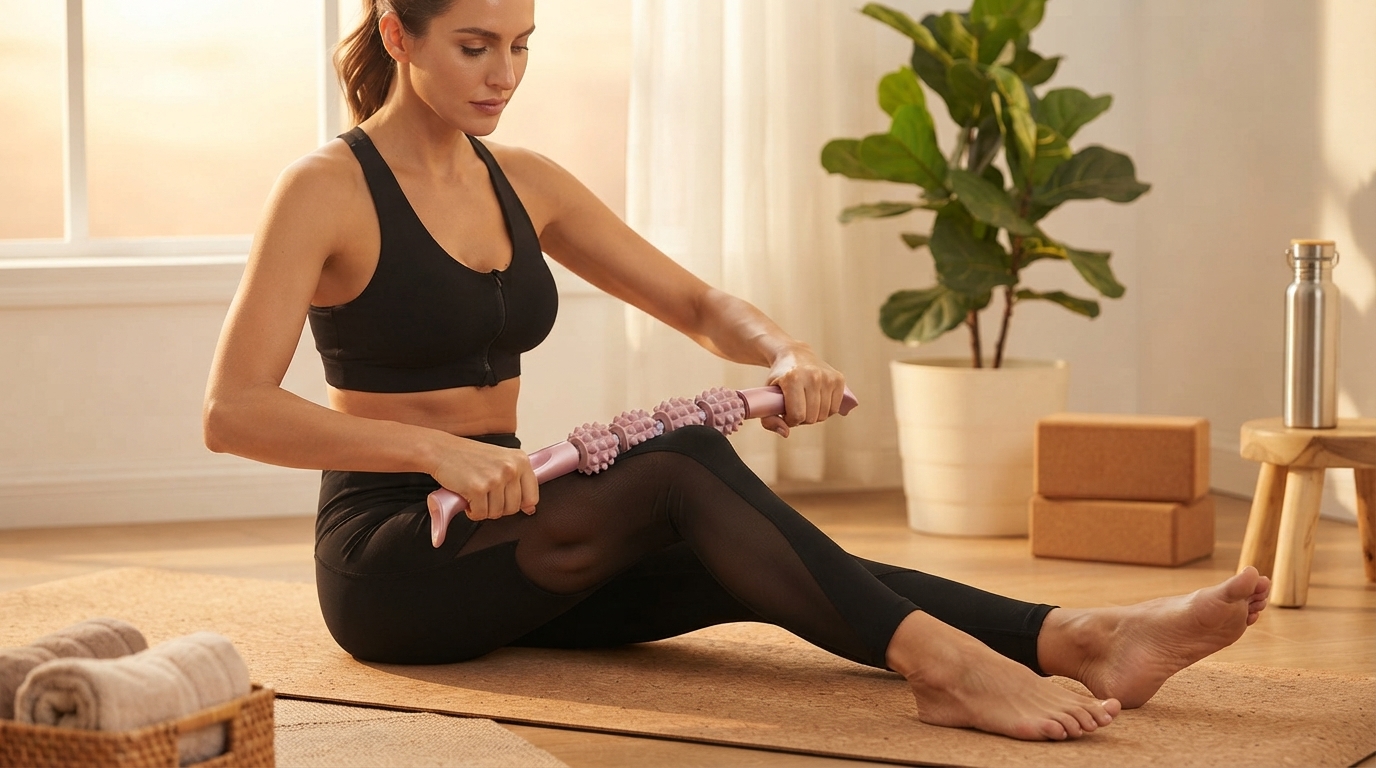
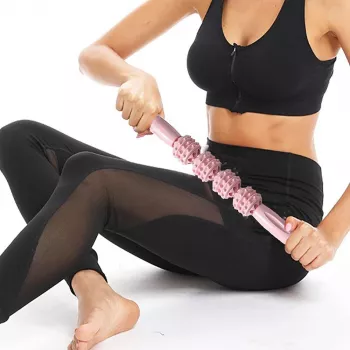
A 4-ball muscle roller stick is a compact self-massage tool designed to apply focused pressure along muscles like calves, quads, hamstrings, forearms, and the upper back. With multiple rolling balls in a row, it helps smooth tight spots, support post-workout recovery, and make quick mobility breaks easier at home, the gym, or the office.
Roller sticks are built for practical, targeted self-massage without needing to get on the floor. Because your hands control the pressure, they’re a good fit for people who want a more adjustable approach than bodyweight-based tools.
Not all roller sticks feel the same. Small design choices can change how “smooth” the roll feels and how easy it is to use consistently.
A little goes a long way. The goal is steady, controlled pressure that helps the area relax—without turning the session into a pain tolerance test.
| Area | Position | Where to roll | Time |
|---|---|---|---|
| Calves | Seated with leg extended or standing with foot on a step | From above Achilles to below knee (avoid direct pressure on the back of the knee) | 60–90 seconds per side |
| Quads | Standing or seated, knee slightly bent | Front thigh from hip to just above kneecap (avoid kneecap) | 60–90 seconds per side |
| Hamstrings | Standing with heel on a chair/bench | Back thigh from sit bone area to just above back of knee | 60–90 seconds per side |
| Forearms | Seated, arm supported on a table | Palm-side and top-side forearm (avoid bony wrist/inner elbow) | 30–60 seconds per side |
| Upper back (around shoulder blades) | Standing against a wall or seated | Along the muscles beside the spine and around shoulder blade edges (avoid rolling directly on the spine) | 45–75 seconds per side |
For flexibility basics and safe stretching habits that pair well with rolling, see guidance from the Mayo Clinic.
| Tool | Best for | Pressure control | Portability | Typical downside |
|---|---|---|---|---|
| 4-ball roller stick | Targeted rolling on limbs and upper back muscles | High (hands control pressure) | High | Less effective for broad, full-body floor-based work |
| Foam roller | Large areas like quads, hamstrings, back (muscles beside spine) | Medium (bodyweight-based) | Medium | Can be awkward for calves/forearms; requires floor space |
| Massage ball | Trigger-point style pressure on small areas | Low–Medium (can be very intense) | High | Easy to overdo pressure; can irritate bony areas |
For a helpful overview of self-myofascial release and what foam rolling is intended to do, the Cleveland Clinic provides a clear explanation.
For broader training and recovery best practices, explore resources from the American College of Sports Medicine (ACSM).
If the goal is quick, controlled rolling without needing a mat or extra floor space, the 4-Ball Muscle Roller Stick fits neatly into gym bags, carry-ons, and desk drawers. It’s especially useful for common tight spots like calves, quads, hamstrings, and forearms—areas where you may want to fine-tune pressure rather than relying on full bodyweight.
For desk-day tension and a more complete reset routine, pairing quick mobility breaks with practical stress strategies can be helpful. The Calm at Work: Smart Strategies to Manage Stress and Boost Focus | Digital Guide for Professionals | How to Manage Stress at Work eBook & Checklist is an easy add-on for building a more consistent workday recovery rhythm.
For a quick session, 30–90 seconds per muscle group is usually plenty, and up to about 2 minutes can work if an area feels persistently tight. Roll slowly and pause on tender spots rather than speeding up or using extreme pressure.
Yes, light-to-moderate pressure is generally fine for daily use, especially for short mobility breaks or post-activity tightness. If soreness lingers or builds day to day, reduce intensity, shorten sessions, or skip irritated areas.
Mild to moderate tenderness is common, especially in tight or overused muscles. Sharp pain, numbness, tingling, or worsening pain is not normal—back off pressure and seek medical guidance if symptoms are concerning.



Leave a comment