
Dry indoor air can make a room feel cooler than it is, irritate sinuses and skin, and stress houseplants. An ultrasonic cold fog humidifier adds fine, cool mist to help keep humidity in a more comfortable range—without heat and with low operating noise—making it a practical option for bedrooms, nurseries, offices, and plant corners.
An ultrasonic cold fog humidifier raises indoor humidity by releasing a visible cool mist (a fine fog of water droplets) into the air. This is especially useful during winter heating months or in heavily air-conditioned spaces where humidity can dip uncomfortably low.
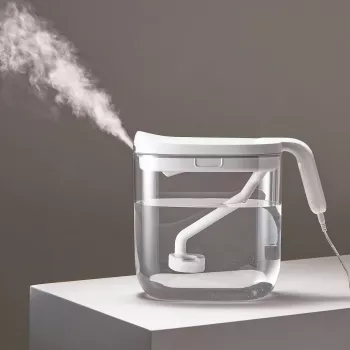
Inside the unit, a small ultrasonic diaphragm vibrates at a very high frequency. That vibration breaks water into microscopic droplets, creating a fog that’s light enough to float into the room.
When humidity is kept in a moderate range and the humidifier is cleaned regularly, cool mist can feel more comfortable than dry air—especially at night.
For households balancing comfort and safety, cool mist is often favored in family spaces because there’s no hot steam to worry about.
Overnight use is common. Keep output moderate and, if possible, use a hygrometer to prevent excessive humidity. A stable surface and a clear mist path (not aimed at pillows or curtains) helps avoid dampness.
Cool mist is commonly preferred to avoid hot water risks. Keep cords secured, place the unit where it can’t be pulled down, and direct mist away from cribs and upholstered furniture.
Air conditioning can dry out a workspace quickly. A quiet ultrasonic unit can maintain comfort during long screen sessions without turning the room into a “sauna” feeling.
Plants usually prefer increased ambient humidity, but direct blasting can wet leaves and soil too much. Position the humidifier so mist disperses into the room rather than soaking one spot.
| Type | How it adds moisture | Typical strengths | Common tradeoffs |
|---|---|---|---|
| Ultrasonic cold fog | Ultrasonic vibrations create fine mist | Quiet operation; low energy; cool mist | Minerals can create white dust; needs regular cleaning |
| Evaporative | Fan moves air through a wet wick/filter | Self-regulating output; less mineral dust | Fan noise; wick/filter replacements |
| Warm mist | Heats water to create steam | Less visible mineral dust; warm output | Hot surfaces/steam risk; higher energy use |
If windows regularly show moisture, humidity may be too high. Guidance from indoor air quality authorities can help you avoid moisture problems; see the EPA’s resource on mold and moisture at epa.gov.
When humidity is high and surfaces stay damp, mold can become a concern. For general information, the CDC’s overview is a helpful reference: cdc.gov/mold. For broader indoor air quality context, ASHRAE’s overview is also useful: ashrae.org.
If you want a simple way to add cool mist without heat, the Ultrasonic Cold Fog Humidifier is designed to deliver steady fog for everyday comfort in dry indoor environments. It’s a strong match for quiet spaces like bedrooms, study areas, and relaxation zones where gentle moisture is preferred.
For work-from-home setups, comfort is often a combination of air quality and a calmer workflow. Pairing a more comfortable room with practical routines can help support focus during long days—consider Calm at Work: Smart Strategies to Manage Stress and Boost Focus for a simple, structured approach.
If you rely on powered devices during storms or outages, having backup power can keep a fan, small purifier, or essential electronics running when conditions are unpredictable; the Portable 200W Solar Generator with AC Outlet & USB Ports is an option for basic power needs.
Generally yes when used correctly: keep the unit on a stable surface, aim mist away from bedding and electronics, and maintain moderate humidity (commonly 30–50%) to reduce condensation and mold risk.
Minerals in hard tap water can become airborne with the mist and settle as dust. Using distilled water, lowering mist output, and cleaning/descaling regularly can reduce it.
Rinse frequently and do deeper cleaning/descaling on a regular schedule based on usage and water hardness. Don’t let water sit for long periods, and allow parts to dry fully to prevent odors.





Leave a comment