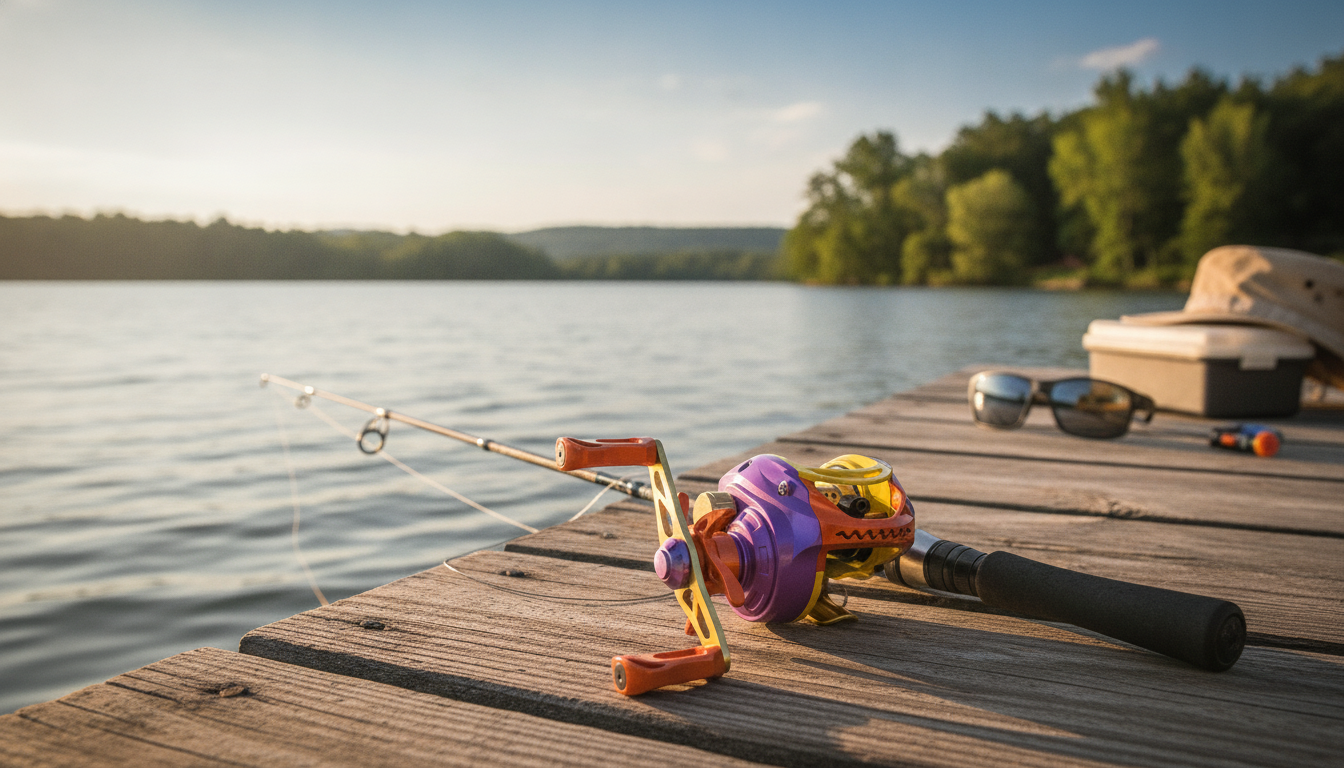
A fast gear ratio, consistent line control, and a rigid spool can make the difference between a clean cast and a frustrating backlash. This reel pairs a 7.2:1 retrieve with a metal spool to support smooth operation, confident hooksets, and repeatable casting when targeting a wide range of freshwater techniques. For more guidance, see Ultra-Strong Body, Over 25lbs Drag, Anti-Reverse Bearin.
A 7.2:1 baitcaster with a metal spool is at home when fishing demands quick line pickup and dependable casting behavior. It’s a practical fit for anglers who want a responsive reel that doesn’t feel “one-technique only.” For further reading, see Portable Fishing Line Spooler – Winder For Baitcasting & ….
If you’re shopping for a fast, all-around option, see the Ultra Smooth 7.2:1 Baitcasting Fishing Reel with Metal Spool.
Gear ratio is about how much line comes back with each turn of the handle. A 7.2:1 retrieve tends to feel “snappy”—especially when a fish hits close, runs toward you, or when you’re making a lot of short, repeatable casts.
| Technique | Why faster retrieve helps | Notes for control |
|---|---|---|
| Jigs & soft plastics | Takes up slack fast after the bite | Use steady pressure and avoid over-reeling at the hookset |
| Spinnerbaits & chatterbaits | Keeps blades working with minimal rod movement | Slow down with the rod tip if the bait rises too much |
| Topwater (walkers/poppers) | Rapid pickup between twitches | Feather the spool at splashdown to reduce overruns |
| Cover fishing | Quickly recovers line after pitching | Set brakes/tension for short, accurate casts |
The spool is the heart of a baitcaster’s casting feel. A metal spool’s rigidity can make the reel feel more predictable once braking and tension are set correctly, especially across many casts in a row.
That stability matters when you’re alternating between pitching to targets and making longer casts down a bank—two situations where inconsistent spool behavior can show up fast.
Even a well-built baitcaster needs a good baseline setup. Small adjustments—especially early on—can dramatically reduce overruns and improve distance without sacrificing control.
For a refresher on the fundamentals of casting and control, the Take Me Fishing guide to using a baitcasting reel is a solid starting point.
A fast reel feels best when the rest of the setup matches the job. The goal is a rod that loads cleanly during the cast and a line choice that complements your primary techniques.
For general maintenance best practices, see Shimano’s reel maintenance basics.
| Detail | Value |
|---|---|
| Model | Ultra Smooth 7.2:1 Baitcasting Fishing Reel with Metal Spool |
| Gear ratio | 7.2:1 |
| Spool | Metal |
| Price | 114.01 USD |
| Availability | In stock |
If your trips involve electronics—phone, camera, headlamp, or a small accessory that needs USB power—a compact power station can be handy at camp or in a vehicle between spots. The Portable 200W Solar Generator with AC Outlet & USB Ports is an in-stock option for keeping essentials topped off during longer outings.
No—gear ratio changes retrieve speed, not how hard the reel is to cast. Beginners can do well with 7.2:1 by starting with higher braking, setting spool tension correctly, and using lures heavy enough to load the rod.
Match line to the technique: braid is great for vegetation and sensitivity, fluorocarbon is popular for bottom-contact baits, and monofilament can help with treble-hook lures thanks to its stretch. Line diameter matters too—overfilling or using very stiff, thick line can make control harder.
Set spool tension to remove side-to-side play, then use braking high enough to control the lure during the cast, especially in wind or with lighter baits. Feather the spool with your thumb at splashdown, and keep line evenly spooled and clean to prevent sudden loops that trigger overruns.






Leave a comment