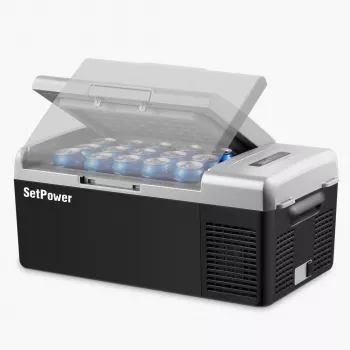
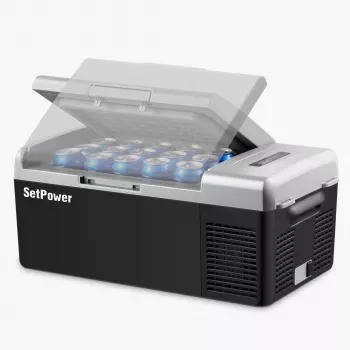
A compact 12V car freezer helps keep groceries, drinks, and temperature-sensitive items reliably cold while driving or parked. Unlike a traditional cooler, it actively maintains a set temperature, which can make a real difference on long drives, hot days, and any trip where the lid gets opened often. Below is a practical guide to where a small 12V freezer fits best, how to power it safely, what to look for in daily use, and how to get consistent results in real-world conditions.
An ultra-portable 12V car freezer is a compact, powered cooling unit designed to run from vehicle power (typically a 12V socket). Instead of relying on ice or pre-frozen packs, it uses active cooling to pull heat out of the insulated compartment and hold a steady temperature.
For food safety, steady refrigeration matters. Authoritative food safety guidance (including the USDA cold storage recommendations and the FDA food safety basics) emphasizes keeping perishable foods properly chilled—something active cooling is better positioned to do consistently in a vehicle.
If you’re shopping for a dedicated unit, the Ultra-Portable 12V Car Freezer is a straightforward option designed specifically for vehicle-friendly cooling without the mess of melting ice.
Most performance complaints come down to power delivery, ventilation, and placement. Set it up like a small appliance—not like a duffel bag.
| Option | Strengths | Trade-offs | Ideal for |
|---|---|---|---|
| 12V car freezer | Active cooling; stable temperatures; no ice mess | Needs power and ventilation; takes cargo space | Road trips, camping, frequent grocery runs, field work |
| Ice cooler | Simple; no power needed; inexpensive | Melting ice; temperature swings; limited duration | Short outings, beach days, occasional use |
| Soft cooler + ice packs | Lightweight; easy to carry; quick setup | Shorter hold time; less protection in extreme heat | Day trips, commutes, quick errands |
| 12V thermoelectric cooler | Typically lightweight; basic cooling | Limited cooling in high heat; may not reach safe temps for perishables | Mild weather, beverages, short durations |
| Car freezer + portable power station | Cooling without idling; flexible placement outside the vehicle | Higher upfront cost; must recharge the power station | Camping basecamps, emergency preparedness, long stationary use |
For a ready-to-go option, consider the Portable 200W Solar Generator with AC Outlet & USB Ports to extend runtime for basecamps and longer parked sessions.
Yes, as long as it’s connected to a power source that remains active. The trade-off is battery drain, so a built-in low-voltage cutoff (if available) helps, and a portable power station is typically safer for long parked periods.
It depends on the starting temperature, how full it is, outside heat, and ventilation. Pre-chilling the unit and loading already-cold items usually gets you to a stable temperature much faster than cooling warm groceries from scratch.
Avoid uncovered liquids that can spill, hot food straight from cooking, and anything that blocks vents or prevents the lid from sealing. For medications, follow the label’s temperature requirements and use a thermometer if a narrow range must be maintained.





Leave a comment