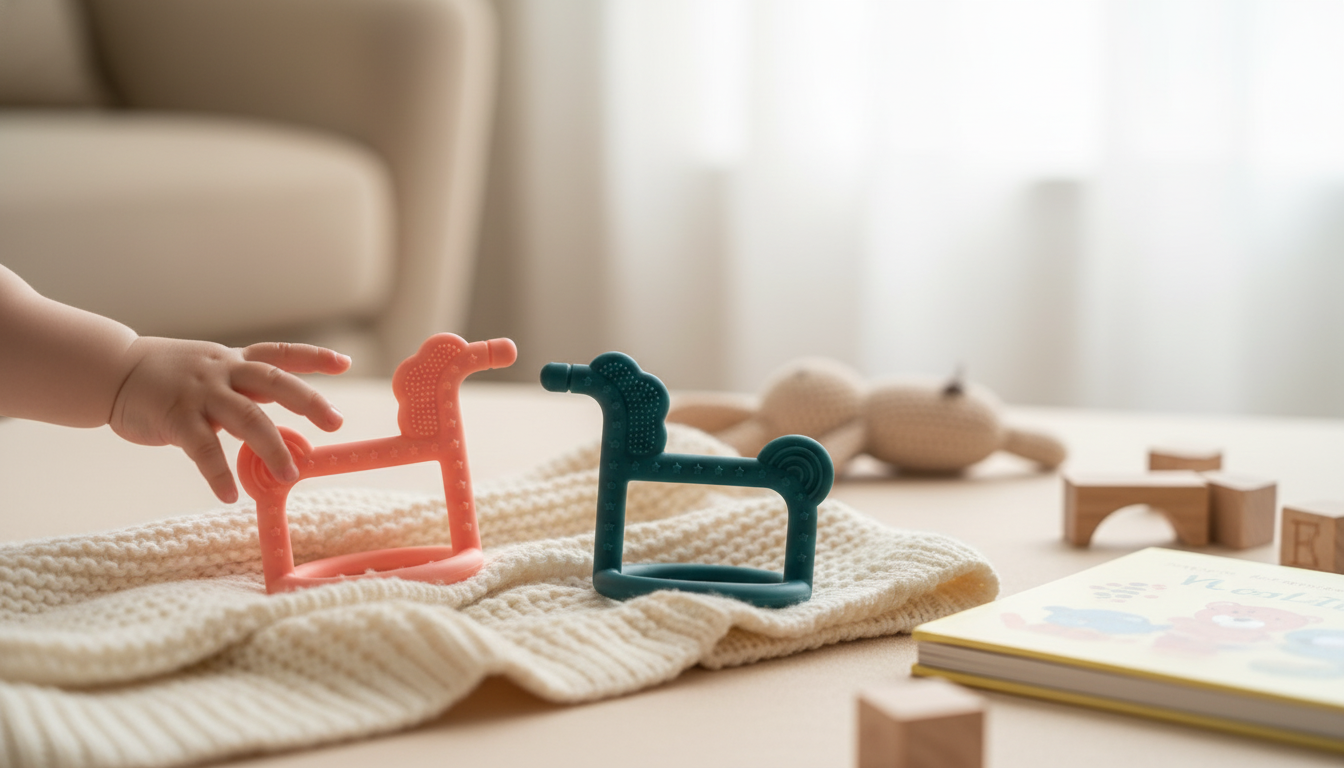
Silicone toys can be safe for infants when they’re made from 100% food-grade or medical-grade silicone and are designed specifically for babies. Silicone is typically soft, durable, and less likely to splinter or crack compared to hard plastics—qualities that matter when a toy is constantly going into a baby’s mouth.
The biggest safety differences come down to material quality and manufacturing standards. Look for products labeled BPA-free and free from common additives like PVC and phthalates, and favor brands that provide clear material details and testing information. For a deeper overview of what “BPA-free baby silicone” means and what to look for in a baby teether, see this guide.
Start with the label: it should clearly state food-grade or medical-grade silicone and appropriate age use. Avoid toys with a strong chemical odor, sticky residue, or paint that can peel. Also inspect the design—one-piece or securely assembled items reduce the risk of parts coming loose.
Clean silicone toys regularly according to the manufacturer’s instructions (many are boil-safe, but not all). Replace any toy that shows tearing, deep cracks, or bite marks that could trap debris. Always supervise infants during use, especially with teethers, and don’t attach toys to long cords or strings that could pose a strangulation hazard.
Be cautious with very cheap, unbranded toys or marketplace listings that don’t disclose materials or testing. If a product’s claims are vague or contradictory, choose another option. Safe silicone should feel smooth and flexible, not oily or brittle.
For Silicone Toys for Infants: Safety Checklist, the best answer depends on fit, material, care instructions, and how the product will be used day to day.
Wash with warm water and mild soap, then rinse well. If the manufacturer allows, you can sanitize by boiling or using a dishwasher, but follow the product’s care instructions to prevent damage.



Leave a comment