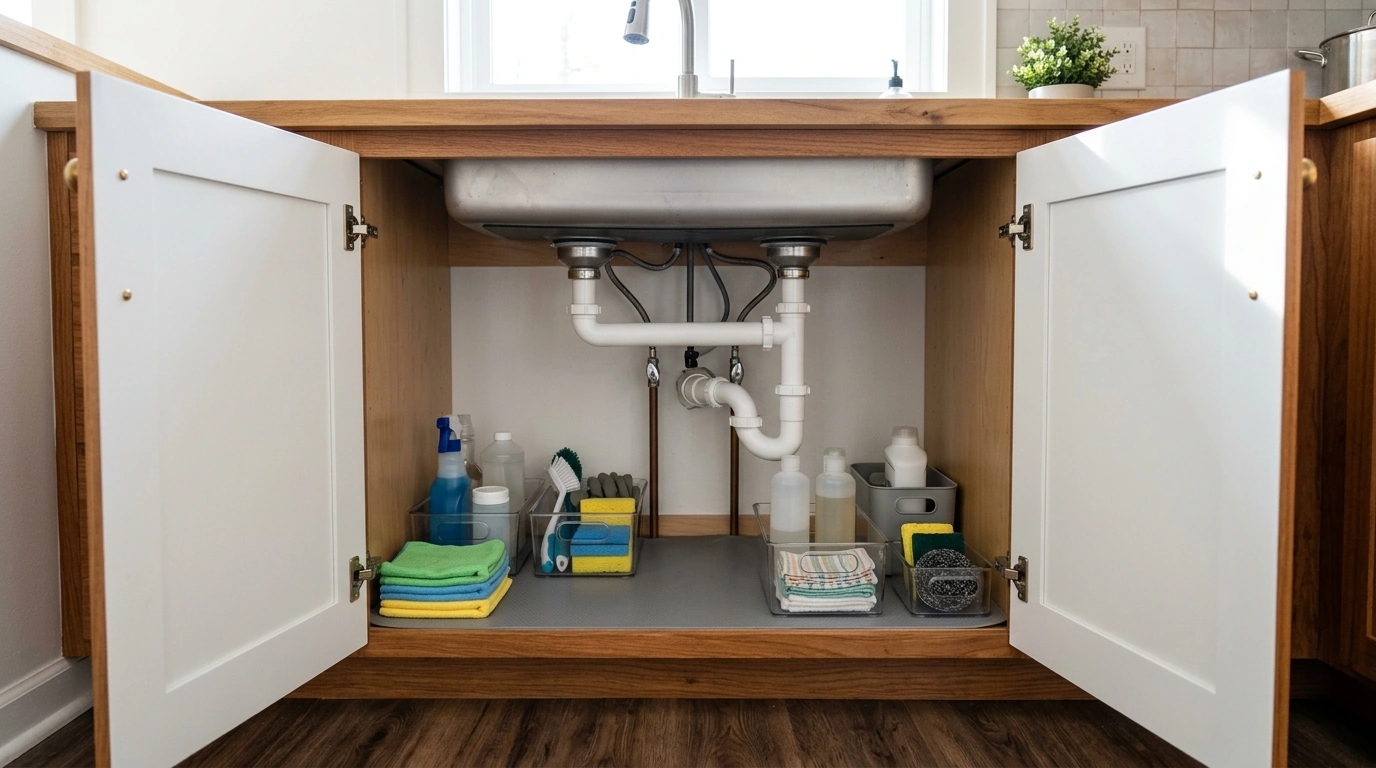
An under-the-sink cabinet has a lot to handle: plumbing takes up space, supplies come in awkward sizes, and small items can disappear behind larger bottles. A little planning can turn that crowded cabinet into a space that is easier to use and maintain.
Our printable checklist is a simple companion for the job. You can use it to keep track of your progress as you sort supplies, arrange storage around pipes, and give everyday essentials a convenient place.
Take everything out of the cabinet before deciding what belongs back inside. Spread the contents on a protected surface and group similar items together: cleaning supplies in one area, sponges and cloths in another, and bags or other extras in a third. Seeing everything at once makes it easier to spot duplicates and supplies you no longer use.
Discard empty containers as directed on their labels. For unwanted cleaning products and other potentially hazardous household materials, follow local disposal guidance rather than assuming they can go in the trash or down the drain. The EPA’s household hazardous waste guide explains why disposal requirements can vary by product and location.
With the cabinet empty, wipe the shelves, floor, and accessible walls, then let the surfaces dry. Look for dampness, water stains, damaged materials, or signs of an active leak around the plumbing. Address a leak before returning supplies; a tidy arrangement will be easier to maintain in a dry cabinet.
As you sort, set aside anything that belongs elsewhere. Keeping only suitable, useful items under the sink leaves more room to reach what you actually need.
Measure the usable width, depth, and height of the cabinet, paying attention to the space taken up by pipes and any other fixed fittings. Measure the cabinet opening too: a bin that fits inside still needs to pass through the door.
Choose containers that fit alongside the plumbing without pressing against it or blocking access. A few smaller bins may be more practical than one large tray, especially if the pipes divide the cabinet into uneven spaces. Leave enough clearance to lift containers out and inspect the area when needed.
Put frequently used supplies near the front, where you can retrieve them without moving a stack of other items. Group smaller supplies in easy-to-lift bins, and place extras farther back if they will not obstruct access. Keep sponges and cloths in a dry, accessible spot rather than closing damp items into a container.
| Item group | Suggested placement | Helpful approach |
|---|---|---|
| Everyday cleaning supplies | Near the front | Group in a removable bin |
| Sponges and cloths | In a dry, accessible spot | Keep together in a small container |
| Extra supplies | Toward the back | Check what is already on hand before buying more |
Keep products in their original labeled containers so instructions and warnings remain available. Store cleaning products away from children and pets; if the cabinet is accessible to them, choose a safer storage location or use an appropriate cabinet lock. Never combine cleaning products, and follow each label’s storage instructions. For more household safety guidance, see Poison Control’s prevention tips.
You do not have to solve every storage problem at once. Begin by clearing and sorting, then clean and measure before deciding where things go. Breaking the work into stages makes it easier to pause between steps without losing track of what remains.
Our From Mess to Magic under-the-sink checklist is a printable digital download designed to accompany that process. It is listed at $3.99. Use it as a practical guide while you clear the cabinet, consider your available space, and put your supplies back in groups.
If you are also looking for a resource on managing stress and focus beyond your organizing project, our Calm at Work digital guide and checklist is another option from our collection.
Once each group has a home, return supplies to their designated spots after use. Put the most-used bin back at the front, and avoid tucking new purchases into gaps where they will be forgotten. Before buying replacements, take a quick look at the extras you already have.
Schedule a periodic check for spills, leaks, and supplies that need replacing. Pull out the bins, wipe up any mess, and make sure you can still reach the plumbing. If you notice moisture or damage, investigate and address the source rather than simply rearranging items around it.
Your setup can change along with your household. If a product is no longer useful or a different item becomes part of your routine, adjust the groups and placements. The best arrangement is one you can use comfortably and keep up without turning every cleaning session into another search.
Empty the cabinet, sort its contents, clean the surfaces, and check for leaks before putting supplies back.
Measure the available space and choose containers that fit around the plumbing while leaving it accessible.
No. From Mess to Magic is listed as a printable digital download.






Leave a comment