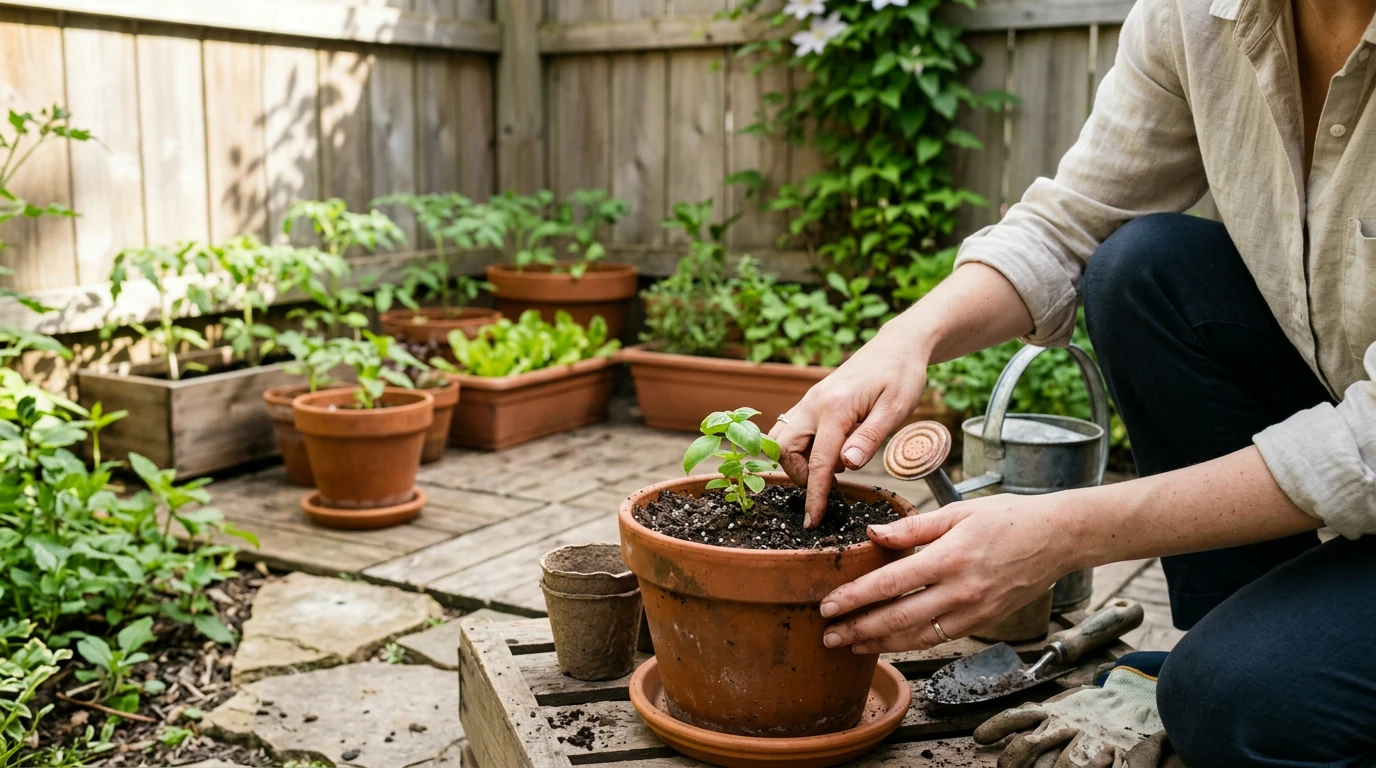
Starting a garden can feel like a lot to learn at once, but you don’t need a perfect plan or a large backyard. A few well-placed plants can teach you plenty about sunlight, soil, and seasonal changes. Our team recommends starting small, watching how your plants respond, and making adjustments as you go.
Our beginner’s guide, First-Time Gardening Mistakes and How to Avoid Them, offers a practical starting point for building confidence one season at a time.
A handful of containers or a modest garden bed is easier to water, observe, and maintain than a large plot. Begin with a few plants you enjoy eating or looking at, and leave room to expand once you know what your space can support. A small start also makes it easier to notice when one plant needs attention.
Before buying plants, watch your intended growing spot throughout the day. Note when direct sunlight reaches it and when buildings, fences, or trees cast shade. Many vegetables prefer at least six hours of direct sun, while some leafy greens and ornamental plants can tolerate less. Match each plant’s label to the light your site actually receives, not the light you hope it will receive.
Climate matters, too. Local frost dates help you decide when tender plants can safely go outdoors. For perennial plants that return year after year, the USDA Plant Hardiness Zone Map is a useful starting point, though moisture, heat, and soil conditions matter as well. Choose varieties that fit both your climate and the space available when they reach mature size.
Most early setbacks are manageable once you know what to look for. Use these corrections to make informed choices before and after planting.
| Mistake | Why it matters | What to do instead |
|---|---|---|
| Planting in too much shade | Sun-loving plants may grow poorly. | Check the plant’s light needs before choosing a spot. |
| Watering too often | Roots can suffer in persistently wet soil. | Check soil moisture and water when appropriate for the plant. |
| Crowding plants | Plants compete for space and airflow. | Follow spacing guidance on seed packets or plant labels. |
| Ignoring soil condition | Poor drainage or compacted soil can hinder growth. | Check drainage and improve soil with suitable organic matter. |
| Planting too early | Cold temperatures can damage tender plants. | Check local frost dates and planting guidance. |
Watering deserves special attention because plant needs vary with weather, soil, and growth stage. Instead of watering automatically on a fixed schedule, feel the soil below the surface and consider the plant’s preferences. Some plants need consistently moist soil; others benefit from drying out between waterings. If the soil is already wet, wait and check again rather than adding more water.
Spacing may seem generous when seedlings are tiny, but those gaps give roots and leaves room to grow. Likewise, soil that stays soggy or becomes hard and compacted deserves attention before planting. Adding suitable organic matter can help improve soil structure, but avoid working wet soil, which can compact it further.
Take a few minutes to walk through your garden regularly. Check soil moisture, look under leaves for pests, and notice damaged or discolored foliage. A single damaged leaf is not always a crisis; look for patterns and changes before deciding what action to take. The University of Minnesota Extension’s planting and growing guides can help you find care information for specific plants.
Containers often dry out faster than garden beds, especially during hot or windy weather. Use pots with drainage holes so excess water can escape, and check them more frequently when temperatures rise. Water thoroughly when the plant needs it, allowing excess water to drain rather than leaving the pot sitting in collected water.
Keep a short garden notebook or a note on your phone. Record planting dates, varieties, watering observations, and what grew well. Next season, those notes can help you choose a better location or adjust your timing without relying on memory.
If you want a practical companion as you get started, explore our First-Time Gardening Mistakes and How to Avoid Them guide. At $7.99, it is an approachable resource for gardeners who want to make decisions with greater confidence. Visit the product page for current details.
For projects beyond the garden, we also offer a Portable 200W Solar Generator with AC Outlet & USB Ports. Consider your device’s power requirements before choosing a portable power source.
Above all, give yourself room to learn. A plant that needs a different spot or a revised watering routine isn’t a failure—it’s useful information for your next small adjustment.
Overwatering is a frequent beginner mistake. Check soil moisture and consider each plant’s needs before watering.
Sunlight requirements vary by plant. Many vegetables prefer at least six hours of direct sun, while some plants tolerate less.
Both can work well. Containers offer flexibility and a manageable starting size, while garden beds provide more growing space.



Leave a comment