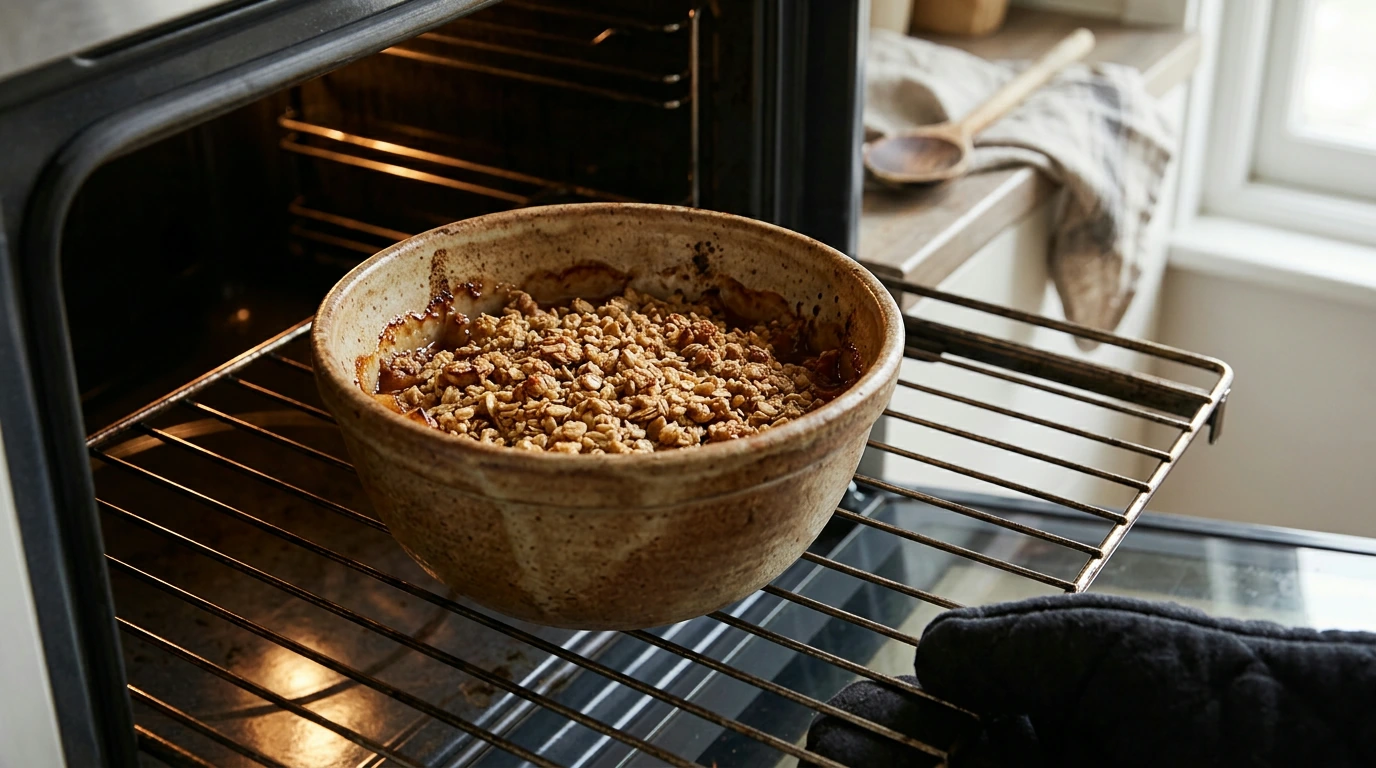
Some ceramic bowls can go in the oven, but not all of them. Check the bowl’s label, packaging, or manufacturer’s care instructions for an explicit “oven-safe” designation before heating it. Ceramic describes a broad range of products, and a bowl’s clay, glaze, construction, and intended use all affect how it handles heat.
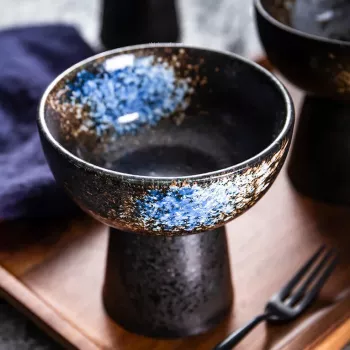
If the maker does not confirm that a bowl is oven-safe, use it for serving rather than baking. Decorative bowls and pieces made for cold desserts may not be designed for oven temperatures. For example, the black high-foot ceramic dessert bowl guide discusses a bowl intended for treats such as ice cream and pudding; do not assume a serving bowl is oven-safe unless its product instructions say so.
Rapid temperature changes can create thermal stress: one part of the bowl expands or contracts faster than another, causing cracks or breakage. A bowl that is oven-safe may still be damaged if it is moved directly from the refrigerator to a hot oven, placed on a cold or wet surface while hot, or exposed to a sudden temperature change.
Follow the maker’s temperature limit and directions. When instructed, place the bowl in a cool oven and let it warm as the oven heats. Set hot ceramic on a dry, heat-resistant pad, not a cold countertop, sink, or damp towel. Avoid using the broiler unless the manufacturer specifically says the bowl is broiler-safe; broilers expose cookware to intense, direct heat.
Also check whether the bowl is microwave-safe, freezer-safe, or dishwasher-safe separately. Those ratings do not automatically mean it can be used in an oven. If the bowl has chips, cracks, or a damaged glaze, avoid heating it, since existing flaws may worsen under stress. When the care instructions are missing or unclear, choose a baking dish that is clearly marked oven-safe instead.
It’s safest to avoid that sudden temperature change, which can cause thermal shock and cracking. Follow the manufacturer’s instructions; if they allow oven use, let the bowl warm gradually as directed.






Leave a comment