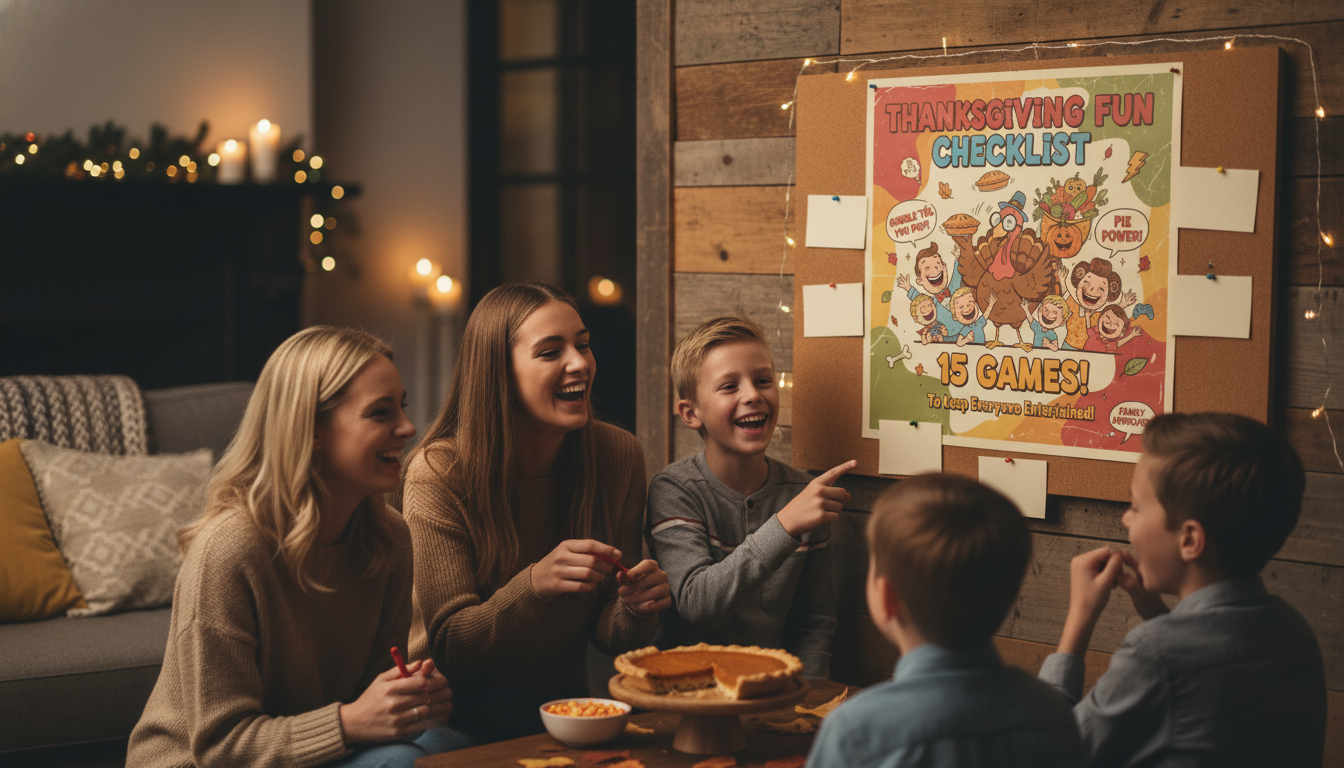
A lively Thanksgiving doesn’t require complicated planning—just a mix of easy, low-prep games that work for different ages and energy levels. This checklist-style guide groups 15 crowd-pleasers by mood (table, living room, and after-dinner) with quick setup notes, time estimates, and simple ways to include kids, teens, and adults—plus a printable option for instant hosting.
| Game type | Best for | Space | Time | What you need |
|---|---|---|---|---|
| Icebreakers | Mixed ages meeting for the first time | Living room or entryway | 5–10 min | Prompt cards or a printable |
| Table games | Keeping the table engaged between courses | Dining table | 5–15 min | Pens, paper, or printouts |
| Team games | Big groups who like friendly competition | Open area | 10–20 min | Timer, score sheet, simple props |
| Quiet games | Kids, introverts, post-meal downtime | Corner of the room | 10–30 min | Word searches, scavenger list, crayons |
| Movement games | High energy kids/teens | Hallway/backyard | 10–15 min | Tape, cups, balloons (optional) |
Tip: keep your game supplies clean and easy to grab—especially if people are handling shared cards or pens. The CDC’s handwashing guidance is a solid baseline for holiday gatherings: CDC — Handwashing: Clean Hands Save Lives.
Each person answers one prompt. Keep it light: favorite fall smell, best family tradition, funniest school story. Setup: index cards or a printed prompt sheet.
Two statements are true; one is a silly “turkey tale.” Everyone votes on the fake. Setup: none—just take turns.
Write guest names plus seasonal words to unscramble. Great for early arrivals and kids who like quick wins. Setup: paper + pens.
Teams take specific photos: something orange, a family selfie, a funny hat, a “chef at work” shot. Setup: a list and phones; designate one person as judge.
Play 1–2 rounds only, then save the rest for later. Setup: bingo cards and something to mark squares (coins, stickers, or pen dots).
Each person shares something they’re grateful for and one small action they’ll do this week (a call, a walk, a note). Setup: none.
Keep questions family-safe. Let kids pick the next prompt so they stay engaged. Setup: a list on your phone or printed prompts.
Set a theme—turkey, pumpkin pie, parade float—and vote for funniest, cutest, and most creative. Setup: napkins + pens/markers.
Older relatives share a quick “first Thanksgiving I remember” story. Kids ask one follow-up question each. Setup: none; keep it moving with a gentle timer.
One question per person, pass right. Short answers keep it flowing between courses. Setup: a small trivia list (family facts, Thanksgiving history, or “who said it?” quotes).
Use simple prompts (foods, traditions, parade, football, family moments). Keep turns under 60 seconds. Setup: slips of paper or a printable prompt list.
If you’re juggling cooking and hosting, build in a little structure: short rounds, clear roles, and predictable transitions help everyone relax. For family connection routines that feel good (and don’t drag on), see: American Academy of Pediatrics — HealthyChildren.org. And for turkey handling basics while games run in the background, the USDA’s holiday guidance is a helpful reference: USDA FSIS — Turkey Basics.
Fast, no-prep favorites include a gratitude prompt round, Thanksgiving would-you-rather, a quick left-right story read from your phone, simple charades prompts, and a napkin doodle challenge. Keep rounds to 5–10 minutes and use basics you already have (pens, napkins, a timer).
Plan for 3–5 total: one pre-meal icebreaker, one table-friendly activity, and one after-dinner game, plus a quiet station that can run in the background. This keeps things fun without interrupting cooking, conversation, or cleanup.
Bingo, scavenger hunts, charades with easy prompts, pictionary relay, and build-a-story cards all adapt well across ages. Mixed-age teams and simple scoring help kids feel included while keeping adults engaged.





Leave a comment