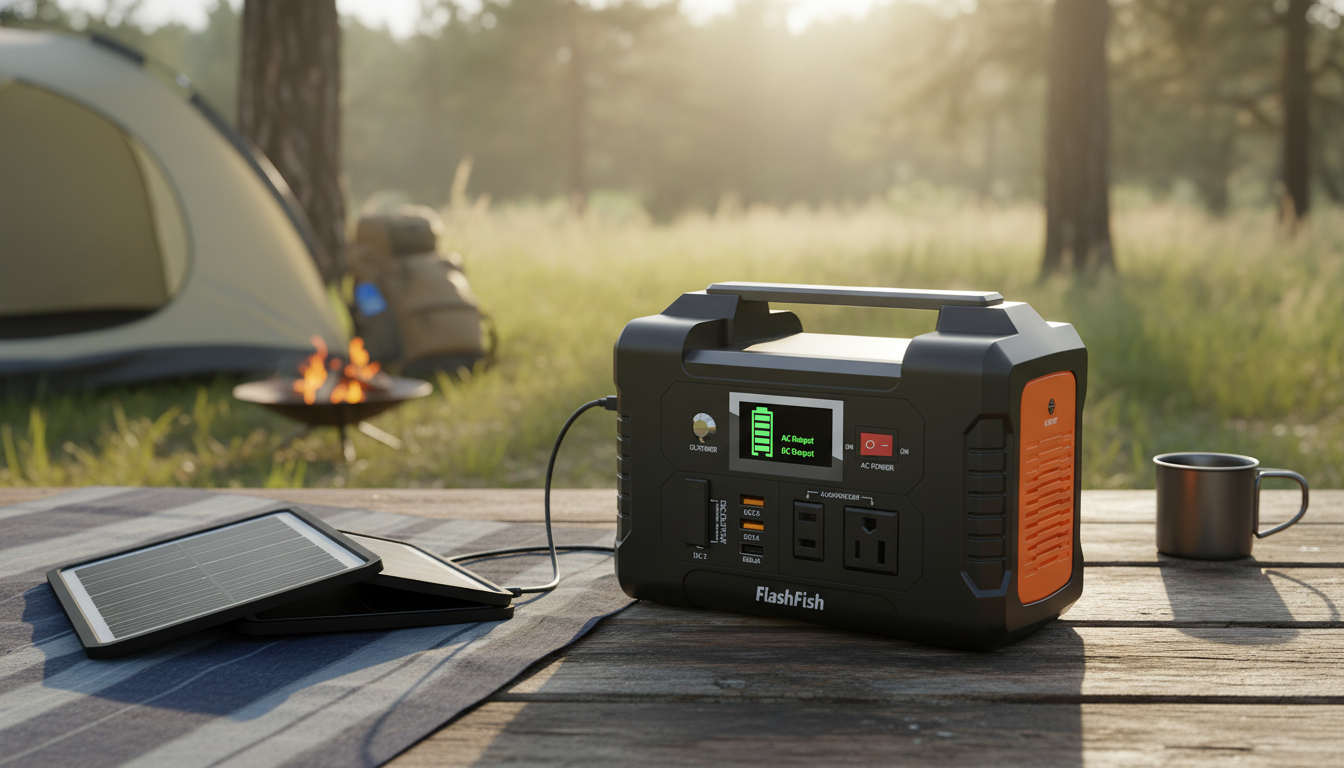
A compact 200W solar generator with an AC outlet and USB ports can keep the essentials going when a wall outlet isn’t available—on a road trip, at a campsite, during outdoor projects, or through a short home outage. The key is matching your expectations to what a 200W-class unit is designed to do: power low-to-moderate draw devices quietly and conveniently, with flexible recharging options.
For broader outage planning guidance, review Ready.gov’s power outage recommendations. For understanding how solar charging works in general, the U.S. Department of Energy’s solar PV basics is a helpful reference.
Instead of replacing a whole-home generator, a 200W unit shines as an “everyday ready” power source: easy to carry, easy to store, and quick to deploy when you need dependable electricity for smaller loads.
A 200W-class power station is best for low-to-moderate draw electronics. Actual performance depends on the combined wattage of everything plugged in, plus startup surge requirements for certain devices (especially anything with a compressor or motor).
| Device Type | Typical Power Draw | Likely Fit | Notes |
|---|---|---|---|
| Smartphone charging (USB) | 5–20W | Yes | Multiple charges; use quality cables for faster charging |
| Laptop charging (AC) | 45–100W | Often | Confirm the laptop adapter wattage; avoid running other loads simultaneously if near the limit |
| LED light strip / lantern | 3–20W | Yes | Excellent for long runtime |
| Wi‑Fi router / modem | 10–30W | Yes | Helpful for short power interruptions; runtime depends on battery capacity |
| Small desk fan | 10–40W | Yes | Choose DC/USB fans for best efficiency |
| Mini fridge / compressor cooler | 60–120W (surge higher) | Maybe | Check starting surge; many compressor units exceed 200W at startup |
| Electric kettle / heater | 800–1500W | No | Heating loads are far beyond a 200W class unit |
Before plugging anything in, check the device label or power brick for wattage. A 200W unit can power several small devices at once, but only if the total draw stays under the rating and the inverter can handle any startup surge.
A practical approach is to run one AC device at a time (like a laptop charger) while using USB ports for everything else. That keeps the inverter load stable and helps prevent unexpected shutoffs.
Solar charging is convenient, but it’s also variable. Panel size, sun angle, temperature, haze, and cloud cover all change how much energy you harvest. For estimating what solar can produce in your area, the NREL PVWatts calculator is a trusted tool.
If you’re building a “grab-and-go” kit, plan for at least two charging paths (for example: wall at home plus solar for extended time outdoors). That way, the power station stays useful even when conditions change.
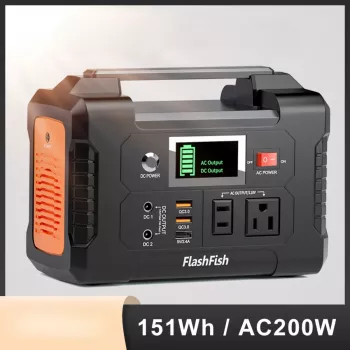
If you want a compact, travel-friendly power station for light-duty AC use and everyday USB charging, the Portable 200W Solar Generator with AC Outlet & USB Ports is designed for exactly that kind of flexibility. It fits common charging needs for phones, tablets, lighting, and many laptop power adapters—especially when you manage total load thoughtfully.
It depends on the fridge’s startup surge and steady draw. Many compressor fridges spike above 200W at startup, so check the fridge label for running watts and starting surge and consider higher surge capability if needed.
Runtime depends on the battery’s watt-hours and the charger wattage. A good estimate is hours ≈ Wh × 0.8 ÷ W, and phones (5–20W) typically run much longer than laptops (45–100W).
Yes, but output is reduced—often significantly. Panel positioning, cloud thickness, and available daylight hours all affect results, so a wall or vehicle charging backup helps for reliability.






Leave a comment