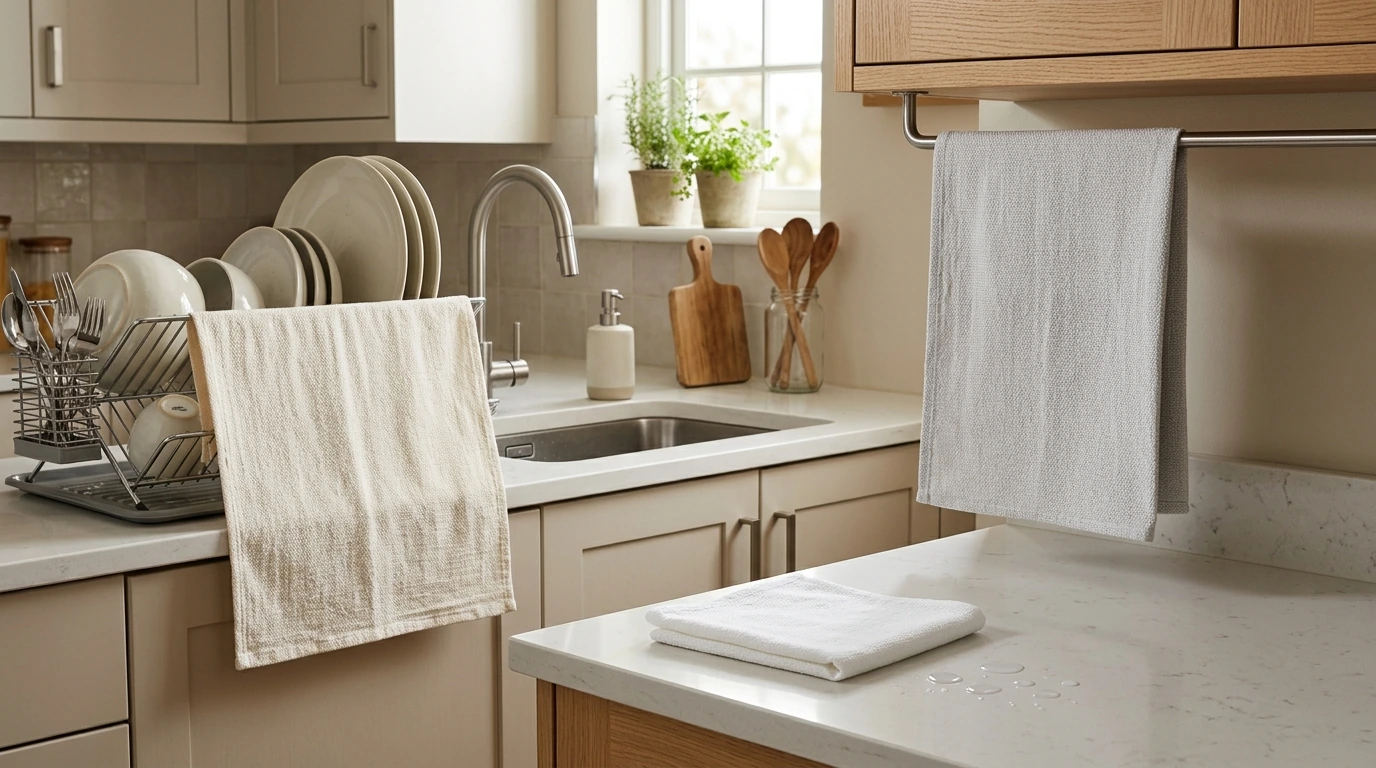
A dependable set of cotton kitchen towels can handle daily dishes, quick counter wipe-downs, and hand drying without feeling flimsy. This 3-piece set is a simple way to keep a fresh towel in rotation—one for drying, one for wiping, and one ready for spills—so the kitchen stays tidy with less fuss.
What a 3-piece cotton towel set is best for
Kitchen towels do a lot of “small jobs” that add up over the day. Keeping three on hand makes it easier to grab the right towel quickly and swap out a damp one before odors start.
- Dish and glass drying: Absorbent cotton helps pull moisture from plates, cutlery, and cookware after washing.
- Hand drying near the sink: Cuts down paper towel use and gives everyone a dedicated towel for hands.
- Countertop and stovetop wipe-ups: Handy for quick crumbs, splashes, and light grease cleanup.
- Oven handle and appliance wipe: Keeps common touchpoints cleaner between deeper cleanings.
- Backup rotation: Having three towels makes it easier to replace one that stays damp too long.
Why cotton works well in the kitchen
Cotton is a go-to choice for everyday kitchen linens because it balances absorbency, comfort, and reusability. For routine drying and wiping, it’s an easy material to live with.
- Absorbency: Cotton fibers take in water efficiently, making drying tasks faster.
- Heat tolerance for everyday use: Suitable for handling warm (not scorching) dishes and routine kitchen conditions.
- Softness for delicate surfaces: Helps reduce the risk of scratching compared with rougher materials when used properly.
- Reusability: Designed to be washed and reused, which can reduce disposable paper product use.
- Comfortable feel: Pleasant for frequent hand drying and quick wipe-downs.
For hygiene basics—especially when switching between food prep, hands, and surfaces—authoritative guidance from the CDC and USDA FSIS emphasizes clean hands, clean surfaces, and avoiding cross-contamination.
How to set up a simple towel routine (cleaner counters, fewer odors)
A “one towel does everything” approach tends to create two problems: towels start smelling faster, and it’s easier to spread mess from one area to another. A three-towel system keeps things straightforward.
- Assign roles: Keep one towel for hands, one for dishes, and one for general wipe-ups to limit cross-contamination.
- Swap before it gets musty: Replace a towel as soon as it stays damp for long periods or starts to smell.
- Dry it out between uses: Hang fully spread (not bunched) so air can circulate.
- Keep a small laundry bin nearby: Makes it easier to toss used towels immediately.
- Use separate towels for raw-meat cleanup: Use disposable options or dedicated sanitizing cloths for higher-risk messes, then disinfect properly.
Easy towel rotation plan
| Task |
Best towel choice |
Swap frequency |
| Hand drying |
Dedicated hand towel |
Daily (or sooner if damp) |
| Dish drying |
Dish-drying towel |
Every 1–2 days depending on use |
| Counter wipe-ups |
General cleanup towel |
Daily; immediately after raw-food contact |
Care and washing tips to help towels last longer
Kitchen towels work hard, so frequent washing is part of the deal. The goal is to keep them absorbent, fresh-smelling, and ready for the next shift.
- Wash regularly: Frequent washing helps prevent lingering odors and keeps absorbency consistent.
- Skip heavy fabric softener when possible: It can leave residue that reduces absorbency over time.
- Dry thoroughly: Fully drying towels helps prevent mildew smells.
- Treat stains quickly: Rinse spills and spot-clean before laundering if needed.
- Store dry only: Put towels away only when completely dry to avoid musty cabinets.
For general laundering guidance on cotton, Cotton Incorporated’s cotton care resources are a helpful reference for keeping cotton items in good shape.
When to replace kitchen towels
Even with great care, towels don’t last forever. Retire them when they stop doing their job well—or when they no longer feel sanitary for kitchen use.
- Persistent odor that remains after washing.
- Noticeable thinning, holes, or fraying edges that reduce usefulness.
- Reduced absorbency even after proper washing and drying.
- Stains from grease or food that cannot be cleaned and may transfer to surfaces.
- After high-risk contamination (for example, raw poultry juices) when laundering cannot reliably restore safe use.
If the goal is a simple, no-fuss towel lineup, a three-pack makes the “assign roles and rotate” routine easy to maintain.
- Simple 3-towel bundle for everyday kitchen rotation.
- Pairs well with assigned roles (hands, dishes, wipe-ups) so towels stay fresher between washes.
- Lightweight and easy to store for apartments, dorm kitchens, and small homes.
- Practical add-on when building a basic kitchen supply kit.
Shop the 3-Piece Cotton Kitchen Towels Set
Helpful add-on for kitchen readiness
Dry towels are great—until a power outage slows down cleanup and food safety routines. A small backup power source can keep essentials running (like charging devices or powering small appliances) when the lights go out.
Portable 200W Solar Generator with AC Outlet & USB Ports
FAQ
How often should kitchen towels be washed?
For most homes, washing daily or every 1–2 days (depending on how heavily they’re used) helps prevent odors and keeps towels absorbent. Wash immediately after wiping up raw meat juices or other higher-risk spills.
Do cotton kitchen towels absorb better over time?
Many cotton towels become more absorbent after a few washes as manufacturing finishes rinse out. Over time, heavy fabric softener buildup can do the opposite by leaving a coating that reduces absorbency.
What is the best way to prevent kitchen towel odors?
Dry towels fully between uses by hanging them spread out, and rotate them before they stay damp for long periods. Avoid leaving damp towels bunched up overnight, and wash regularly (hot water when appropriate for the fabric and soil level).
Recommended for you







Leave a comment