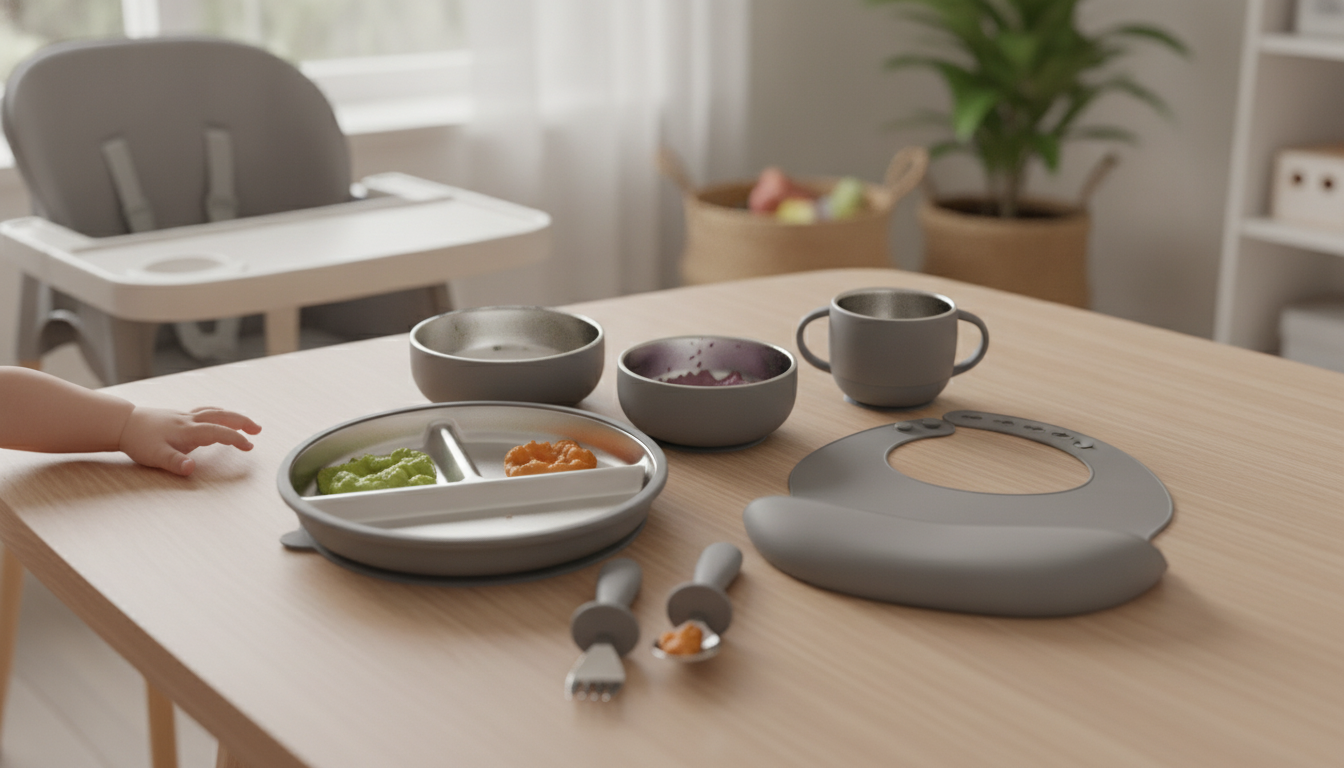
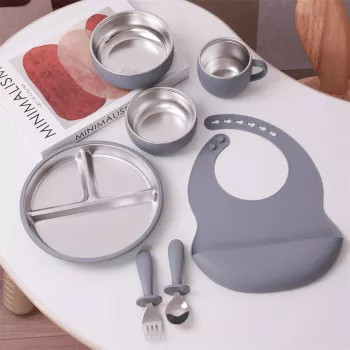
Mealtime with babies and toddlers can be messy, fast-paced, and unpredictable. A coordinated feeding set helps keep food on the tray, supports early self-feeding skills, and simplifies cleanup. This 7-piece silicone baby feeding set pairs suction plates with a leakproof bib and stainless-steel utensils for everyday use at home or on the go.
If you’re setting up a practical routine for starting solids and beyond, the 7PCS Silicone Baby Feeding Set with Suction Plates, Leakproof Bib & Stainless Utensils brings the core essentials together so you’re not piecing things together one meal at a time.
A unified set can make daily feeding feel more predictable—especially when different caregivers (parents, grandparents, daycare) are sharing responsibilities. Here’s what this kind of kit is designed to cover:
For families building a starter feeding station, it also helps to pair routine tools with parent-friendly support. If you’re juggling work, schedules, and baby milestones, Calm at Work: Smart Strategies to Manage Stress and Boost Focus can be a practical add-on for planning calmer days around busy transitions.
Early self-feeding is a learning curve. Babies explore with their hands, test gravity, and push on edges—often before they’re able to control force and direction. A strong suction base won’t eliminate mess, but it can reduce the “plate on the floor” moments that derail a meal.
| Step | What to Do | Why It Helps |
|---|---|---|
| Clean the surface | Wipe dry and remove crumbs/grease | Improves suction strength |
| Warm the plate if needed | Rinse with warm water and dry | Helps silicone seal evenly |
| Press from center outward | Apply firm pressure across the base | Reduces air gaps |
| Test before serving | Try lifting a corner gently | Confirms a secure hold |
A good bib isn’t just about keeping a shirt clean—it’s about making the whole process faster to reset. When the catch pocket does its job, fewer crumbs end up in the high-chair seat, which can mean less scrubbing later.
For families introducing solids, it can be helpful to review age-appropriate feeding guidance, including readiness and how textures change over time. The American Academy of Pediatrics has a helpful overview on starting solid foods.
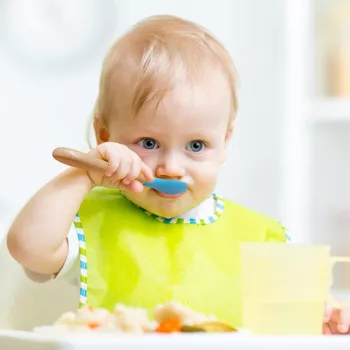
Utensils matter more than they seem. When the spoon flexes too much, thicker foods can slide off before they reach the mouth—leading to frustration and more mess. Stainless tips tend to feel steadier, while child-sized handles help little hands practice control.
As skills improve, many children move from “hand-first” feeding to alternating hands and utensils. Expect a phase where the spoon is used like a shovel—and that’s still progress.
For a quick refresher on common risks and food examples, the CDC’s resource on choking hazards is a useful reference for caregivers.
If you’re comparing materials, the U.S. FDA also provides background on BPA and food-contact applications, which many parents consider when shopping for everyday feeding items.
If you want a simple “grab-and-go” setup that covers suction stability, drip-catching, and utensil practice in one place, the 7PCS Silicone Baby Feeding Set with Suction Plates, Leakproof Bib & Stainless Utensils is a straightforward way to build that routine.
Suction works best on smooth, clean, non-porous surfaces. Textured or matte trays can reduce grip, so wiping the tray dry, pressing firmly, and testing the seal before serving can help.
Rinse promptly after meals, wash with mild soap, and dry thoroughly before storing. Strongly pigmented foods can cause staining, and occasional warm-water soaks often help odors fade over time.
They can be when they’re age-appropriate, smooth-edged, and used with close supervision. Stainless tips may help with scooping, but mealtime readiness and safe feeding practices matter most.




Leave a comment