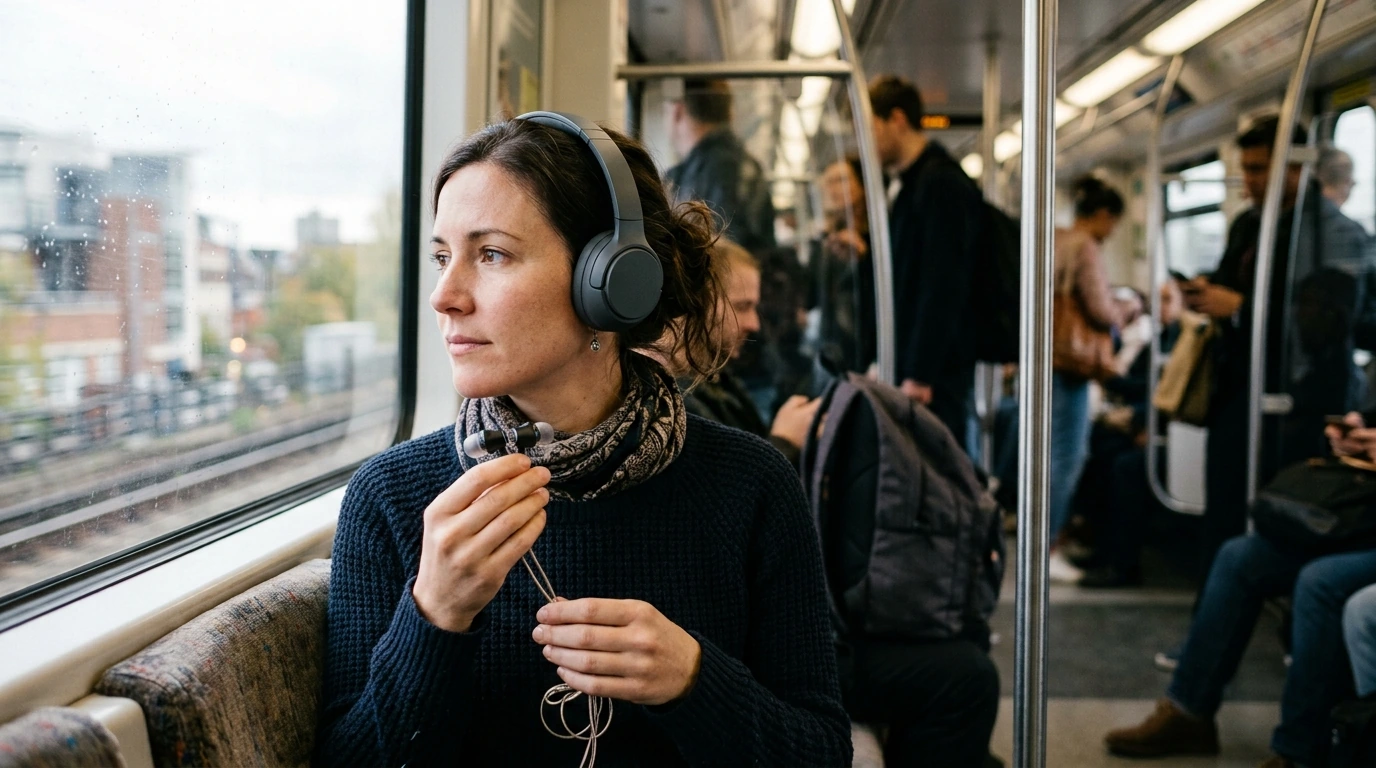
Two headphones can sound equally good in a quiet room yet feel completely different on a commute or in an open office. The difference usually comes down to how they reduce noise: active noise cancellation that fights sound with sound, or passive sound blocking that relies on physical isolation. This guide breaks down how each method works, where each excels, and how to pick the right option for your typical environments and comfort needs.
Active noise cancellation (ANC) uses microphones and onboard processing to create an inverse signal that reduces certain external sounds by the time they reach your ear. Passive sound blocking (isolation) reduces noise through physical barriers: an earcup seal (over-ear/on-ear) or eartips (in-ear), plus materials that damp sound.
Many modern headphones combine both—strong passive isolation plus ANC—because the two methods cover each other’s weak spots. Also, perceived quiet is heavily influenced by fit: head shape, ear canal shape, glasses, hair, and how stable the seal stays while you move can matter as much as the tech inside.
ANC systems use microphones to capture outside sound, then digital signal processing generates an “anti-noise” waveform. Your headphone driver plays that inverse waveform along with your music or podcast, reducing the energy of certain noises at your ear.
ANC typically performs best against steady, low-frequency noise—think engine drone, HVAC hum, bus vibration, or airplane cabin rumble. That’s why travelers often describe good ANC as instantly “calming,” even before audio starts.
There are limits. Sudden, sharp sounds (a dropped dish), irregular high-frequency noise (some speech patterns), and wind can reduce effectiveness or cause audible artifacts. Many models now include adjustable ANC levels or transparency modes that intentionally let in speech and environmental cues when awareness matters. For a deeper technical explanation, IEEE Spectrum offers a clear overview of the fundamentals of ANC: https://spectrum.ieee.org/how-noise-canceling-headphones-work.
Passive isolation depends on physical design and sealing. With over-ear headphones, isolation comes from the earcup volume, clamp force, and the cushion’s ability to seal against the head. Even small gaps—often caused by glasses arms, thick hair, or jaw movement—can leak noise and reduce bass.
With in-ear headphones, isolation depends on eartip material and insertion depth. Silicone tips can be comfortable and easy to clean; foam tips often conform better and can improve isolation for many ears. A proper seal can dramatically cut external noise without any electronics at all.
| Situation | ANC advantage | Passive blocking advantage | Best pick if priority is quiet |
|---|---|---|---|
| Plane/train cabin | Excellent at low-frequency rumble | Helps but may leave some rumble | ANC (with good seal) |
| Office voices | Varies by model; helps reduce overall loudness | Often strong for mid/high frequencies with a solid seal | Strong passive, or ANC+passive combo |
| Windy outdoors | Can introduce wind noise without mitigation | No electronic artifacts; consistent | Passive (or ANC with wind reduction) |
| Study/reading at home | Creates a calmer backdrop | Simple and battery-free | Either—choose for comfort |
Reducing background noise can lower the temptation to crank volume, supporting safer listening habits. For guidance on noise exposure and hearing loss prevention, NIOSH provides practical resources: https://www.cdc.gov/niosh/topics/noise/.
Use safe listening habits: keep volume at a comfortable level, take breaks, and avoid sustained high volume in noisy settings. If you experience ringing, pain, or persistent discomfort, reduce volume and consider professional guidance. OSHA also summarizes occupational noise exposure concerns and limits: https://www.osha.gov/noise.
| Choose this if… | ANC | Passive blocking |
|---|---|---|
| You commute by plane/train often | Strong match | Helpful but secondary |
| You want battery-free isolation | Not ideal | Best match |
| You’re sensitive to “pressure” feeling | Try adjustable; may bother some | Often preferable |
| You need awareness while walking | Use transparency mode | May block too much |
If you want a streamlined buying overview with practical considerations, see Noise Cancellation vs Passive Sound Blocking: Your Ultimate Guide to Choosing the Best Headphones.
For anyone using headphones to focus in busy environments, pairing better isolation with workplace focus habits can help, especially in open offices. The digital guide Calm at Work: Smart Strategies to Manage Stress and Boost Focus includes actionable routines and checklists that fit into real workdays.
It depends on the noise you’re trying to reduce and how well the headphones fit. ANC usually excels at steady low-frequency rumble, while strong passive isolation can be excellent for voices and higher-frequency clatter; the most consistent results often come from models that combine both.
Some people are sensitive to the way ANC alters low-frequency sound and the sensation it can create in the ear. Trying a lower ANC setting, switching to a different earcup design, or choosing strong passive isolation can reduce or eliminate that discomfort.
They can support safer listening by reducing background noise so you’re less tempted to raise volume, but they aren’t certified hearing protection. Keeping volume reasonable, taking breaks, and staying aware in safety-critical situations are still important.





Leave a comment