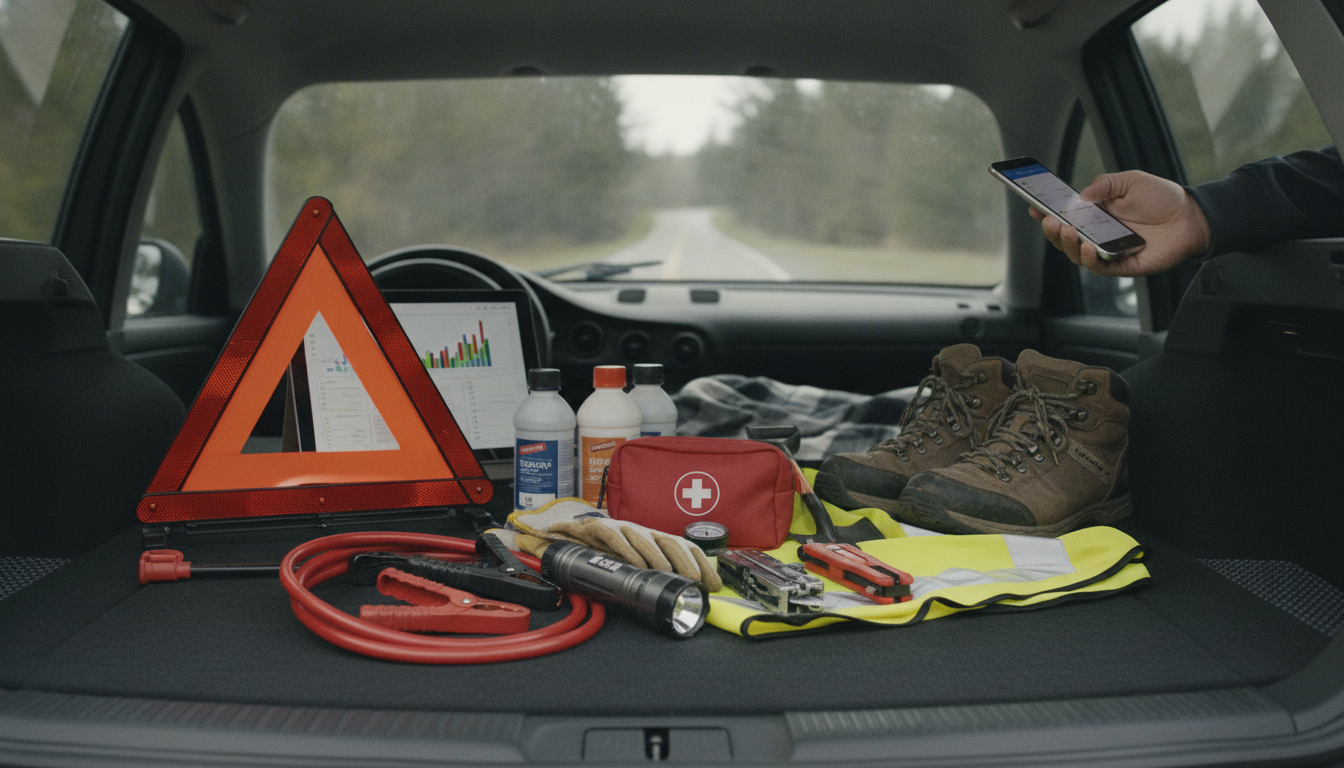
A well-built car emergency kit reduces stress and risk during breakdowns, flat tires, minor injuries, and surprise weather. The goal isn’t to pack everything—it’s to keep the right essentials organized, easy to reach, and ready to use when seconds matter. Below is a practical system for what to pack, how to store it, and how to maintain it year-round.
For baseline guidance on vehicle preparedness, you can cross-check your plan with Ready.gov’s car emergency kit recommendations.
Start with a compact “core kit” that can handle most day-to-day roadside situations. If you only build one layer, build this one.
| Category | Recommended items | Quick notes |
|---|---|---|
| Visibility & signaling | Reflective triangles/LED flares, hi-vis vest, flashlight/headlamp | Set out warnings before working near traffic |
| Power & communication | Phone cable, car charger, power bank, jump starter/jumper cables | Charge monthly; store cables where reachable |
| Tire & roadside tools | Inflator, gauge, gloves, basic tool set, duct tape/zip ties | Confirm jack/lug wrench fit your vehicle |
| First aid & hygiene | First-aid kit, antiseptic, nitrile gloves, wipes | Replace expired items and heat-damaged meds |
| Weather & survival | Water, snacks, blanket, poncho, hand warmers | Adjust for seasonal extremes and trip length |
| Documents & planning | Insurance/registration copies, emergency contacts, towing info | Keep in a sealed bag; update after renewals |
For first-aid specifics, the American Red Cross first aid kit checklist is a solid reference for what to stock and what to replace.
Once the core kit is handled, add a small “route-and-season” pouch that rotates. This prevents the common problem of overstuffing one bag until nothing is easy to find.
For broader emergency communications planning (including what to do when service is limited), consult NHTSA resources for preparedness and safety guidance.
If you’d rather not build a kit from memory, a checklist makes it easier to assemble once and then maintain with quick reviews. The Roadside Ready – Car Emergency Kit Guide & Checklist (Digital Download) is designed for fast setup, clear categories, and simple maintenance reminders.
Do a quick monthly check for lighting and power (flashlights, power banks, jump starters), a quarterly inventory review for missing or damaged items, and seasonal swaps for weather gear. Replace expired first-aid items, heat-damaged supplies, and rotate water and snacks before they degrade.
A roadside kit focuses on vehicle problems—visibility, tire tools, and battery support—so you can stabilize the situation. An emergency kit adds personal safety for waiting (water, warmth, food, and first aid); combining both into one organized system is the most practical approach.
Yes—keep it secured so it won’t slide, and check the manufacturer’s storage guidance for temperature and charging. Test it periodically and recharge on a consistent schedule so it works when you actually need it.






Leave a comment