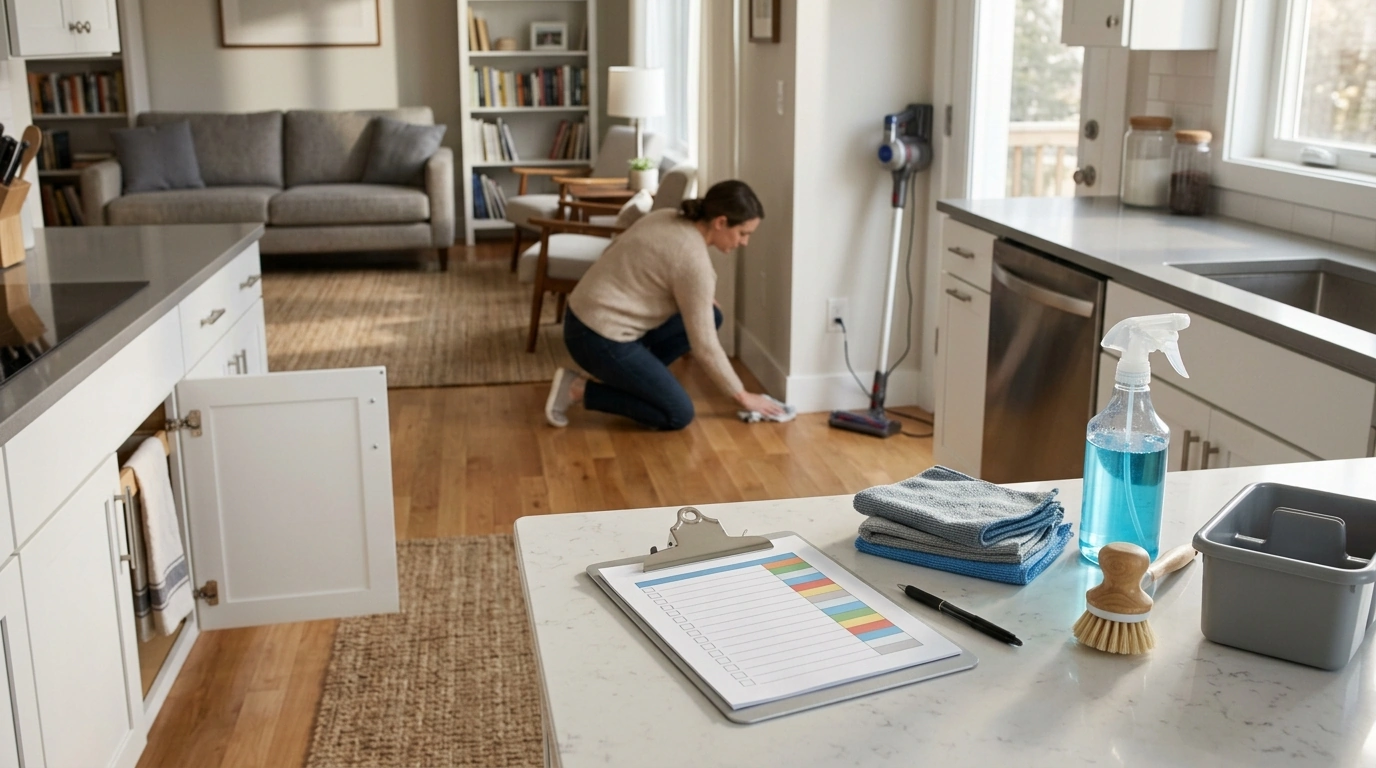
A deep-cleaned home feels lighter, functions better, and stays that way when the work is paced and repeatable. The goal isn’t a once-a-year cleaning marathon—it’s a realistic rhythm that quietly removes buildup before it turns into a weekend-eating project. Below is a practical deep-clean cadence, a room-by-room game plan, and a simple printable + digital workflow that turns “someday tasks” into a routine you can actually maintain.
Deep cleaning is detail work: the hidden dust, film, and grime that normal weekly cleaning doesn’t fully reach. Think baseboards, vents, grout lines, behind appliances, inside cabinets, ceiling fan blades, and window tracks—places that collect buildup slowly until they suddenly feel “gross.”
It’s also different from tidying. Tidying is putting items back where they belong; deep cleaning is restoring surfaces and spaces. A simple rule: if you skip it because it requires a tool, moving furniture, or extra time, it probably belongs on your deep-clean list.
Most importantly, deep cleaning is not a one-day perfection project. Done in a cycle, it makes every future clean faster and less stressful.
| Area | Key tasks | Suggested frequency |
|---|---|---|
| Kitchen | Degrease hood/filter, clean oven, wipe cabinet fronts, pull fridge to clean behind/under, sanitize sink/disposal | Monthly to quarterly |
| Bathrooms | Descale showerhead, scrub grout, wash bath mats, clean vents, wipe baseboards | Monthly |
| Bedrooms | Wash pillows/duvet (per care), vacuum mattress, dust blinds, clean under bed | Quarterly |
| Living areas | Dust high surfaces, wipe baseboards, vacuum upholstery, clean light switches/handles | Monthly to quarterly |
| Laundry/utility | Clean washer gasket/drawer, clear dryer vent/lint areas, wipe shelves, mop behind machines | Monthly to quarterly |
| Entryways/hallways | Wipe doors/frames, clean scuffs, organize shoes/coats, vacuum corners | Monthly |
A strong deep-clean schedule works because it protects your time and your energy. Instead of “clean everything,” it creates small, repeatable sessions with a clear stop point.
If you want a safety net for health-focused cleaning and product use, keep guidance from authoritative sources handy, like the CDC’s cleaning and disinfecting recommendations and the EPA Safer Choice program.
Start with the sink and counters (your “work surface”), then go top-to-bottom: hood/backsplash, cabinet fronts, appliances, and finally the floors. Rotate inside-cabinet wipe-downs—one or two sections at a time—so it never becomes an all-day job.
Descale first and let products dwell while you handle other tasks. Then hit high-touch points (faucets, handles, switches), followed by mirrors, floors, and fresh textiles. Good ventilation matters; the American Lung Association highlights indoor air quality considerations when using cleaning supplies.
Focus on dust traps: headboard, lampshades, blinds, and under-bed space. Refresh the sleep zone by laundering what’s washable per care instructions, vacuuming the mattress, and clearing “stuff stacks” that collect dust.
Vacuum upholstery and cushions, clean remotes and light switches, dust vents, and wipe baseboards. If possible, do a quick cable tidy during the reset—less visual noise makes the room feel cleaner even before you finish.
Clear lint beyond the screen, wipe machine exteriors, and keep detergents contained to prevent sticky shelf buildup. Add “mop behind machines” as an occasional module (monthly to quarterly depending on traffic and pets).
Treat it as the home’s “drop zone.” A small weekly reset here reduces clutter migration into every other room. A shoe bin, a hook row, and a 2-minute nightly scoop can dramatically reduce mess.
A rotating cycle works best: monthly for kitchens, bathrooms, and high-touch areas; quarterly for less-visible zones like vents, under furniture, and inside cabinets; and seasonal for windows, closets, and bulky textiles. Adjust based on pets, allergies, and how much traffic your home gets.
Go top-to-bottom and dry-to-wet: declutter first, dust high surfaces, wipe, then vacuum, then mop. For descalers and degreasers, apply early and let them dwell while you tackle other tasks.
A checklist turns vague pressure into small, finishable modules—especially when paired with timers and “last cleaned” tracking. Printing it makes progress visible, and duplicating a digital version keeps the routine repeatable without extra planning.







Leave a comment