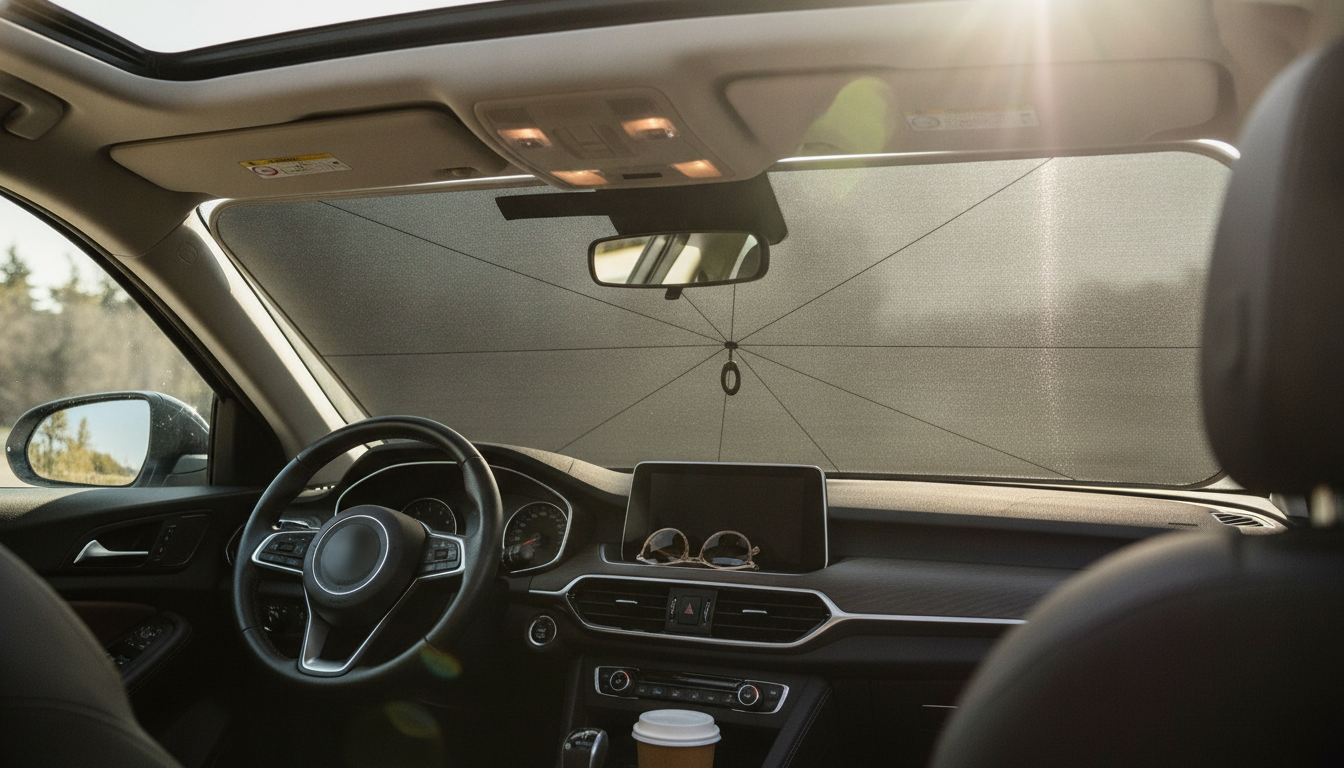
A windshield sunshade does more than block glare—it helps slow heat buildup, reduces UV exposure on interior surfaces, and makes summer parking less punishing. This double-layer design pairs reflective and insulating layers with a pull-ring handle for quicker setup and removal, aiming for a snug, daily-use fit that protects the dash, steering wheel, and upholstery.
When a car sits in direct sun, the windshield becomes a major entry point for radiant heat. A double-layer construction is built to tackle that problem from two angles: reflection and insulation.
Heat gain through windows is a well-documented concept in building and energy performance; the same principles apply to vehicle glass, where radiation drives rapid warming. For a practical overview of how sunlight contributes to heat gain through windows, see the U.S. Department of Energy guidance on window performance.
A sunshade only helps when it’s easy enough to use every time. The pull-ring handle detail is simple, but it can make the routine faster and less irritating.
Even the best materials can’t do much if the shade leaves big gaps at the corners or sags away from the glass. Before ordering, measure your windshield carefully and think about any hardware near the top center.
| What to measure | How to measure | Why it matters |
|---|---|---|
| Width (max) | Measure across the widest part of the glass | Prevents gaps at corners and sides |
| Height (center) | Measure from dash line to top edge at center | Ensures the shade reaches high enough to block sun |
| Mirror clearance | Note mirror mount position and any sensors | Avoids bunching or poor contact near the top |
| A-pillar shape | Check if corners are sharply curved | Helps choose a shade that seals better at edges |
Good results come down to coverage and contact. The goal is to limit direct sun and reduce the “chimney effect” where hot air circulates around gaps.
For broader context on UV exposure and protective habits, the EPA’s sun safety resources explain UV intensity and why consistent protection matters.
Double-Layer Car Windshield Sunshade – UV Protection with Pull-Ring Handle is designed for quick handling and improved insulation through a layered build. It’s a strong fit for drivers who park in direct sun and want a reusable, easy-on/easy-off shade for routine trips.
To complement sun protection, consider periodic cleanup and conditioning—especially for dashboards, trim, and seats that see frequent sunlight. Car Plastic & Leather Restorer – Back to Black Gloss Coating & Polish can help restore a darker, refreshed look after regular exposure and cleaning.
| Item | What it’s for | Link |
|---|---|---|
| Double-Layer Car Windshield Sunshade – UV Protection with Pull-Ring Handle | Daily windshield coverage to reduce heat and UV exposure | View product |
| Car Plastic & Leather Restorer – Back to Black Gloss Coating & Polish | Refresh trim and surfaces as part of interior care | View product |
Yes—by reflecting sunlight and limiting radiant heating through the windshield, a sunshade can reduce heat gain and make the cabin warm up more slowly. The real-world difference varies by vehicle size, outside temperature, glass tint, and how well the shade seals along the edges.
It can help by blocking direct sunlight, which reduces UV exposure and heat stress that contribute to fading and cracking. It’s most effective when used consistently and paired with basic interior cleaning and protectant habits.
Measure the windshield width at its widest point and the height from the dashboard line to the top edge, then compare those numbers to the shade’s sizing guidance. Also account for mirror mounts or sensor clusters and aim for strong corner coverage to avoid light leaks.






Leave a comment