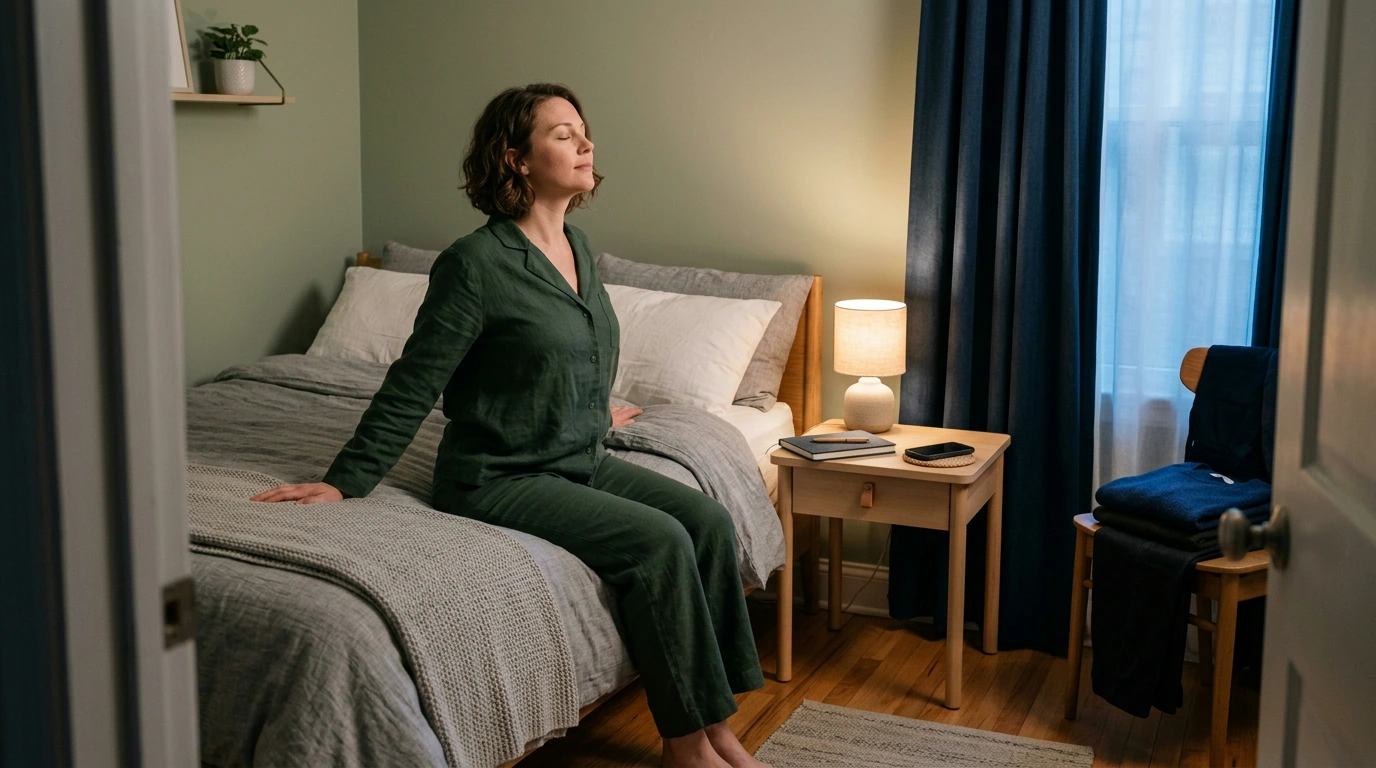
When you can’t fall asleep fast, it’s rarely because you “lack willpower.” Sleep shows up when your body clock, sleep pressure, and nervous system all move in the same direction. If even one is out of sync—stress is high, light is too bright, or timing is inconsistent—bed can start to feel like a place where your brain performs instead of powers down.
The biggest culprits tend to be high mental arousal (work, conflict, or late-night scrolling), irregular sleep/wake timing that weakens your circadian rhythm, and a bedroom environment that quietly fragments sleep (heat, light, or noise). Even if you get enough hours, fragmented sleep can leave you waking in the wrong phase and feeling drained.
| Blocker | What it does | Try this tonight |
|---|---|---|
| Bright screens late | Delays melatonin release and increases alertness | Dim lights 60 minutes before bed; use night mode; keep phone off the pillow |
| Bedroom too warm | Raises core temperature and disrupts deep sleep | Aim for a cooler room; use lighter bedding; warm shower 1–2 hours before bed |
| Racing thoughts | Triggers stress response and restlessness | 2-minute brain dump; 4-7-8 breathing; “worry window” earlier in the evening |
| Late caffeine | Blocks sleep pressure and reduces sleep depth | Set a caffeine cutoff (often early afternoon) and swap to herbal tea later |
| Inconsistent schedule | Weakens circadian rhythm and morning alertness | Set a fixed wake time; shift bedtime gradually in 15–30 minute steps |
For a quick primer on proven basics, the CDC’s sleep resources and the NIH (NHLBI) healthy sleep overview are solid references.
A wind-down works best when it’s short, repeatable, and low-effort—something you can do even on hectic days. The goal isn’t to “force sleep,” but to lower stimulation and teach your brain that a predictable sequence leads to rest.
About 30–60 minutes before bed, switch from overhead lighting to lamps and keep brightness modest. If you’re using screens, lower brightness and enable warm color settings.
Wash your face, brush your teeth, and do one small prep task for tomorrow (set out clothes, prep coffee, or pack a bag). This reduces “unfinished business” that can re-ignite thinking once you’re in bed.
Keep it simple: light reading, gentle stretching, or a warm shower. Consistency matters more than novelty—your brain learns the pattern.
Try nasal breathing at a slower pace (around 5–6 breaths per minute). If you prefer a structure, inhale gently, exhale longer than you inhale, and let the shoulders drop on each exhale.
Write a quick list: your top 3 priorities for tomorrow plus any lingering thoughts. Then close the notebook—physically “ending” the loop helps.
If you want this as a simple sequence you can follow without thinking, Fall Asleep Fast and Wake Up Recharged – Digital Guide for How to Go to Sleep Quickly, Sleep Better, and Wake Refreshed organizes the routine as a nightly checklist.
When your mind is loud, the fastest path to sleep is usually reducing pressure. The more you chase sleep, the more alert you become. These tactics aim to break the cycle without turning bedtime into a “project.”
Stop checking the clock. Turn it away and keep your phone facedown and out of arm’s reach. Time math (“If I fall asleep now…”) spikes arousal.
Stress during the day is a major driver of nighttime rumination. For daytime tools that make evenings calmer, Calm at Work: Smart Strategies to Manage Stress and Boost Focus focuses on reducing carryover tension so sleep comes easier at night.
Step outside or sit by a bright window soon after waking. Consistent morning light is one of the simplest ways to improve circadian timing. The National Sleep Foundation’s sleep tips also emphasize light, consistency, and wind-down routines.
If you prefer a ready-to-follow format, Fall Asleep Fast and Wake Up Recharged – Digital Guide for How to Go to Sleep Quickly, Sleep Better, and Wake Refreshed includes wind-down prompts, fast relaxation steps, and a morning reboot sequence.
Many adults fall asleep in about 10–20 minutes. If it consistently takes much longer, it often points to timing issues, stress, light exposure, or late caffeine—focus on a repeatable wind-down and avoid clock-watching.
Avoid bright screens, heavy meals, nicotine, late caffeine, and alcohol close to bedtime. Swap them for dim lighting, a calm activity, and a short wind-down routine that you can repeat nightly.
Grogginess can come from sleep inertia, fragmented sleep, inconsistent wake times, or waking from deeper sleep. Morning light, a little movement, and limiting the snooze button can help your brain transition into daytime faster.







Leave a comment