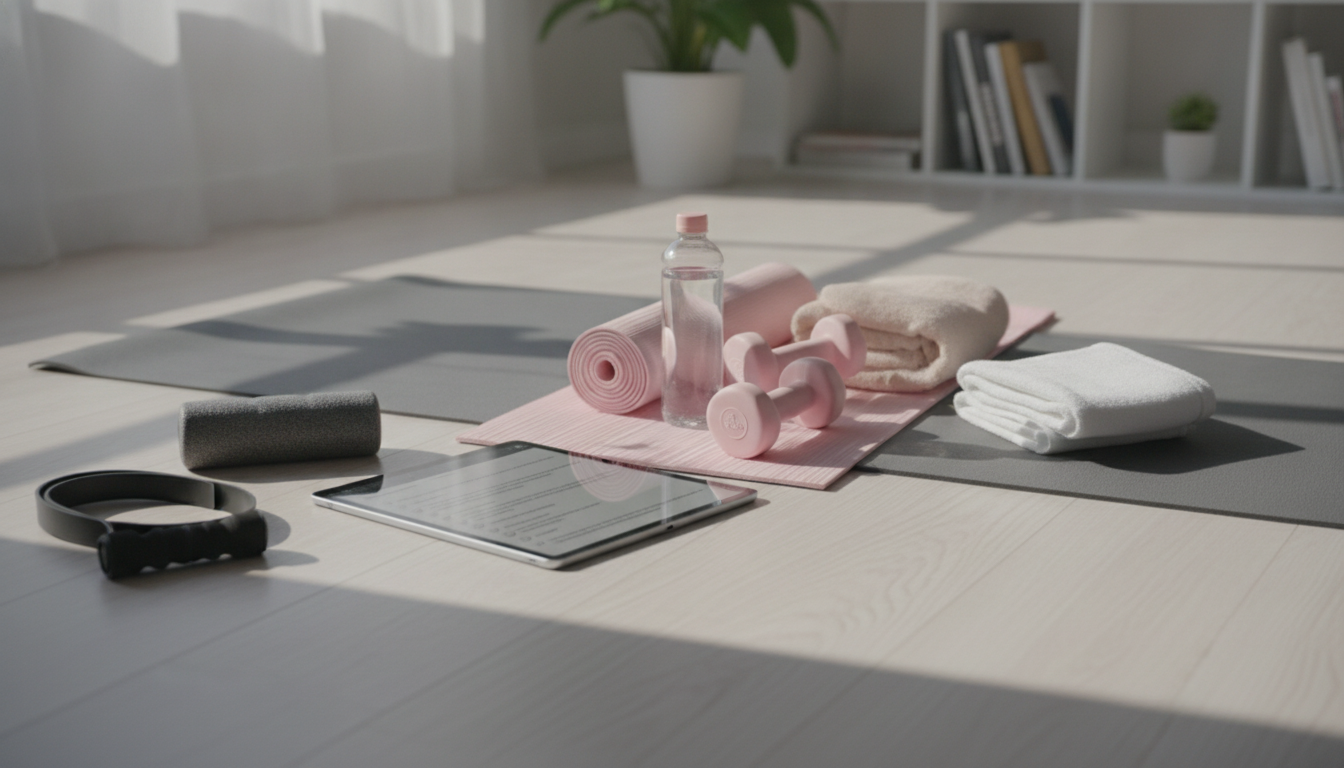
Choosing home fitness equipment gets easier when decisions are tied to goals, space, budget, and the kind of workouts that will actually happen week after week. The goal isn’t a “perfect” home gym—it’s a setup that removes friction, keeps clutter low, and makes training feel doable on a normal Tuesday. Use the checklist approach below to narrow options fast, buy with confidence, and keep momentum once the box arrives.
Equipment should be a tool for a specific outcome, not a decoration with a power cord. Start by naming the primary goal (strength, cardio conditioning, mobility, fat loss via consistency, sport performance, or general health). Then pick a training style that fits your personality: short efficient sessions, longer steady-state workouts, circuit training, or progressive strength programs.
Before buying anything, set a realistic weekly schedule—days and minutes. A simple plan like “3 days/week for 30 minutes” is more useful than a vague intention to work out “more.” When motivation fluctuates, versatility matters: one flexible tool used often beats several single-purpose tools used rarely. Finally, plan for progression: the best choice today should still challenge you after 8–12 weeks of improvement.
| Primary goal | Best starter categories | Nice-to-have upgrades | Common mismatch to avoid |
|---|---|---|---|
| Strength & muscle | Adjustable dumbbells, resistance bands, bench | Rack, barbell set, cable system | Buying a treadmill first and hoping strength happens |
| Cardio conditioning | Jump rope, compact bike, rower | Treadmill, smart trainer | Oversized machine that won’t be used regularly |
| Mobility & recovery | Yoga mat, foam roller | Massage gun, mobility blocks | Only recovery tools with no plan to train |
| Fat loss (via consistency) | Versatile strength tools + simple cardio option | Wearable HR monitor | Chasing “fat-burner” gadgets instead of a routine |
Space is more than “Will it fit?” Measure your workout footprint (length × width) and add safe clearance for movement—especially for swings, presses, and rowing. If you’re considering tall cardio machines, pull-up bars, or overhead presses, check ceiling height and light fixtures.
Floor type matters. Rubber mats reduce noise, protect flooring, and improve stability. For small spaces, prioritize foldable or vertical-storage gear—but confirm stored dimensions, not just the phrase “folds up.” If you share walls or live above others, low-impact options (bike, strength work, rower paired with a mat) tend to be more neighbor-friendly than high-impact jumping.
Budgets work best when split into three buckets: (1) core equipment, (2) safety/support items (mats, collars, anchors), and (3) comfort items (fan, towel rack, storage). Decide early whether your budget supports a single flagship machine or a versatile kit. Both approaches can work; mixing them often leads to compromises that feel “meh” in every direction.
Use cost per use as a reality check. An affordable tool used 3–5 times per week beats an expensive tool used twice a month. Also watch hidden costs: delivery, assembly, app subscriptions, replacement parts, and the inevitable “one more attachment.” As a rule, prioritize durability and adjustability for strength tools, and prioritize warranty plus smooth mechanics for cardio machines.
Progression is where purchases either age well or get replaced quickly. For strength tools, choose load ranges that allow steady increases. For cardio, make sure resistance levels (or speed/incline ranges) won’t top out once your conditioning improves.
Picking the Best Home Fitness Equipment Checklist (digital download) includes prompts for goals, space, progression, safety, and a comparison grid to rank options quickly. Pair it with a short training plan so purchases align with what will realistically happen each week.
Consistency is also mental. If stress is a frequent barrier to following through, consider adding simple focus and decompression habits alongside training: Calm at Work: Smart Strategies to Manage Stress and Boost Focus (digital guide).
Most adults benefit from a mix of cardio and strength across the week. The CDC’s physical activity guidelines and the American College of Sports Medicine (ACSM) guidance are useful benchmarks when deciding whether your home setup should emphasize strength tools, cardio tools, or a blend. The best purchase is the one that makes it easier to meet those targets consistently.
The best “one item” depends on your top goal and constraints, but a versatile strength option (like adjustable dumbbells plus bands) or a compact cardio option (like a bike or rower) tends to deliver the most consistent use. Choose the option that fits your space and supports progression over the next 8–12 weeks.
A basic setup with a mat and dumbbells can work in a small open area (often roughly 6′ × 6′ plus storage), while larger cardio machines may need closer to 3′ × 7′ or more plus safe clearance. Always measure the workout footprint and the stored dimensions, and plan for flooring protection.
Weights usually offer more versatility for strength, body composition, and full-body training in limited space, while a treadmill makes cardio extremely convenient. When possible, combine a simple strength kit with a low-friction cardio option; if choosing only one, pick the tool you’ll use most consistently.





Leave a comment