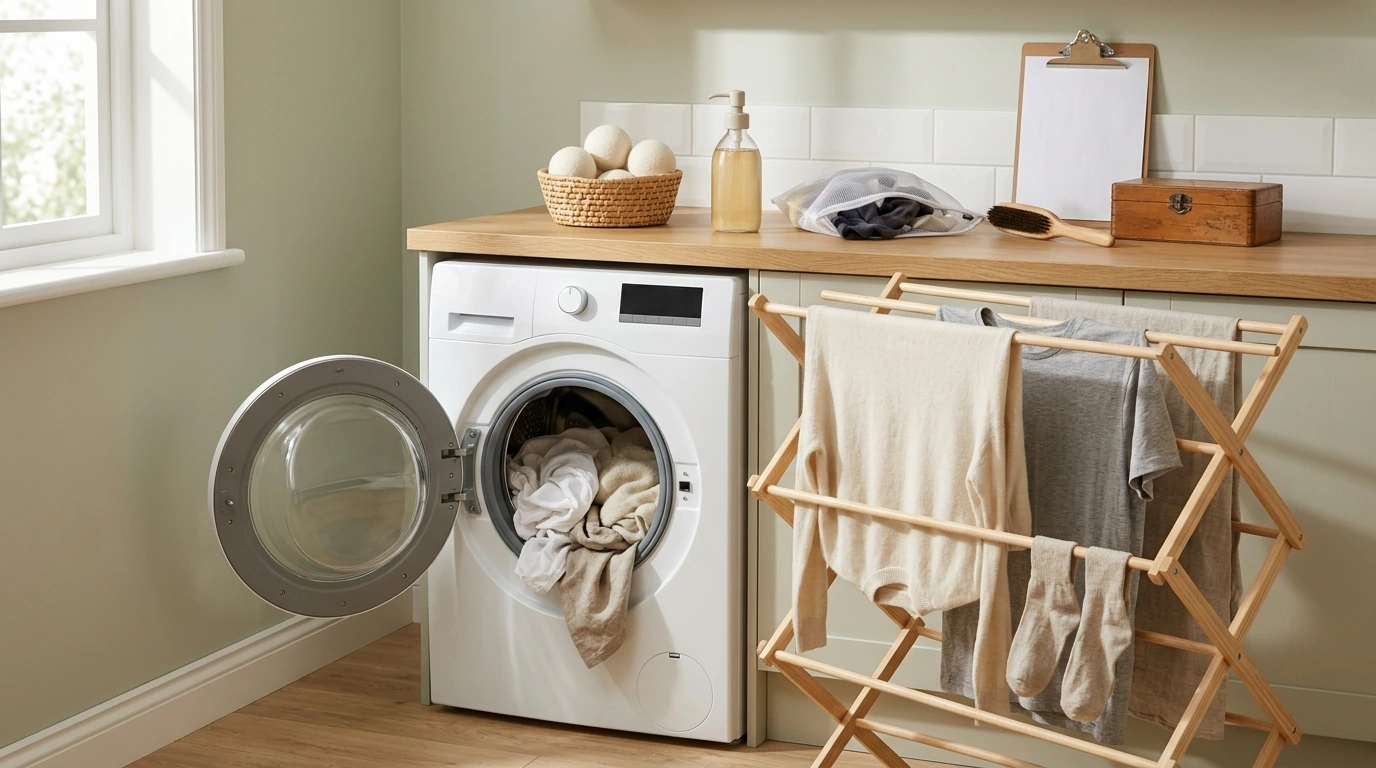
A low-waste laundry routine focuses on using less water and energy, reducing plastic and chemical exposure, and extending the life of clothing. With a few simple habit changes—plus a clear checklist—it becomes easier to wash smarter, not harder, while keeping fabrics fresh and long-lasting. For more guidance, see A beginner’s guide to green cleaning : Life Kit – NPR.
If you want a simple, repeatable system you can post near your washer, the Low-Waste Laundry Routine Checklist (digital download) is designed to keep the high-impact steps visible on busy wash days. For further reading, see [PDF] Waste Less at Home toolkit. – Sustainable America.
Energy use adds up quickly in laundry rooms; even small changes (cold washes, efficient drying) can make a measurable difference over time. ENERGY STAR offers a helpful overview of why saving energy benefits the environment: https://www.energystar.gov/about/saving-energy-helps-environment.
Separate by color and fabric weight so everything dries at a similar rate. When possible, keep lint-shedding items (like towels and fleece) away from synthetics to reduce lint transfer and microfiber shedding.
Aim for a properly filled drum to avoid wasted water and energy, while leaving enough space for items to move freely. Overfilling can trap detergent and dirt, causing odors and re-washes.
Cold or cool water is often sufficient for everyday loads. Reserve hot washes for specific hygiene needs (illness, heavily soiled workwear, or items that truly require it per the care label).
| Step | Frequency | Low-waste option | Quick note |
|---|---|---|---|
| Plan loads and sort by fabric | Each wash day | Wash fewer, fuller loads | Group heavy items; separate towels from synthetics if possible |
| Spot-treat stains early | As needed | Target stains instead of re-washing full loads | Blot, don’t rub; test on an inside seam |
| Measure detergent | Every wash | Use the minimum effective dose | More soap often = more residue and extra rinses |
| Wash cold / eco cycle | Most loads | Lower energy use and gentler on fibers | Use warm/hot only when truly needed |
| Air-dry or shorten dryer time | Every load | Less energy and longer garment life | Use dryer balls; remove items slightly damp if line-finishing |
| Clean lint trap / check washer gasket | Every dryer cycle / weekly | Improves efficiency and prevents odors | Wipe gasket and leave door ajar after washing |
If you prefer products with more transparent ingredient and safety review standards, the U.S. EPA’s Safer Choice program explains what the label means and how products are evaluated: https://www.epa.gov/saferchoice/safer-choice-standard.
For homes that deal with frequent outages or off-grid setups, reliable power can support more flexible laundry timing (for example, running loads when it’s most efficient). If that’s relevant to your household, consider the Portable 200W Solar Generator with AC Outlet & USB Ports as an emergency-ready option.
Digital downloads work well for posting in a laundry area, adding to a home binder, or saving as a quick phone reference. The Low-Waste Laundry Routine Checklist (digital download) is a simple one-page guide you can reuse season after season.
Wash based on wear and activity: underwear and socks typically need each wear, while jeans, sweaters, and many outer layers can often be aired out and reworn. Spot-clean small marks and prioritize hygiene exceptions like illness, heavy sweating, or food-service exposure.
For everyday soil, cold water is usually effective—especially with modern detergents and a full load that allows good agitation. Pre-treat stains and use warm or hot selectively for specific needs and care-label guidance.
Start with one high-impact habit: run fuller loads and measure detergent instead of “free-pouring.” If you use a dryer, cleaning the lint trap every cycle is another quick win that improves efficiency immediately.







Leave a comment