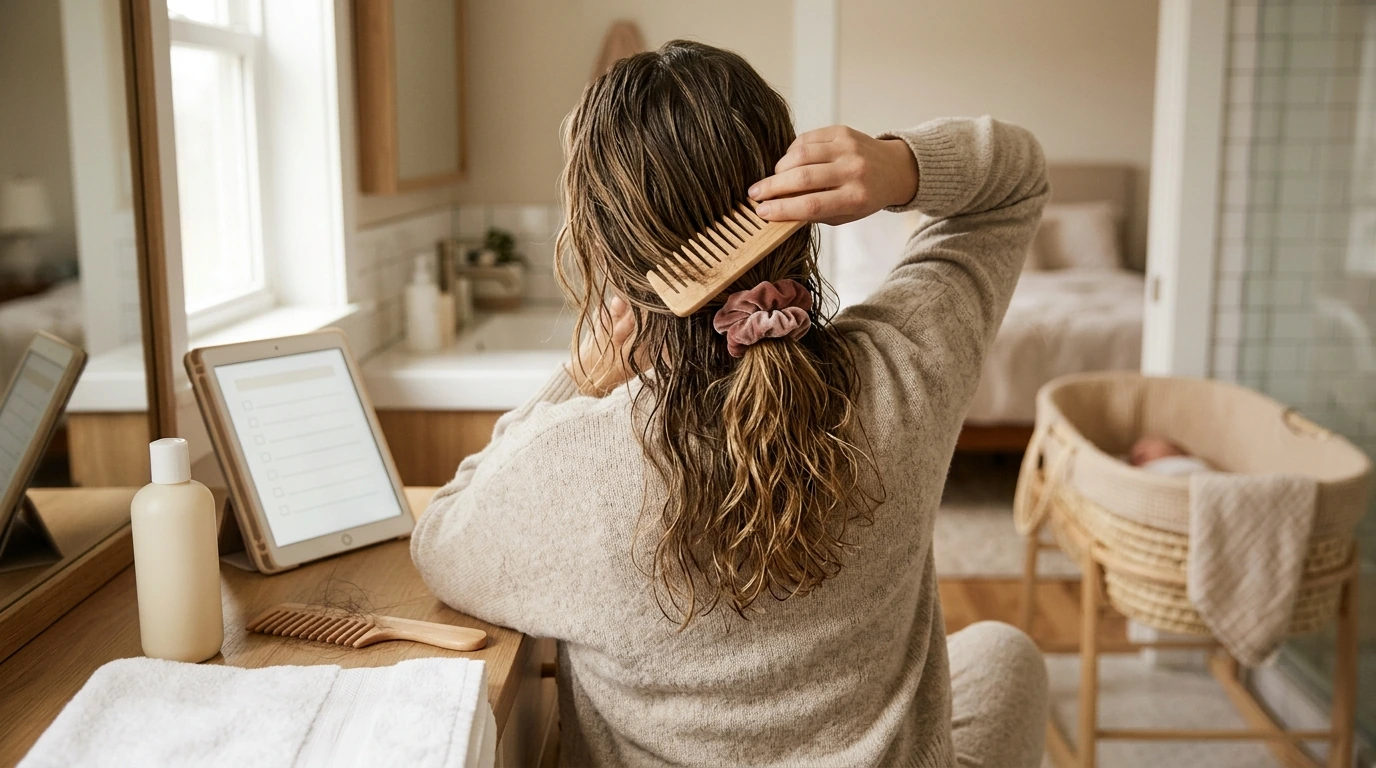
Postpartum hair shedding can feel alarming—especially when it shows up in the shower drain, on your pillow, or wrapped around your brush. The good news is that for many moms, it’s temporary and closely tied to normal hormone shifts after pregnancy. A clear, low-effort routine can make this season feel more manageable by helping you protect fragile strands, notice what worsens shedding, and recognize when it’s time to ask a professional.
Below is a simple, realistic plan (plus a quick weekly table) to help you stay consistent without overthinking it. For medical context on typical postpartum shedding, see the American Academy of Dermatology Association and the Cleveland Clinic resources linked below.
Common timing: Many people notice increased shedding a few months after delivery. It often improves gradually over time, though the pace can vary.
Why it happens: During pregnancy, higher estrogen levels can keep more hairs in the growth phase. After birth, more hairs can shift into the shedding phase at once—often described as telogen effluvium. The result can feel dramatic, even when it’s a normal reset. For an overview, the American Academy of Dermatology Association explains what many new moms experience.
What “normal” can feel like: More hair on the pillow, in the shower, or when detangling—sometimes in noticeable clumps—without true bald patches.
Texture and scalp changes: Hair can feel drier, more breakable, or frizzier. Your scalp may feel oilier or more sensitive depending on sleep disruption, stress, and product use.
When it might not be typical: If shedding persists far beyond the first postpartum year, you see bald spots, you have scaly patches or significant itching/burning, or you notice symptoms like fatigue and cold intolerance, it’s worth checking in with a clinician. Thyroid changes and low iron can contribute, among other factors. You can also review general “when to seek care” guidance via ACOG’s postpartum care FAQ and discuss what applies to your situation.
When energy is limited, the goal isn’t perfect hair—it’s less breakage, less scalp irritation, and fewer “oops, I yanked a knot” moments.
Pick a wash-and-condition rhythm that fits your hair and lifestyle. Over-washing can increase tangles for some, while under-washing can lead to scalp buildup and discomfort for others. A “good enough” schedule is one you can repeat.
Detangle on damp hair with conditioner or a detangling product for slip. Use a wide-tooth comb or gentle brush and start at the ends, working upward in small sections to reduce snapping.
Try a loose braid or a low bun with a soft scrunchie to reduce friction. If you can, a smoother pillowcase can help reduce morning tangles and frizz.
When shedding is heavy, reduce high-heat styling and avoid harsh chemical processes when possible. Choose low-tension styles that don’t pull at the hairline.
Massage lightly while shampooing to lift buildup without aggressive scratching. If you suspect product buildup (dry shampoo, styling creams), consider an occasional clarifying wash—then condition well.
Pick 2–3 non-negotiables (for example: gentle wash + careful damp detangling + low-tension styling). Everything else is optional.
A checklist reduces mental load. Instead of wondering why shedding feels worse this week, you can mark a few quick daily or weekly actions—hydration, gentle styling, scalp comfort, supplements if prescribed—and move on with your day.
| Area | What to Note | If It’s Getting Harder |
|---|---|---|
| Shedding | More/less than last week; any clumps? | If worsening fast or paired with bald patches, consider clinician/dermatology input |
| Breakage | Short snapped hairs; rough ends; tangles | Reduce heat, switch to gentler detangling, consider a trim |
| Scalp | Itch, flakes, tenderness, oiliness | Try gentler products; persistent symptoms may need medical advice |
| Lifestyle | Sleep, stress, illness, hydration, nutrition | Prioritize basics; ask about iron/thyroid labs if symptoms suggest |
If you want structure without adding a complicated routine, Bounce Back Beautiful: Your Fun & Easy Postpartum Hair Loss Checklist (Digital Download) turns scattered advice into a repeatable plan you can follow in minutes.
If stress is a major trigger right now, consider adding a separate, simple support tool like Calm at Work: Smart Strategies to Manage Stress and Boost Focus (Digital Guide)—because lowering overall strain can benefit your whole system, including your scalp and hair.
For additional medical perspective on postpartum shedding, you can also reference the Cleveland Clinic’s postpartum hair loss guide.
Many moms notice shedding begin a few months after delivery, then gradually improve over time as hormones stabilize. If shedding continues well beyond the first postpartum year or comes with bald patches or other symptoms, it’s a good idea to ask a clinician about possible contributing factors.
Not usually. Postpartum shedding is often temporary (telogen effluvium), while permanent thinning can be related to genetics or other medical causes; patchy loss, scalp inflammation, or prolonged shedding may signal a different issue worth evaluating.
Keep it minimal: gentle wash and condition, careful detangling on damp conditioned hair (ends to roots), low-tension hairstyles, and reduced heat styling. Consistency with a few basics is typically more helpful than adding lots of new products at once.







Leave a comment