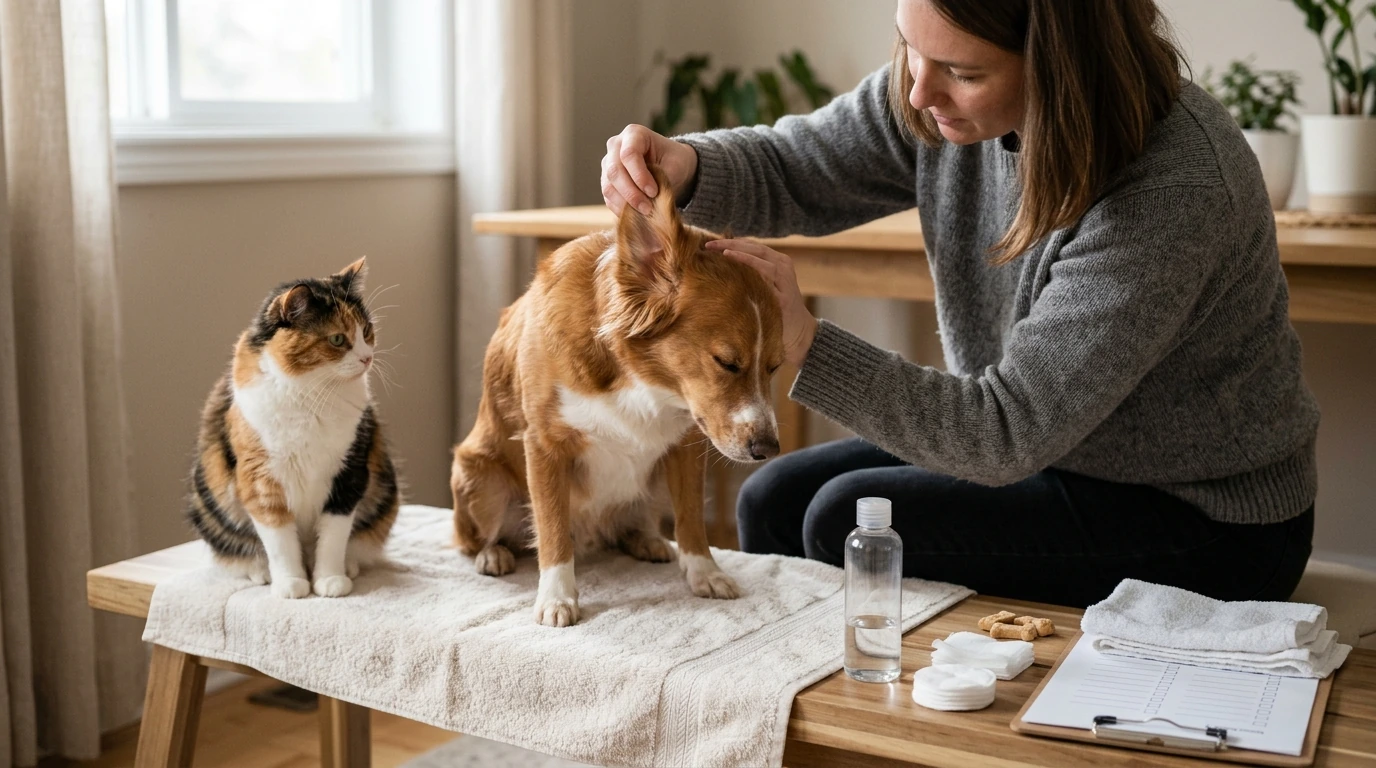
Ear care can be quick, calm, and even a little playful when it follows a simple routine. A printable checklist turns ear-cleaning into a repeatable, low-stress habit with clear steps, safety reminders, and space to track dates—helpful for both dogs and cats.
Routine ear checks help reduce buildup of wax and debris that can contribute to irritation and odor. They’re especially helpful for pets prone to allergies, frequent swimming, or floppy ears—while still following veterinary guidance for what’s appropriate for your pet.
Pause cleaning and contact a veterinarian if you notice any of the following: strong odor, swelling, heat, thick discharge, bleeding, a sudden head tilt, balance issues, or intense pain. Also avoid inserting cotton swabs into the ear canal; focus only on areas you can safely reach and see.
For more background on ear problems and when to seek care, reputable veterinary references include VCA Animal Hospitals and Cornell University College of Veterinary Medicine.
Pick a quiet spot with good lighting. Place a towel under your pet for traction and to catch any solution or debris. Keeping the environment predictable (same spot, same order of steps) can make future cleanings easier.
Optional helpers: a grooming glove or brush for a 30-second “warm-up,” and a timer to keep sessions short. Before you do anything, check the ear flap and the visible opening. If you see obvious inflammation or anything unusual, stop and consult a veterinarian.
This sequence keeps things upbeat and consistent. The goal is calm cooperation—not wrestling your way through the task.
If you want a ready-to-print page that follows these exact steps with a tracking area, use the Printable ear-cleaning checklist for pets.
“Normal” ears often have a small amount of light wax and a mild “ear” smell, without redness—and your pet should tolerate gentle touch. “Not normal” tends to look darker, smell stronger, or feel painful.
| What you notice | What it can mean | What to do next |
|---|---|---|
| Light wax, no redness, pet comfortable | Typical ear condition | Clean gently as needed; record the date |
| Mild itch after cleaning | Temporary sensitivity | Monitor; keep sessions shorter next time |
| Strong odor, redness, thick discharge | Possible infection or inflammation | Stop cleaning and contact a veterinarian |
| Coffee-ground debris | Could be mites or other irritation | Seek veterinary advice before continuing |
| Head tilt, balance issues, notable pain | Potential middle/inner ear concern | Urgent veterinary evaluation |
If problems keep coming back, a veterinarian can check for infection, mites, allergies, foreign bodies, or anatomical factors that make your pet’s ears harder to keep healthy. General pet-care guidance from the American Veterinary Medical Association (AVMA) can also help you decide when to seek professional care.
For pet parents who want a calmer, more consistent routine mindset (helpful for grooming, nail trims, and ear checks), a simple companion resource is Calm at Work: Smart Strategies to Manage Stress and Boost Focus, which can help you stay steady and patient during short training sessions.
A checklist works best when it makes the process predictable. The A Fun Checklist for Cleaning Your Pet’s Ears | Printable Pet Care Guide includes:
The overall steps are similar—check, apply a vet-approved solution, massage, and wipe only visible areas. Product choice, handling, and cleaning frequency should be tailored to your pet, and you should stop immediately if you see pain or abnormal discharge.
Signs include yelping, pulling away, sudden aggression, trembling, intense head shaking, swelling, bleeding, or worsening redness. Stop the session and contact a veterinarian, especially if discomfort continues after you stop.
Many pets need only periodic checks and occasional cleaning when buildup is visible. Swimmers, allergy-prone pets, and floppy-eared breeds may need more frequent care, but it’s best to follow your veterinarian’s guidance to avoid over-cleaning.






Leave a comment