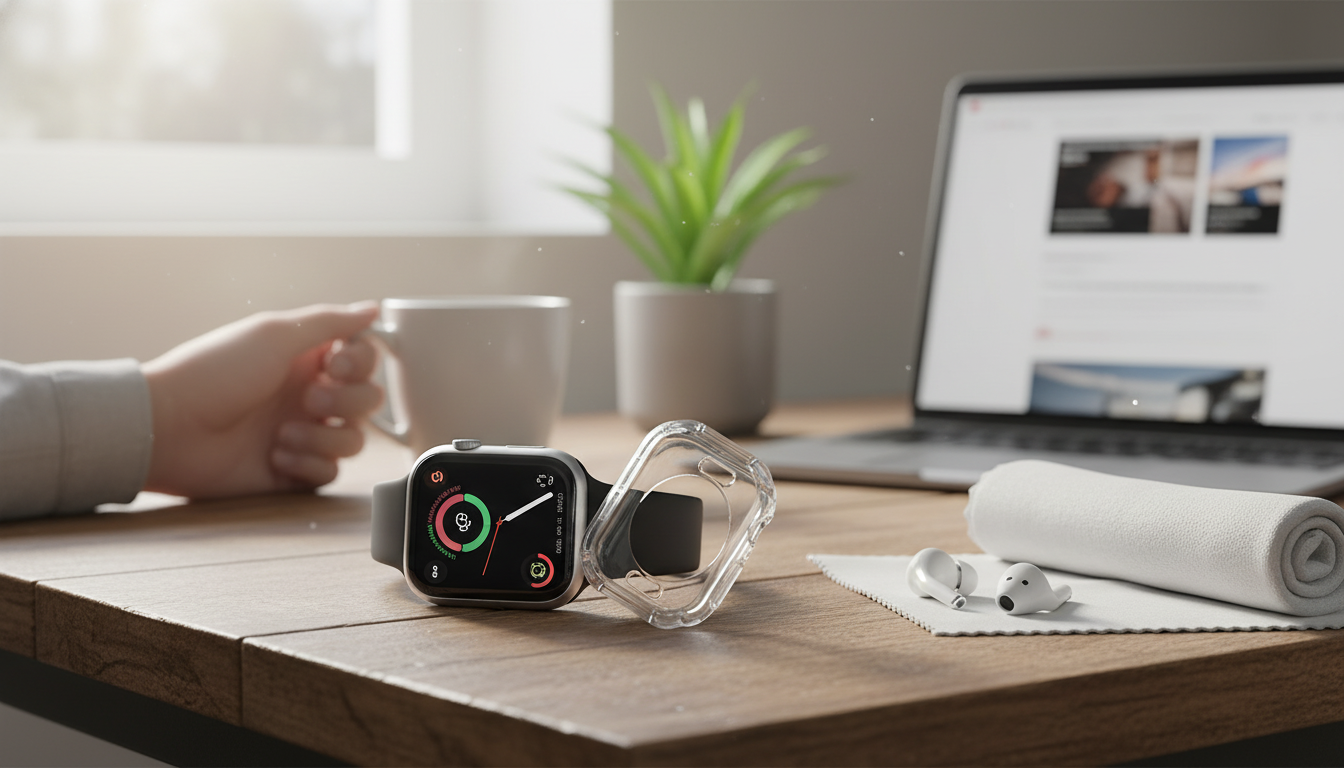
A silicone case can take the hit from doorframes, gym equipment, and daily wear while keeping the Apple Watch comfortable on the wrist. This guide breaks down what a protective silicone case does well, where it has limits, how to get the right fit for Apple Watch 10, and how to keep it looking clean over time.
Apple Watch is built for everyday life, but “everyday” includes plenty of small hazards that add up—especially if you wear it to the gym, on commutes, or at work. A silicone case acts like a flexible bumper around the watch body, helping reduce cosmetic wear and making the watch easier to handle.
Silicone’s biggest advantage is that it absorbs minor knocks without adding a lot of weight. It won’t turn your watch into an indestructible tool watch, but it can keep the body looking newer, longer—especially around corners where most “first contact” bumps happen.
Fit is everything. A case that’s slightly off can feel uncomfortable, interfere with controls, or let dust work its way between the case and watch. When shopping, focus on model-specific sizing and precise cutouts.
| Check | What to look for | Why it matters |
|---|---|---|
| Size match | Case size equals watch size | Prevents loose fit or pressure points |
| Crown access | Crown rotates freely; no rubbing | Keeps controls responsive |
| Button clearance | Side button clicks cleanly | Avoids accidental presses or stiffness |
| Sensor area | Back sensors unobstructed | Maintains heart-rate/health tracking |
| Charging | Sits flat on charger; no rocking | Reliable charging connection |
One underrated reason people like silicone cases is comfort. Metal edges can feel “sharp” against the wrist when the watch shifts during typing, lifting, or sleep. A thin silicone shell softens that contact without turning the watch into a bulky brick.
If you frequently set your watch face-down on counters or gym benches, a modest raised edge can help prevent direct screen contact. It’s not the same as a dedicated screen protector, but it’s a useful extra barrier for day-to-day handling.
A silicone case is a smart “first layer,” but it’s still important to know what it can’t do. Understanding the limits helps prevent disappointment and helps you pair the case with the right habits.
For water-related use, it helps to understand what Apple Watch water resistance ratings do (and don’t) cover. Apple’s guidance is the most reliable reference: Apple Support — About Apple Watch water resistance.
Silicone is low-maintenance, but it’s not “no maintenance.” Skin oils, sunscreen, sweat, and pocket lint can build up—especially around cutouts and corners. A quick routine keeps the case looking fresh and helps prevent fine grit from rubbing against the watch body.
For watch-safe cleaning habits (especially around the sensor area and bands), follow Apple’s official care recommendations: Apple Support — Clean and care for your Apple Watch.
If you want a straightforward option to start with, consider the Protective Silicone Case for Apple Watch 10. It’s an easy add-on that can be swapped seasonally or replaced quickly when it starts showing wear.
It shouldn’t if the case is made for the correct Apple Watch 10 size and doesn’t add bulk to the back. If charging becomes inconsistent, check that the watch sits flat on the charger and remove the case to confirm the connection is stable.
They can trap moisture, sweat, and fine dust between the case and the watch body. Removing the case periodically, rinsing it, and drying everything fully before reinstalling helps prevent buildup and irritation.
A silicone case mainly protects the watch body and edges, while the display can still scratch unless it’s covered. For stronger scratch resistance—especially for workouts, hands-on jobs, or frequent contact with hard surfaces—pairing the case with a screen protector is a safer setup.






Leave a comment