
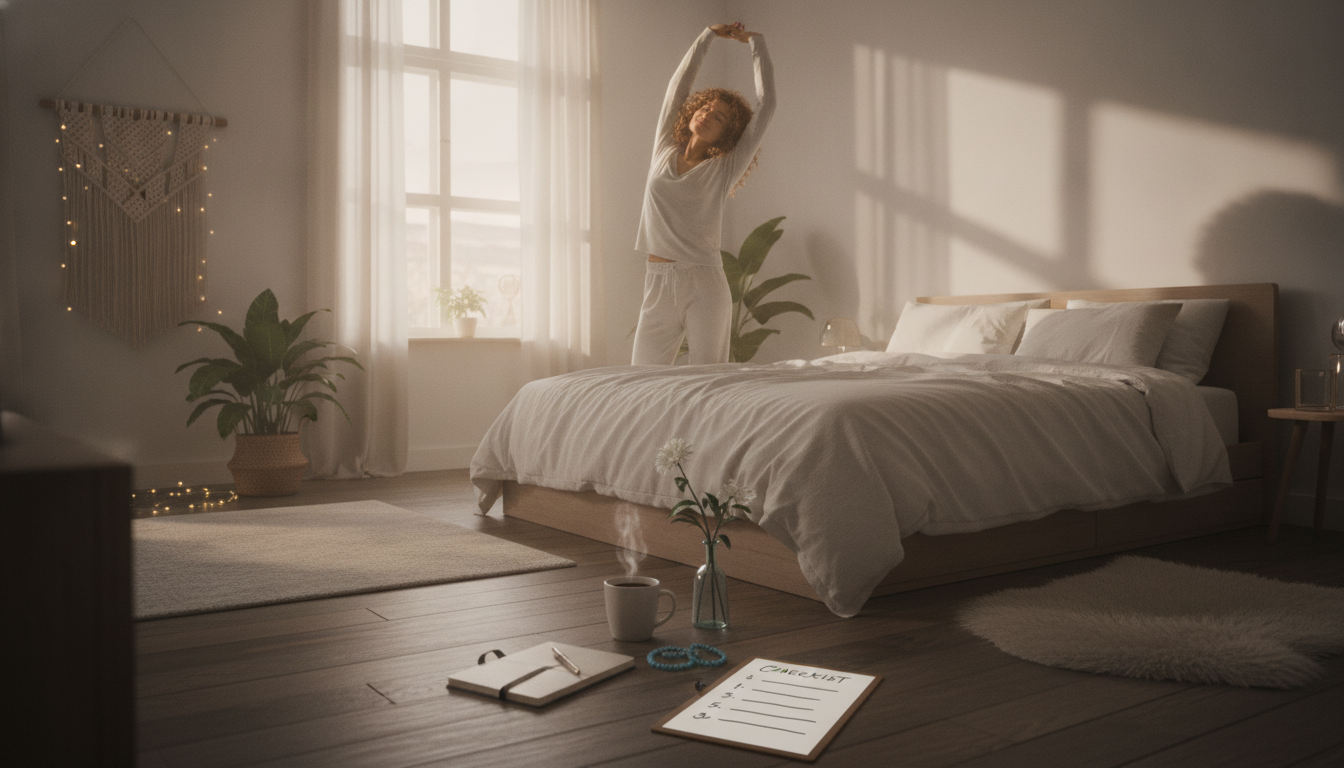
A bedroom set up for rest can quietly train the brain to unwind on cue. Removing or reducing screens in the sleep space helps protect melatonin timing, lowers mental stimulation at night, and creates a clearer boundary between daytime demands and nighttime recovery. The goal isn’t perfection—it’s building a room that makes sleep the easiest option.
Research organizations and clinical sleep educators repeatedly point to light exposure and bedtime routines as core drivers of sleep quality. For a deeper look at how blue light can affect circadian rhythms, see Harvard Health Publishing and practical habit guidance from the American Academy of Sleep Medicine.
A screen‑free bedroom is less about rules and more about a reliable boundary: the bed and the room signal sleep, not scrolling, working, or watching. For many households, it’s a spectrum.
Screens can interfere with sleep in two common ways: light exposure (especially brighter, cooler light) and mental/emotional activation (messages, news, videos, games). Reducing screens before bed supports a smoother transition into sleep.
| Screen habit in the bedroom | What it tends to do | Simple screen‑free swap |
|---|---|---|
| Scrolling social media in bed | Keeps the brain alert; emotional spikes; time loss | Set a 10–15 minute reading window with a paperback and a warm bedside lamp |
| TV as background noise | Light + storylines delay sleep; volume changes can cause arousals | White-noise machine or fan; calming audio from a speaker set to a sleep timer outside reach |
| Phone as alarm clock | Encourages bedtime and night checks; notification temptation | Standalone alarm clock; charge phone outside the bedroom |
| Late-night email/work tasks | Stress activation; problem-solving mode at bedtime | “Shut-down list” on paper: 3 tasks to handle tomorrow + one next step |
| Checking the time during wake-ups | Increases anxiety and rumination | Turn the clock face away; use a dim, non-phone nightlight only if needed |
What happens in the first minutes after waking often sets the tone for the day. A screen‑free bedroom helps reduce “attention hijack,” where notifications pull you into other people’s priorities before you’ve even gotten out of bed.
Even “neutral” content can be activating late at night. A screen‑free bedroom reduces exposure to information and social pressures that tend to spike stress when the nervous system is trying to downshift.
Willpower fades at bedtime. Environment lasts. A few simple changes make the screen‑free routine feel automatic rather than restrictive.
If a printable routine and progress tracker would help, consider the Benefits of a Screen‑Free Bedroom Guide (digital download). For daytime stress and focus support that pairs well with better sleep, Calm at Work: Smart Strategies to Manage Stress and Boost Focus (digital guide) can help reinforce the same “less noise, more clarity” mindset beyond the bedroom.
Many people notice small changes within 3–7 days, like fewer bedtime checks and an easier wind‑down. Stronger improvements often build over 2–4 weeks as the routine becomes more automatic, so consistency matters more than perfection.
Charge it outside the bedroom and use Do Not Disturb with allowed contacts for true emergencies. If it must stay in the room, keep it across the room, face down, with notifications off—no bedside scrolling.
Not always, but both can add light exposure and mental stimulation. Paper books or an e‑ink reader are typically easier on the brain at night; if using a device, keep brightness low with warm settings and stop early enough to create a wind‑down buffer.






Leave a comment