
Soft, comfortable lips come from consistent basics, a few smart seasonal swaps, and long-term habits that protect the delicate lip barrier. Instead of chasing quick fixes, the most reliable approach is a set of simple rituals—morning, day, night, and weekly—then small adjustments for dry winters, hot summers, travel days, and indoor heating or AC.
The skin on your lips is built differently than most facial skin. It has a thinner outer layer and fewer oil glands, which means it loses moisture faster and has a harder time “self-lubricating” when the weather turns dry or windy. Even a small disruption to the barrier can quickly feel like tightness, roughness, or flaking.
Common triggers include low humidity, cold air, wind, sun exposure, and the saliva lip-licking cycle (saliva evaporates and pulls more water with it). Fragranced or “tingly” products can also irritate sensitive lips, and over-exfoliation can strip away what little protection the lips have.
A barrier-first approach typically works best: reduce irritation, seal in water with an occlusive layer, and add sun protection during daytime exposure. For dermatologist-backed basics on chapping triggers and care, see the American Academy of Dermatology Association guidance on chapped lips.
A good routine doesn’t need ten steps. It needs consistency, comfortable textures you’ll actually use, and a “repair” window at night when the lips can stay coated without constant eating, drinking, or talking.
| Time | Step | What to look for | Common mistake to avoid |
|---|---|---|---|
| Morning | Protect + hydrate | Balm with occlusives (petrolatum, lanolin, waxes) and/or humectants (glycerin, hyaluronic acid); SPF when outdoors | Skipping SPF on high-exposure days |
| Midday | Reapply as needed | Thin layers; reapply after meals; consider fragrance-free if sensitive | Layering endlessly without removing buildup |
| Evening | Remove + repair | Gentle makeup removal; rich balm or lip mask; soothing ingredients (ceramides, panthenol) | Using harsh cleansers or alcohol-heavy removers |
| Weekly | Smooth (optional) | Very gentle exfoliation only if flaky and not raw; follow with a thick balm | Scrubbing cracked lips or using gritty scrubs too often |
When lips are acting up, it’s tempting to overhaul everything at once. Instead, keep the same ritual and swap the “weight” of protection based on conditions.
UV exposure can worsen dryness and contribute to discoloration over time. For straightforward sun-safety basics, the MedlinePlus sun protection overview is a helpful reference.
Long-term comfort is less about finding a “miracle balm” and more about reducing repeat irritation and supporting the lip barrier daily.
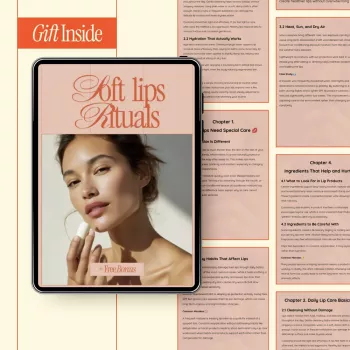
If you want a simple way to turn these habits into a repeatable plan, Soft Lips Rituals – A Complete Lip Care Tips eBook (Digital Download) organizes daily steps, seasonal swaps, and long-term trackers into an easy reference you can keep on your phone.
If a product stings or burns repeatedly, discontinue it and switch to fragrance-free, flavor-free, minimalist formulas. Frequent flare-ups can also be related to contact irritation/allergy, harsh actives, or repeated environmental exposure. For a clear overview of symptoms and treatment options, the Cleveland Clinic’s chapped lips resource is a solid starting point.
Soft Lips Rituals – A Complete Lip Care Tips eBook for Daily, Seasonal & Long-Term Lip Care Routines | Digital Download is designed to remove guesswork and keep your routine realistic.
Stress can also show up as repetitive lip picking, forgetting to reapply, or leaning on irritating “tingly” products for sensory relief. If that sounds familiar, pairing your lip ritual with a steadier daily rhythm can help—Calm at Work: Smart Strategies to Manage Stress and Boost Focus (Digital Guide) offers practical routines and checklists that fit into a busy day.
Apply in the morning, after eating or drinking, and before bed, then reapply anytime lips feel tight—especially in wind or cold. If product buildup starts to feel waxy or gritty, blot first and apply a thin fresh layer instead of endlessly layering.
No—exfoliation is optional and should be gentle and occasional. If lips are flaky but not raw, a light exfoliation can help, but over-exfoliating often worsens barrier damage; always follow immediately with an occlusive balm.
SPF matters most when you’re outdoors (even on cooler or windy days) because lips are vulnerable to UV and sun can worsen dryness. Reapply after eating, drinking, swimming, or sweating to maintain protection.



Leave a comment