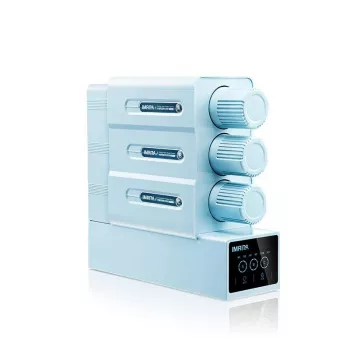
A dedicated drinking-water faucet can make it easier to fill a glass, rinse produce, or add water to a pot without moving a pitcher around the kitchen. If you’re considering the Ultra-Pure 75GPD Under Sink Reverse Osmosis Water Purifier, the most useful questions are practical ones: What does its capacity rating mean, will the installation work in your cabinet, and what will ownership require?
Reverse osmosis, or RO, sends water through a membrane that reduces many dissolved substances. Water that does not pass through the membrane carries rejected substances to a drain. An under-sink system treats water at a point of use, making it an option when you primarily want treated water for drinking and food preparation rather than for every tap in the home.
RO is not a single, universal performance claim. The substances a system reduces depend on its design and verified performance. Before choosing this purifier to address a particular concern, compare that concern with documentation for the specific model; don’t assume it removes every contaminant or holds a certification that hasn’t been documented. The CDC’s guide to home water treatment systems offers a useful overview of treatment choices.
75GPD means a rated production capacity of up to 75 gallons per day under specified test conditions. It is not a promise that 75 gallons will come from the faucet whenever you turn it on. Incoming water pressure, temperature, water quality, and system configuration can all affect actual production.
Production is also different from immediate dispensing. The water available at a given moment depends on the purifier’s storage and dispensing arrangement. If your household fills several bottles in the morning or uses treated water for cooking, confirm how this system stores and delivers water rather than using the daily rating as a measure of faucet flow.
Start with the space you can actually use, not just the cabinet’s outside dimensions. Measure around the sink basin, plumbing, disposal, and anything you plan to keep in the cabinet. Leave access for future service; a unit that fits only after everything else is removed may be frustrating to maintain.
Next, identify the cold-water supply, a suitable drain connection, and the intended location for a dedicated drinking-water faucet. Confirm the included components and installation requirements for your plumbing before you order. If the sink layout or local requirements are unclear, a qualified installer can help you plan the connections.
| Check | Why it matters | What to confirm |
|---|---|---|
| Cabinet space | The system needs room for installation and service. | Measure clear space around pipes, the disposal, and stored items. |
| Water supply | Incoming conditions can affect RO production. | Compare your water pressure and supply setup with installation requirements. |
| Drain and faucet | RO needs a reject-water drain path and a place to dispense treated water. | Identify connection locations and a suitable sink or counter position for the faucet. |
| Maintenance access | Serviceable parts need periodic attention. | Make sure you can reach components without dismantling the cabinet. |
Begin with the water you have. If you use municipal water, review your utility’s water-quality report. If you use a private well, appropriate testing can help identify concerns that a municipal report would not cover; the EPA’s private-well guidance is a starting point. Match identified substances to documented performance claims and relevant independent certifications, where available, for the system you intend to buy.
Maintenance is part of the purchase decision, too. Filters and other serviceable components may need replacement, and intervals and procedures should follow the manufacturer’s instructions. Budget for consumables and consider whether you will be able to reach the system comfortably when service is due. Because reverse osmosis sends a reject-water stream to the drain, overall water use also belongs in your comparison of systems.
Our Ultra-Pure 75GPD purifier is an option if you want a dedicated under-sink RO setup and can accommodate its installation and upkeep. Compare your daily drinking and cooking needs with what the 75GPD production rating actually describes; it should not stand in for details about storage or immediate dispensing.
Kitchen planning can include other needs, but keep them separate from the water-treatment decision. For example, our Portable 200W Solar Generator with AC Outlet & USB Ports is a separate product for shoppers considering portable power; its listing does not establish compatibility with this purifier. For the RO purchase, review the current purifier specifications and included parts, then confirm your cabinet measurements and installation plan before ordering.
No. It describes rated daily production under test conditions; immediate dispensing and actual production depend on the system’s configuration and your household’s water conditions.
Not necessarily. Measure usable space and compare your supply, drain, faucet, and maintenance access with the product’s installation requirements.
Start with a municipal water-quality report or appropriate test results for your private well. Then compare the substances identified with documented performance claims and certifications for the specific system.





Leave a comment