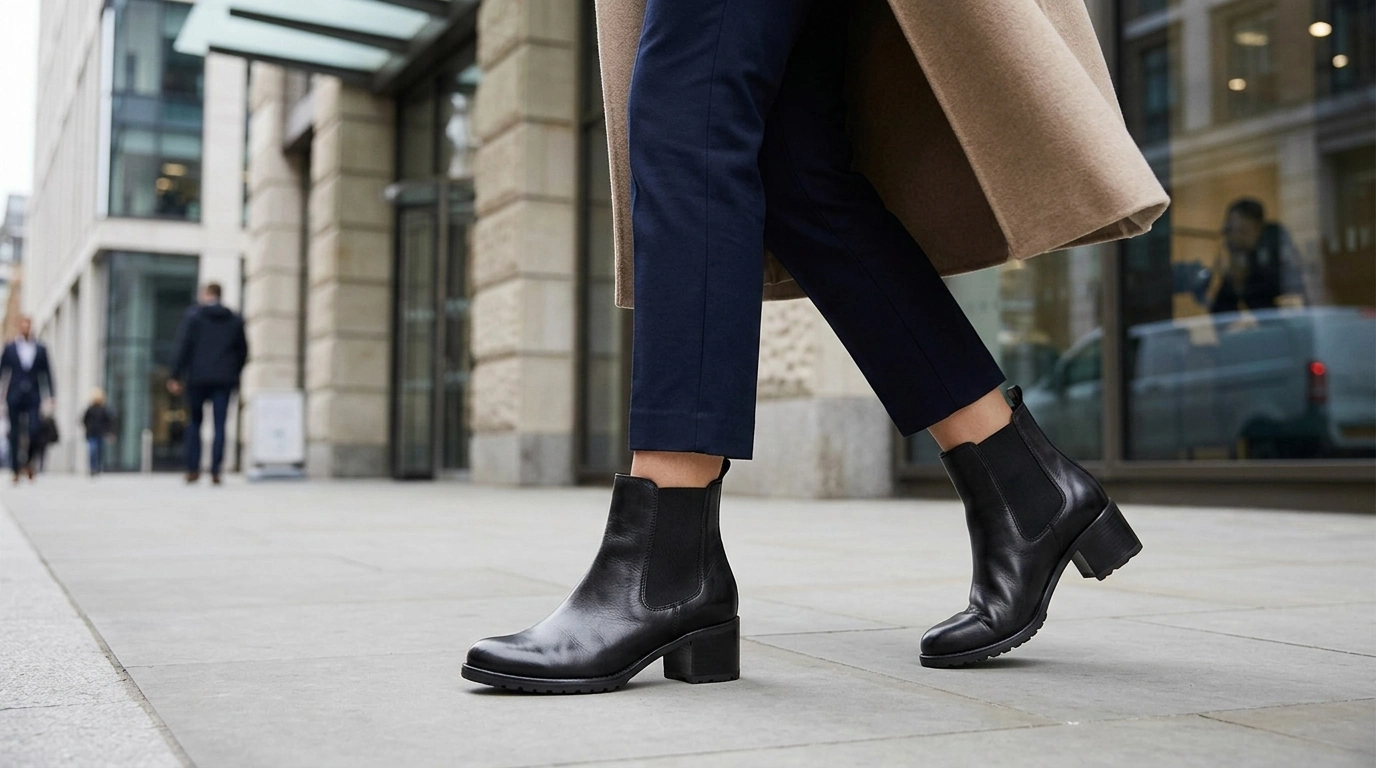
Chelsea ankle boots in genuine leather strike that rare middle ground between polished and practical. The pull-on profile looks refined with office outfits, yet it’s also easy to live in—especially when paired with a mid block heel that adds lift without feeling precarious. If you’re shopping for a pair you’ll reach for on repeat, focus on leather quality, fit through the instep and heel, underfoot cushioning, and a sole that matches your daily surfaces. With a few simple care habits, leather can keep its shape and finish through season after season.
The Chelsea silhouette is a staple because it solves multiple wardrobe needs at once. Elastic side panels (often called “gore”) make the boots easy to pull on and quick to take off—no fussing with laces when you’re running out the door. The ankle height is also remarkably versatile: it pairs cleanly with straight-leg denim, tailored pants, and midi skirts without visually “cutting” the leg line as much as taller shafts can.
A mid block heel is the other everyday win. Compared with narrow heels, the wider base tends to feel steadier on sidewalks, office corridors, and hard floors while still giving a subtle leg-lengthening effect. Over time, genuine leather uppers usually mold to your foot for a more personalized feel, which can make a frequently worn pair more comfortable than synthetics that stay rigid.
“Genuine leather” indicates a real leather upper rather than a fully synthetic alternative. In day-to-day wear, real leather often balances structure and flexibility: it can feel supportive at first, then relax slightly where your foot needs room—without collapsing when cared for.
When evaluating leather, look for a smooth, even grain and consistent color. Natural variation is normal; what you want to avoid is visible cracking, a plastic-like shine, or a thick coating that can prevent the leather from breathing. One advantage of leather is recoverability: small scuffs can often be buffed out, while deeper marks may improve with conditioner and a matching polish.
Moisture is manageable, but it requires a routine. A protector spray can help, and if the boots get wet, prompt drying at room temperature is key—direct heat (radiators, hair dryers) can stiffen leather and lead to premature creasing. For broader material background and how leather is made, see Britannica’s overview of leather. For sourcing and responsible manufacturing standards, the Leather Working Group is a widely recognized industry resource.
| Need | What to do | How often |
|---|---|---|
| Light dirt | Wipe with a soft dry cloth; use a slightly damp cloth for stubborn spots | After wear as needed |
| Dryness | Apply leather conditioner sparingly, then buff | Every 4–8 weeks (more in dry climates) |
| Rain/snow protection | Use a leather-safe water and stain protector | Before first wear; reapply every few weeks in wet seasons |
| Storage | Use boot shapers or stuff with paper; store away from sunlight | Always |
Mid block heels are popular because the geometry is forgiving: a wider base can distribute pressure more evenly than narrow heels, especially on concrete and tile. Comfort still depends on what’s happening inside the boot, though. Look for cushioning under the ball of the foot, a footbed that feels supportive (not flat and slappy), and a heel counter that holds your heel in place to reduce rubbing.
Flexibility matters, too. A forefoot that bends with your stride helps the boot move naturally instead of forcing you to “clomp.” If you walk on smooth floors, rubberized outsole sections or a traction pattern can make a noticeable difference in grip.
For general foot comfort considerations and shoe-wearing tips, the American Podiatric Medical Association (APMA) is a helpful starting point for everyday guidance.
A Chelsea boot should feel secure without feeling restrictive. Use these checkpoints while trying pairs on:
If you’re ready to add a versatile pair to your rotation, start here: Women’s Genuine Leather Chelsea Ankle Boots with Mid Block Heels. For keeping leather looking refreshed between deeper cleanings, consider Car Plastic & Leather Restorer – Back to Black Gloss Coating & Polish for quick shine and surface touch-ups on compatible leather finishes.
Leather can relax and mold slightly in width and across the instep with wear, but it won’t meaningfully increase in length. Prioritize correct length from day one and aim for a secure heel to reduce rubbing.
They can be, especially when the boot has cushioning, a stable heel counter, and an outsole with grip. Comfort ultimately depends on fit, footbed support, and how evenly the boot distributes pressure.
Wipe off moisture and surface dirt right away, then let the boots air-dry at room temperature. Once fully dry, condition lightly and consider reapplying a leather-safe protector for future wet days.





Leave a comment